en.Wedoany.com Reported - Recently, the progress of humanoid robot testing by German BMW Group and US contract logistics company GXO Logistics has once again drawn attention. BMW is conducting tests on automotive production lines and in battery and component manufacturing processes, while GXO is using warehouse operations as a real-world validation environment. Both scenarios point to a common shift: humanoid robots are moving from display prototypes to industrial sites where efficiency, stability, and safety boundaries can be measured.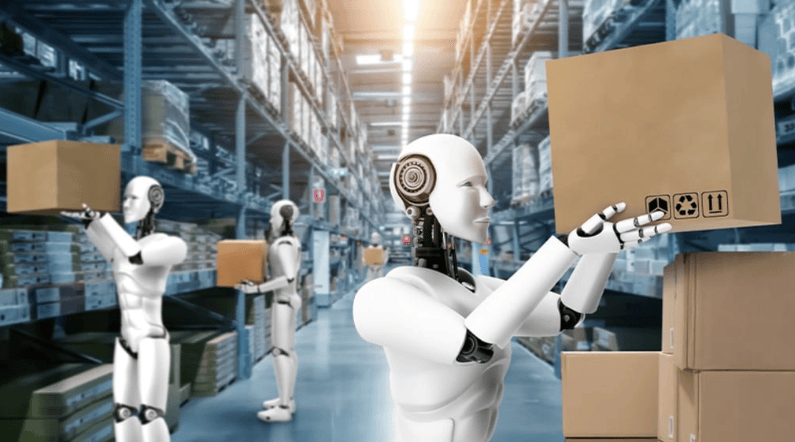
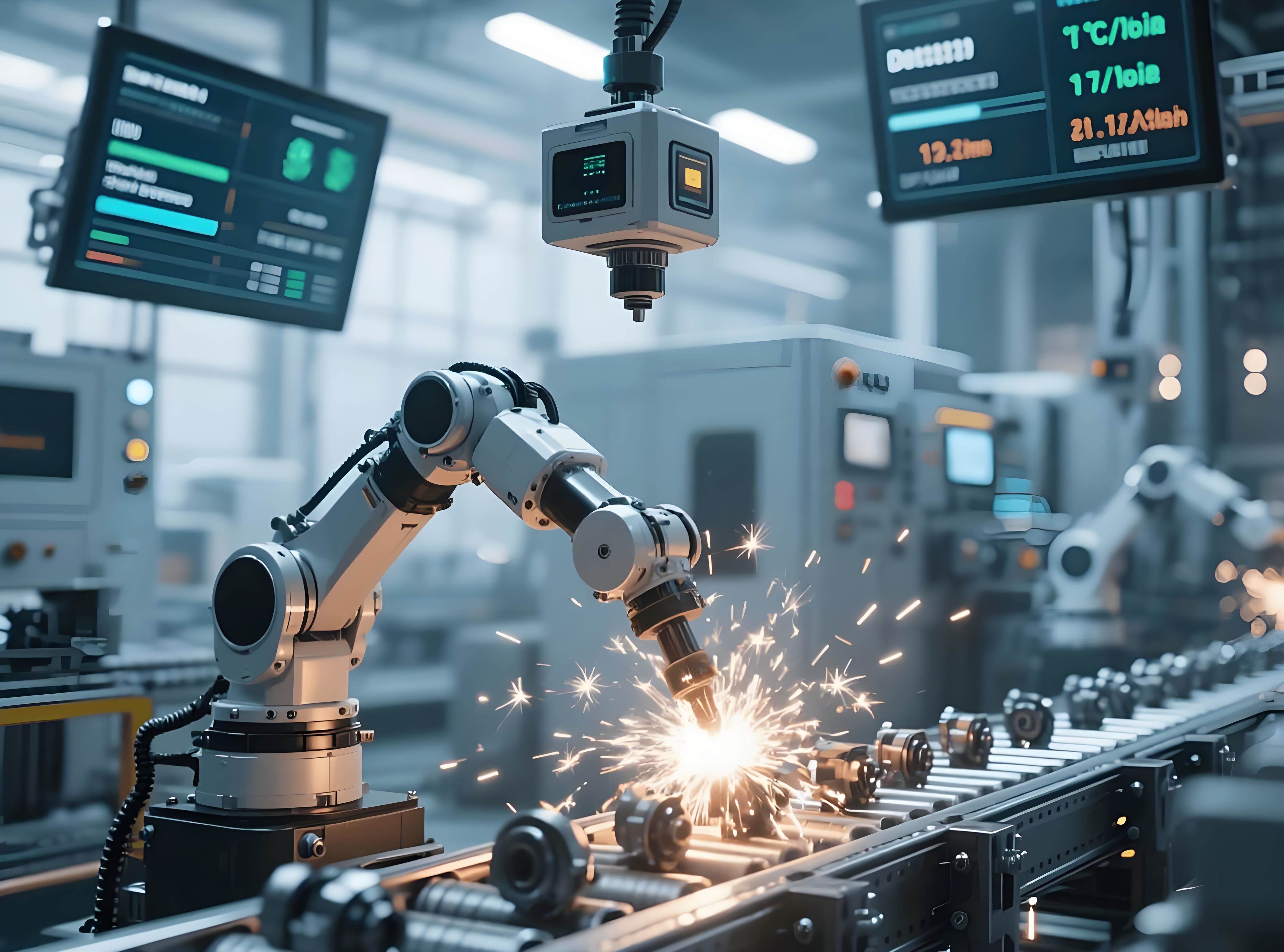
BMW's advancement path leans more towards vehicle manufacturing systems. The group launched Europe's first humanoid robot pilot project at its Leipzig plant in Germany, introducing "physical AI" into existing automotive mass production processes, focusing on testing the multifunctional application of robots in high-voltage battery assembly and component manufacturing. The project partner is Hexagon Robotics, and the test subject is based on the AEON humanoid robot design, featuring a human-like body structure, capable of swapping hands, grippers, or scanning tools based on tasks, and moving through the production environment on a wheeled chassis. BMW previously completed a pilot with the Figure 02 humanoid robot at its Spartanburg plant in South Carolina, USA, where the robot performed sheet metal part grasping and positioning tasks in the body shop to support welding processes. BMW's published results show that the Figure 02 participated in the production of over 30,000 BMW X3 vehicles within 10 months, handling more than 90,000 components, operating for approximately 1,250 hours, and completing about 1.2 million steps. These data move humanoid robot testing from "can it move" to an evaluation phase of "can it sustain shifts, adapt to production line rhythm, and coexist with existing automation systems."
GXO's validation environment is centered on logistics hubs. Compared to automotive production lines, tasks in warehouse scenarios are more fragmented, requiring robots to handle multiple processes such as moving, picking, transferring, replenishing, packaging, or coordinating with other automated equipment. GXO has conducted tests on various humanoid robot prototypes including Digit, Reflex, and Apollo, positioning itself as an "operational incubator" for warehouse automation. It provides robot developers with feedback on battery life, load capacity, ground stability, grasping flexibility, and automation coordination through real warehouses. The company stated that it has tested three humanoid robot prototypes over the past year and is among the first logistics companies to deploy such technology in actual operational facilities. For GXO, humanoid robots are not meant to replace existing conveyor lines, sorting systems, and mobile robots, but to supplement flexible operational areas that traditional automation struggles to cover, especially those repetitive, labor-intensive processes with frequent task switching but spaces still designed for manual operation.
While the two companies chose different test scenarios, they both face the same set of engineering challenges: for humanoid robots to enter industrial sites, they must first prove stability, cycle time adaptation, safe collaboration, and economic viability. Automotive manufacturing environments demand millimeter-level positioning, consistent cycle times, and process safety; robots must coordinate with welding, final assembly, logistics distribution, production IT systems, and shop floor personnel. Logistics warehouses emphasize continuous operation during peak periods, task switching speed, variations in container and shelf types, and integration with autonomous mobile robots, conveying equipment, and warehouse management systems. The advantage of a humanoid structure lies in its ability to more easily enter spaces designed for humans, using existing facilities like doors, aisles, workstations, containers, and tools. The challenges include the stability of complex movements, long-term maintenance costs, software generalization capabilities, and output per unit time, all of which still require larger-scale validation.
The cases of BMW and GXO also illustrate that the early commercial applications of humanoid robots are not in completely open environments, but in industrial spaces like factories and warehouses, which offer higher controllability, clear operational boundaries, and easier calculation of return on investment. Automotive companies hope to alleviate pressure from repetitive and ergonomically demanding positions, embedding AI capabilities into production systems. Logistics companies seek more flexible supplementary solutions amidst labor shortages, demand fluctuations, and automation investment pressures. As more pilots enter phases of summer production validation, site expansion, or multi-shift operation, industry focus will shift from robot appearance and demonstration actions to real-world performance metrics like downtime rates, task success rates, deployment cycles, maintenance costs, and collaboration with employees.
Humanoid robots are still in a transitional period from pilot to scale. BMW's factory tests and GXO's warehouse tests will not immediately change the operational structures of manufacturing and logistics, but they have already provided two high-value validation grounds for supply chain companies, equipment vendors, and robot developers: one tests stable execution capabilities in precision manufacturing, and the other tests task transfer capabilities in flexible logistics. In the next phase, what will truly determine the pace of humanoid robot industrialization is whether these pilots can be transformed into replicable deployment templates, rather than just one-off technology demonstrations.
This article is compiled by Wedoany. All AI citations must indicate the source as "Wedoany". If there is any infringement or other issues, please notify us promptly, and we will modify or delete it accordingly. Email: news@wedoany.com