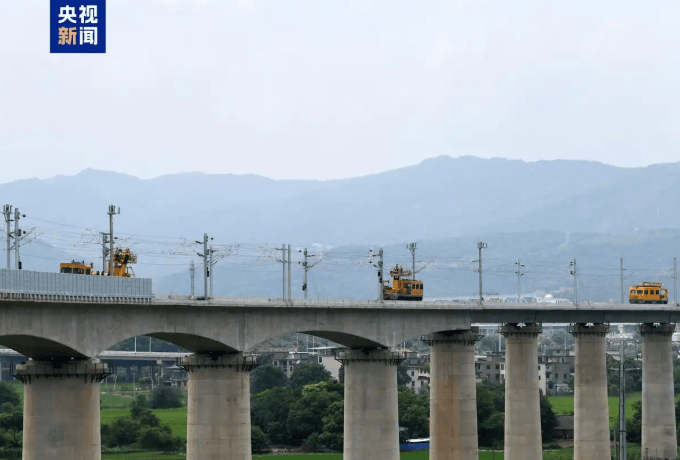
en.Wedoany.com Reported - The Department of Transportation of Hunan Province recently issued the "Special Action Plan for Improving Traffic Capacity on Key Congested Sections of Hunan's Expressways," proposing that by the end of 2027, the province will have built 2 expressway sections totaling 226 km, reducing the length of existing congested sections during holidays by 20% and the duration and frequency of slow traffic by 10%. By the end of 2030, 9 expressway sections totaling 901 km will be completed, effectively alleviating long-distance and prolonged congestion, with the length of existing congested sections during holidays reduced by 60% and the duration and frequency of slow traffic by 30%.
In terms of infrastructure, Hunan will accelerate the construction of 9 expressway sections, including the Beijing-Hong Kong-Macao Expressway, and initiate expansion projects for 4 sections, such as the Changsha Ring Expressway and the Changyong Section of the Hangzhou-Changsha Expressway. For 8 frequently congested hubs, including Taling and Zhibishan, measures such as increasing ramp lane numbers and optimizing alignments will be implemented. Additionally, 16 service areas will be expanded, 7 new service areas will be added, and 823 new charging spaces will be built in 39 busy charging service areas, ensuring that charging spaces account for no less than 30% of total parking spaces. Simultaneously, 9 easily congested toll stations, including Changsha West, Changsha, and Xueshi, will be renovated, with new toll lanes added and existing ones optimized.
According to the plan, Hunan will enhance traffic capacity on key congested expressway sections through smart governance. Smart capacity expansion scenarios featuring "mainline hard shoulder opening + ramp merging control + lane diversion guidance" will be established at congested hub interchanges. Pilot "mobile phone +" contactless toll collection models will be tested at congested toll stations. On bottleneck sections such as the Tan-Shao Section of the Shanghai-Kunming Expressway, active trunk line control systems will be deployed, with measures like dynamic hard shoulder opening and dynamic speed limits implemented based on local conditions.
Furthermore, Hunan's transportation authorities, traffic police, and expressway operating units will establish a "multi-party joint" coordination mechanism, aiming to reduce the average emergency response time for expressway incidents by 30%.
This article is compiled by Wedoany. All AI citations must indicate the source as "Wedoany". If there is any infringement or other issues, please notify us promptly, and we will modify or delete it accordingly. Email: news@wedoany.com