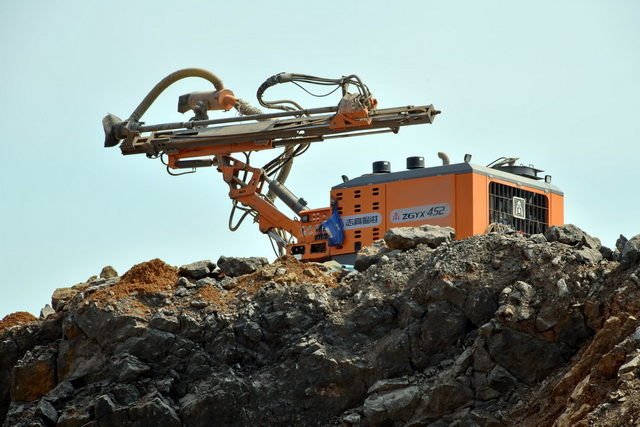
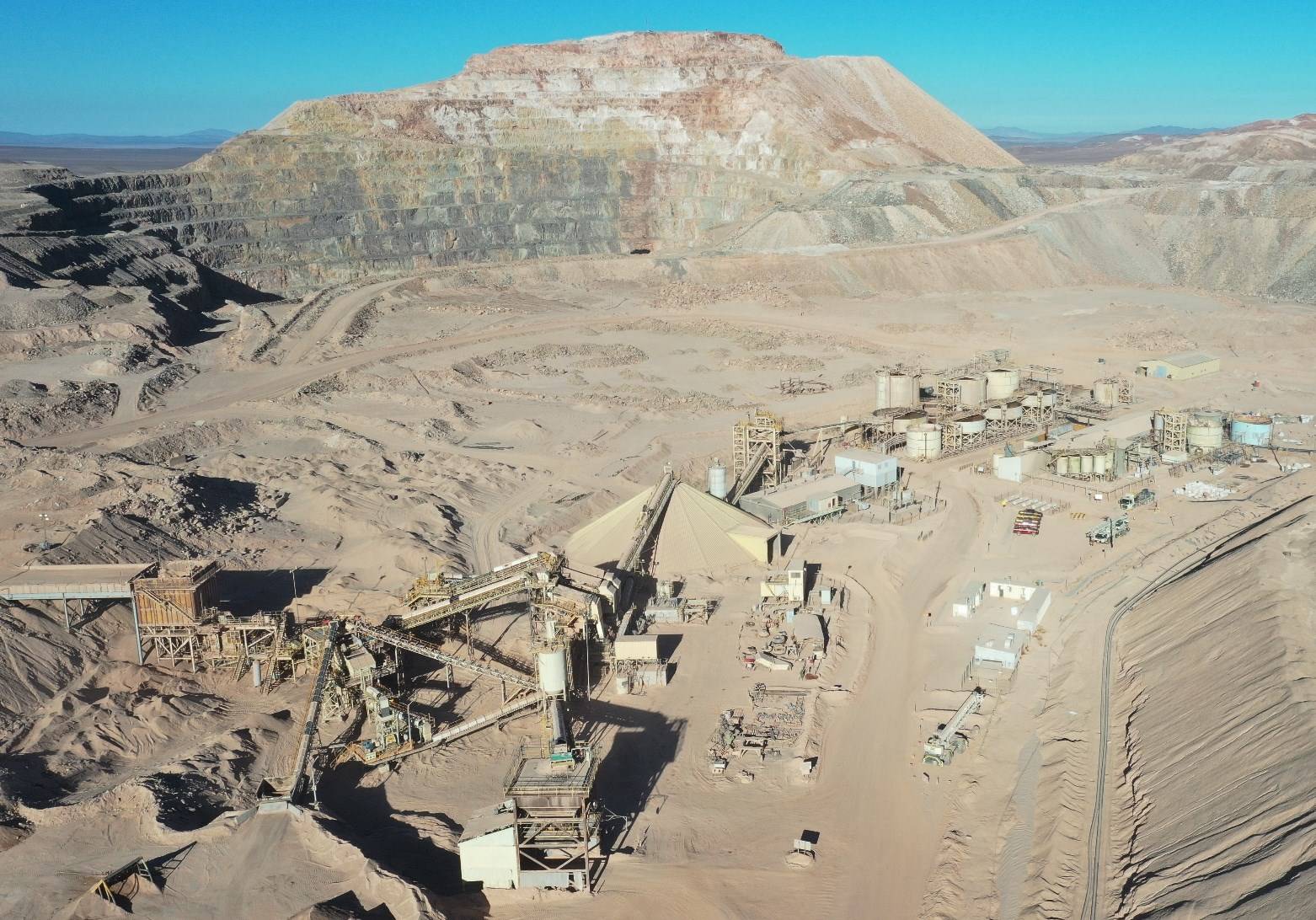
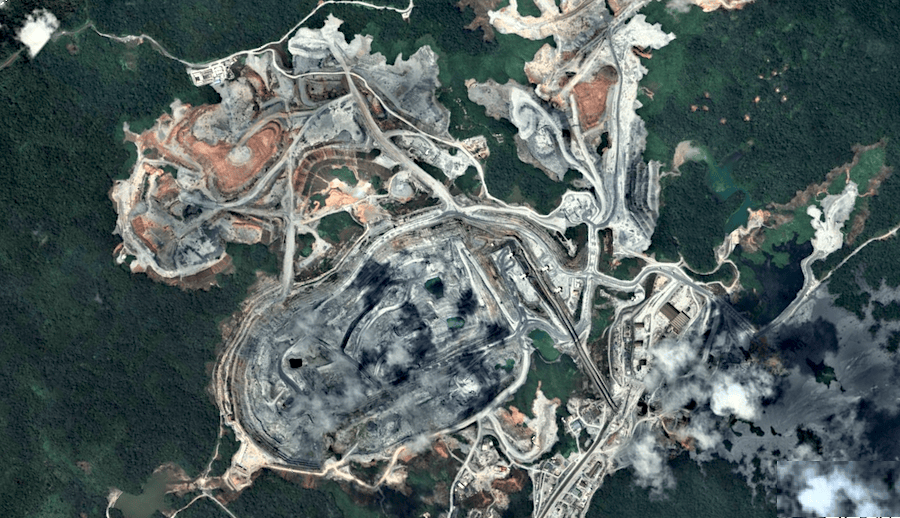
en.Wedoany.com Reported - Tiger Gold Corp. (TIGR:TSXV) has released assay results from the Ceibal target within its Quinchía Gold Project in the Mid-Cauca gold belt of Colombia. These results come from the company's initial 5,000-meter drilling program at the target, which is part of an ongoing 20,000-meter drilling campaign.
The company reported that drill hole CEDDH-010 primarily intersected porphyry-style mineralization over a near-surface interval of 685.7 meters. Highlights include 214 meters grading 0.7 g/t gold from a depth of 22 meters, including 23 meters grading 1.1 g/t gold and 8 meters grading 1.0 g/t gold. A second interval from a depth of 271 meters returned 437.05 meters grading 0.5 g/t gold, including 9 meters grading 2.2 g/t gold and 114 ppm molybdenum from 613 meters, and 10 meters grading 1.4 g/t gold from 656 meters.
According to the company, the hole was drilled as a stepback from the previously drilled discovery hole CEDDH-001, with the collar located approximately 80 meters to the northeast along the same section line. CEDDH-010 reached a final depth of 707.7 meters and ended in mineralization, remaining open at depth.
"CEDDH-010 delivers another strong result for Ceibal and expands the mineralization along our first section line," said President and CEO Robert Vallis in a company press release.
The company stated that Ceibal is located approximately 1 kilometer south of the Miraflores deposit and about 1 kilometer southwest of the Tesorito deposit. Drilling at Ceibal has intersected a mineralized corridor with an apparent strike length of at least 300 meters and an apparent average width of approximately 300 meters. In CEDDH-010, mineralization has been traced to a vertical thickness of approximately 600 meters and remains open at depth.
Tiger reported that CEDDH-010 intersected dacite porphyry for most of its drilled length, with intercalations of intrusive breccia and inter-mineral to late diorite porphyry. The company stated that the consistent chalcopyrite, trace bornite and covellite, abundant magnetite, and persistent vein stockwork observed in the hole are consistent with porphyry gold mineralization. The company also noted that three drill rigs remain active on the project, with assay results pending from Ceibal, Dos Quebradas, and Tesorito.
Central bank activity remains a key theme in the gold market, as official institutions continue to expand their gold bullion reserves. According to the June 2 edition of Rocks Daily by Red Cloud Securities, gold has surpassed U.S. Treasuries to become the world's second-largest reserve asset. The publication reported that central banks now hold over 36,000 tonnes of gold, with total reserves approaching levels seen during the Bretton Woods era. Rocks Daily noted that this trend reflects ongoing efforts by countries to diversify reserve assets, with gold claiming a larger share of global reserve portfolios.
Similar observations were reported on June 2 by The Telegraph, citing data from the European Central Bank. The report stated that gold accounted for 27% of central bank foreign exchange reserves in 2025, compared to 22% for U.S. Treasuries. According to the European Central Bank, geopolitical concerns remain a primary consideration for reserve managers, with 70% of central banks surveyed in April identifying geopolitics as the most important risk for the year. Although annual central bank purchases in 2025 slowed to 850 tonnes from over 1,000 tonnes per year in the previous three years, the report noted that rising gold prices have driven the increase in gold's share of global reserves.
Market commentators also highlighted continued interest in precious metals. In a June 2 commentary, Stewart Thomson described gold's recent trading pattern as consolidation following significant gains against fiat currencies in 2024 and 2025. "Gold price consolidation is healthy," Thomson wrote, adding that sideways trading periods can shift attention to gold's role as money rather than short-term market volatility. He also stated, "Professional gold and silver bulls are more focused on acquiring more metal than on where the price is going next." Thomson also commented on precious metals stocks, writing, "Gold and silver miners appear ready to show their greatness once again, with a fresh move to the top of the range!" He noted that mining-focused exchange-traded funds and their underlying companies continue to offer investors exposure to the gold and silver sector.
According to an April 21 report from Gold Advisor, senior analyst Jeff Valks discussed Tiger Gold's results from Dos Quebradas, highlighting what he called "an impressive 169 gram-meter intercept," including "282.45 meters grading 0.6 g/t gold," with "32 meters grading 1.3 g/t gold" and "21.23 meters grading 1.6 g/t gold." Valks wrote that the hole "ended in mineralization," stating, "This suggests the system continues at depth." He also noted that the company had "confirmed gold mineralization across multiple intervals in a second hole drilled to 631.1 meters, indicating the system extends vertically and laterally through a breccia complex." Valks cited comments from President and CEO Robert Vallis, who stated, "QDQDH-27 is an encouraging result from our initial drilling program... As we await assay results from QDQDH-26, we are updating our model and planning the next phase of drilling." Valks further wrote, "Three drill rigs are active across the broader Quinchía project, with assay results pending from Dos Quebradas, Tesorito, and Ceibal." Regarding the company's stock, Valks stated, "The stock is a buy."
In an April 22 report, Bob Moriarty discussed the same drilling results, writing, "The QDQDH-27 hole from the Dos Quebradas deposit shows 282.5 meters grading 0.6 g/t gold from a depth of 18 meters." He added, "A 282.5-meter intercept is massive," and stated, "Any intercept over 100 gram-meters is a very good hole." Moriarty also commented on Tiger Gold's management team, writing, "Tiger Gold is led by the most experienced junior resource CEO I have seen in 25 years." Referring to Robert Vallis, Moriarty said, "He is first-class and well-traveled." Discussing the broader project, Moriarty wrote, "The assay numbers alone don't tell the full story of this incredible prize." He stated, "This fully funded 20,000-meter drilling program has already revealed the potential for a high-grade feeder zone beneath the Tesorito pit resource," and added, "Breccia mineralization shows the presence of higher-grade gold and copper mineralization."
Moriarty concluded, "Tiger Gold has it all," adding, "Management is experienced and determined to become Colombia's newest gold mine."
According to a June 2 update from Gold Advisor, senior analyst Jeff Valks discussed Tiger Gold's latest results from the Ceibal target at the Quinchía Gold Project. Valks described the results as "another long intercept from Ceibal," writing that the latest hole "helps expand the story laterally and at depth." Valks highlighted results from drill hole CEDDH-010, including "437.05 meters grading 0.5 g/t gold from a depth of 271 meters," with "9 meters grading 2.2 g/t gold" and "10 meters grading 1.4 g/t gold," as well as "214 meters grading 0.7 g/t gold from a depth of 22 meters," with "23 meters grading 1.1 g/t gold" and "8 meters grading 1.0 g/t gold." He wrote that the hole "primarily hit porphyry-style mineralization over a stunning 685.7-meter near-surface interval." Discussing the scale of the target, Valks stated, "This is not jewelry-box grade. This is bulk-tonnage porphyry-style work, where width and continuity do the heavy lifting." He noted that drilling at Ceibal "shows an apparent strike length of at least 300 meters and an apparent average width of about 300 meters," and wrote that CEDDH-010 "traced mineralization vertically for approximately 600 meters and ended in mineralization at a depth of 707.7 meters." Valks also commented, "The system remains open at depth, and the corridor remains open to the northwest, southeast, and southwest." Regarding ongoing exploration activities, he wrote, "Three drill rigs remain active, with assay results pending from Ceibal, Dos Quebradas, and Tesorito." On the company's stock, Valks stated, "As I write this, the stock is up 2.5% and remains a buy." He added, "CEDDH-010 adds scale to Ceibal ahead of the planned initial resource estimate."
Tiger's initial 5,000-meter drilling program at Ceibal primarily focused on expansion drilling to test the apparent strike extension of the mineralized corridor to the northwest and southeast. The company stated that deeper holes were designed to collect data to identify indicator minerals that may help locate the causative porphyry responsible for the system. The company reported that drill hole CEDDH-012 has been completed as a further stepback from CEDDH-001, with the collar located approximately 150 meters northeast of the discovery hole and 70 meters northeast of CEDDH-010. Logging shows roughly equal proportions of dacite porphyry, inter-mineral to late diorite porphyry, and intrusive breccia, while assay results remain pending. Tiger stated that drilling along this section line now covers the central portion of the Ceibal gold-molybdenum surface geochemical anomaly. Additional drilling along this section line and adjacent areas will be used to evaluate the geometry, true thickness, and continuity of the mineralized system. According to the company, drilling results obtained to date at Ceibal are being used to support detailed planning of a follow-up drilling program for an initial mineral resource estimate.
Separately, the company's Q1 2026 corporate presentation outlined a broader 2026 work plan for the Quinchía Gold Project, including expanding mineral resources, increasing confidence in the Tesorito mineral resource through infill drilling, refining the geological model with new drilling data, evaluating the impact of potential resource expansion on preliminary economic assessment assumptions, and generating technical data to support future pre-feasibility study work. The presentation also outlined planned drilling programs, including up to 10,000 meters of expansion drilling, 4,000 meters of infill drilling, and up to 6,000 meters of exploration drilling across the project area. Planned regional exploration activities include mapping, rock sampling, trenching, re-surveying historical drill holes, and exploration modeling, while engineering and environmental, social, and governance work includes baseline studies, community engagement, metallurgical test work, mine engineering studies, and tailings facility design.
This article is compiled by Wedoany. All AI citations must indicate the source as "Wedoany". If there is any infringement or other issues, please notify us promptly, and we will modify or delete it accordingly. Email: news@wedoany.com