en.Wedoany.com Reported - The biogas laboratory (Labiogás) of the Brazilian International Center for Renewable Energy - Biogas (CIBiogás) has completed ten years of accreditation by the General Coordination for Accreditation (CGCRE) of the National Institute of Metrology, Quality and Technology (Inmetro) in the field of Biochemical Methane Potential (BMP) testing. The institution will celebrate its 15th anniversary in 2026. The accreditation reinforces its reliability, impartiality, and technical rigor in a sector that continues to expand in scale, complexity, and demand for high-quality data.
Daiana Gotardo Martinez, Technical Director and Environmental Engineer at CIBiogás, stated that the institution provides security for decisions involving investments, engineering, operations, environment, and energy strategy through technical knowledge, independence, and the ability to transform data into applicable solutions. The laboratory is a key component of this system, connecting the potential of each waste type to the reality of each project.
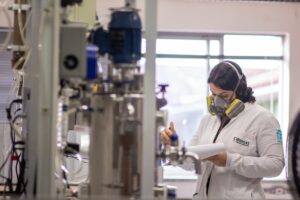
According to the "2025 Brazilian Biogas Panorama," Brazil has registered 1,803 biogas plants, with over 1,700 in operation, producing an estimated 4.96 billion standard cubic meters of biogas annually. The survey indicates that over the past five years, the number of biogas plants has grown at a compound annual rate of 15%, and production has increased by 13%, reflecting a more mature industry with expanding projects and new energy utilization pathways. The biogas laboratory began operations in 2011, before CIBiogás was officially established. It has become a reference institution for the characterization of organic waste with energy potential, having conducted over 50,000 tests, analyzed more than 500 substrates and mixtures, and currently capable of analyzing over 60 samples simultaneously. The laboratory also serves clients in Uruguay, Paraguay, Chile, Colombia, and Jordan.
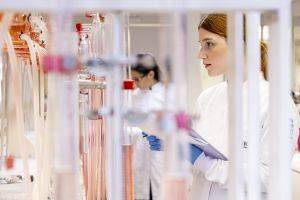
BMP testing is one of the main tools in this process. It estimates the biogas and methane generation potential of specific waste, providing critical information for assessing energy feasibility, system sizing, digester feed composition, and project return potential. Accreditation is not mandatory for the sector but represents a technical and institutional choice by CIBiogás to submit its processes to external evaluation, ensuring international standards of quality, confidentiality, and impartiality. Accreditation by CGCRE/Inmetro guarantees traceability of results, quality control, and protection of client information.
In addition to BMP testing, the laboratory performs physicochemical analyses of substrates and digestate, including total solids, fixed and volatile solids, alkalinity and pH, FOS/TAC, chemical oxygen demand, sulfates, ammonium, nitrogen, phosphorus, and potassium. These tests help determine digester feed load, stability monitoring, inhibitor identification, operational performance assessment, and recommendations for agricultural use of digestate. The laboratory also operates bench-scale reactors that simulate the operating conditions of real digestion systems at a laboratory scale, running completely stirred tank reactor (CSTR) and covered lagoon (BLC) models, with parallel tests to compare control and treatment groups.

The laboratory has expanded its services by acquiring a new solid-state bench-scale reactor, inspired by dry technology and designed for processing waste with high solid content. This move aims to expand its capacity to simulate technologies not yet widespread in the country and to validate possibilities for substrates requiring routes different from traditional wet digestion.
Franciele Natividade, Labiogás Manager and Environmental Engineer, noted that the laboratory's role is to answer clients' project questions with methodology, traceability, and technical interpretation—such as whether waste generates biogas, the amount of substrate entering the plant feed, the risk of instability, or whether a specific biotechnological product can increase yield. Accreditation reinforces this commitment.
According to the "2025 Brazilian Biogas Panorama," biomethane already accounts for 34% of biogas use in Brazil, although it is concentrated in a smaller proportion of plants, highlighting the larger scale of these facilities. The document also highlights progress in pathways such as syngas, renewable methanol, synthetic fuels, and sustainable aviation fuel (SAF). CIBiogás is involved in several pioneering projects, including GEF Biogás Brasil, the Itaipu Biofuel Demonstration Plant, the Toledo Bioenergy Center, and hydrocarbon facilities.
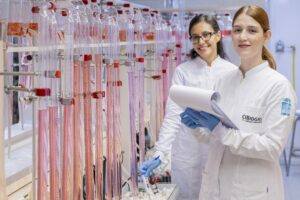
Luis Thiago, CEO of Master Biodigestores, stated that the company has partnered with Labiogás since its founding in 2019, considering the laboratory to have cutting-edge equipment, a qualified team, and accreditation, while demonstrating an exceptional level of care. Flavio Gross of Frimesa noted that the laboratory provides not only analytical services but also trust and consultancy, ensuring analyses are conducted to rigorous standards and helping to understand the impact of results on project decisions.
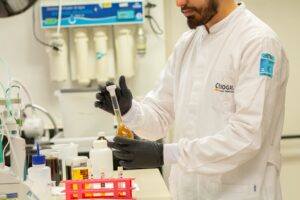
As a Science, Technology, and Innovation Institution (ICT) focused on the development of the biogas and biomethane production chain, CIBiogás has completed over 25 research, development, and innovation projects, served more than 50 public and private enterprises, operated across 22 Brazilian states, trained over 5,000 professionals, and reached an influence spanning 27 countries. Its activities integrate laboratory services, engineering, business model design, market intelligence, training, technical due diligence, basic design, operational support, and the construction of R&D and innovation proposals.
This article is compiled by Wedoany. All AI citations must indicate the source as "Wedoany". If there is any infringement or other issues, please notify us promptly, and we will modify or delete it accordingly. Email: news@wedoany.com