en.Wedoany.com Reported - The UK fibre market is firmly controlled by a dominant network operator, with almost all other networks facing severe challenges. According to data from the UK regulator Ofcom, the proportion of premises covered by fibre has soared from 17% to 78% in just five years, with internet service providers (ISPs) widely offering affordable high-speed connections. However, the real issue lies in the dominance of one network: BT Openreach, the wholesale infrastructure arm of the former state-owned telecom monopoly.
When interest rates were low and regulatory conditions improved, alternative operators (altnets) began flooding the market. Fearing a loss of broadband market share, Openreach had laid fibre to nearly 23 million premises by the end of March, an increase of over 20 million in six years. In theory, vibrant competition should have led to Openreach losing broadband market share, but over the entire period, it lost fewer than 2.1 million broadband lines, less than 10% of its previous total. Nexfibre CEO Rajiv Datta stated that Openreach's immense market power far exceeds regulatory expectations.
Datta spoke to journalists and analysts at a briefing earlier this week. As the head of an ambitious wholesale challenger, he has reason to feel aggrieved. Nexfibre was founded at the end of 2022, with Infravia Capital Partners holding a 50% stake, and the remaining 50% split equally between Liberty Global and Telefónica, the parent companies of consumer-facing telecom operator Virgin Media O2 (VMO2). By the end of last year, Nexfibre's own network covered only 2.6 million premises, appearing insignificant.
Investors are fleeing this market. Ignoring the incumbent operator, the only other significant wholesale option is Goldman Sachs-backed CityFibre. But its fibre-to-the-home (FTTH) coverage is only 5 million premises, growing by just 600,000 since the end of 2024 due to financing difficulties and a debt spiral. This week, the company claimed to have reached 1 million connections, but a take-up rate of only 20% leaves most of its fibre unused. According to Nokia, this is well below the 30% needed for commercial viability and far below the 38% achieved by Openreach.
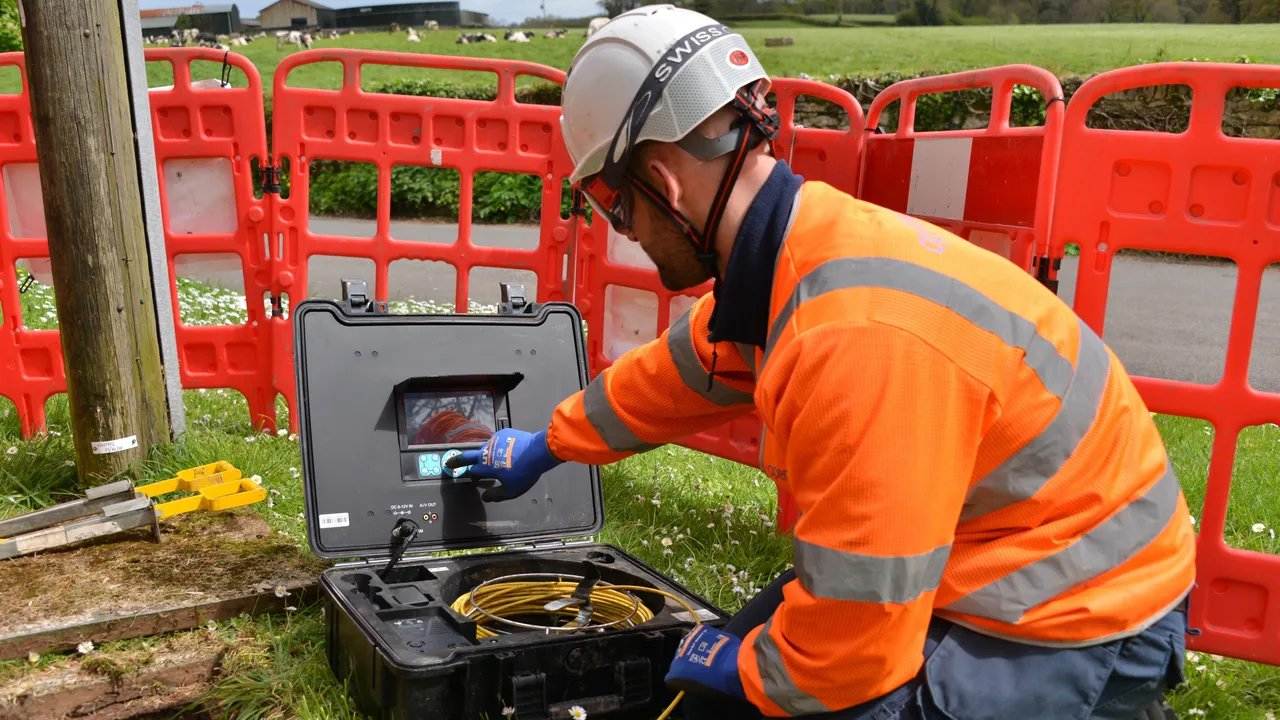
Datta noted that there is currently no scaled wholesale player in the market. Many participants trying to attract wholesale business and bring other ISPs onto their networks are struggling. Lacking options outside specific areas, major ISPs like Sky and TalkTalk continue to rely on Openreach. With so many unused lines crisscrossing the UK, the last thing anyone wants is to dig up the ground to lay more fibre. The high cost of civil engineering explains the rising debt and why BT had to invest around £15 billion ($20.1 billion) to build a full-fibre network.
Datta said that with over 19 million premises already deployed, overbuilding in these established coverage areas would be a waste of capital. Investors have also lost interest in more fibre. Datta's answer is consolidation. Nexfibre's £2 billion ($2.7 billion) bid for another fibre builder, Netomnia, would be the most significant deal in the UK to date. The idea is to create a stronger wholesale player, with a total coverage of around 5.8 million premises based on Netomnia's build plan. Datta promised that by the end of next year, as homes within the cable coverage area of Nexfibre's anchor tenant VMO2 are upgraded to fibre, 8 million premises will be covered.
However, the deal has faced strong opposition from CityFibre. CityFibre CEO Simon Holden said in March that if the deal proceeds, it would re-establish an "effective BT and VMO2 duopoly," citing a perceived "80%" overlap between Nexfibre and VMO2 coverage areas. According to sources, Holden also wanted to acquire Netomnia, but his investors were not prepared to outbid Nexfibre. According to a new report from Assembly Research, Holden's objections do not hold up to scrutiny.
The key finding of the Assembly Research report states that Nexfibre's acquisition of Netomnia offers the most meaningful opportunity to date for achieving sustainable investment, competition, and consumer benefits in the UK fibre market. Analysts also warned that delays caused by a lengthy review by the Competition and Markets Authority (CMA) could have a chilling effect on investment and consolidation across the industry. Assembly dismissed the concerns, arguing that opponents mistakenly compared Netomnia's fibre coverage with VMO2's cable coverage. This cable infrastructure has no wholesale demand, and in the XGS PON fibre technology deployed by Netomnia and VMO2, only 540,000 premises overlap, just 17% of the total. According to Assembly, Openreach's constraints will limit the merged entity's ability to harm competition.
Without the deal, the UK faces a group of small, highly indebted players with low take-up rates, with many companies at risk of collapse. In such a scenario, customers could suddenly find themselves without broadband service, said James Robinson, Senior Analyst at Assembly Research. The briefing came one day after Openreach announced a series of "attractive" new pricing schemes. James Lowther, Managing Director of Commercial at Openreach, said the broadband market has fundamentally changed, with competition fiercer than ever. Among other things, it offers rebates to ISP customers who win new fibre connections in areas where Openreach competes with VMO2.
Datta's team is still analyzing the numbers, but he believes the pricing scheme Openreach launched last year was already very aggressive. All of this could be a potential nightmare for Ofcom, which must balance the concerns of Openreach's competitors with BT's demands for greater pricing freedom. Under CEO Allison Kirkby, BT has performed well, with its share price rising 82% since she took office in February 2024. A market consisting of two or three scaled wholesale platforms would naturally require less regulatory oversight, but this would require a significant drop in market share, far exceeding the 800,000 lines BT expects to lose this year. Preventing this is BT's top priority.
This article is compiled by Wedoany. All AI citations must indicate the source as "Wedoany". If there is any infringement or other issues, please notify us promptly, and we will modify or delete it accordingly. Email: news@wedoany.com