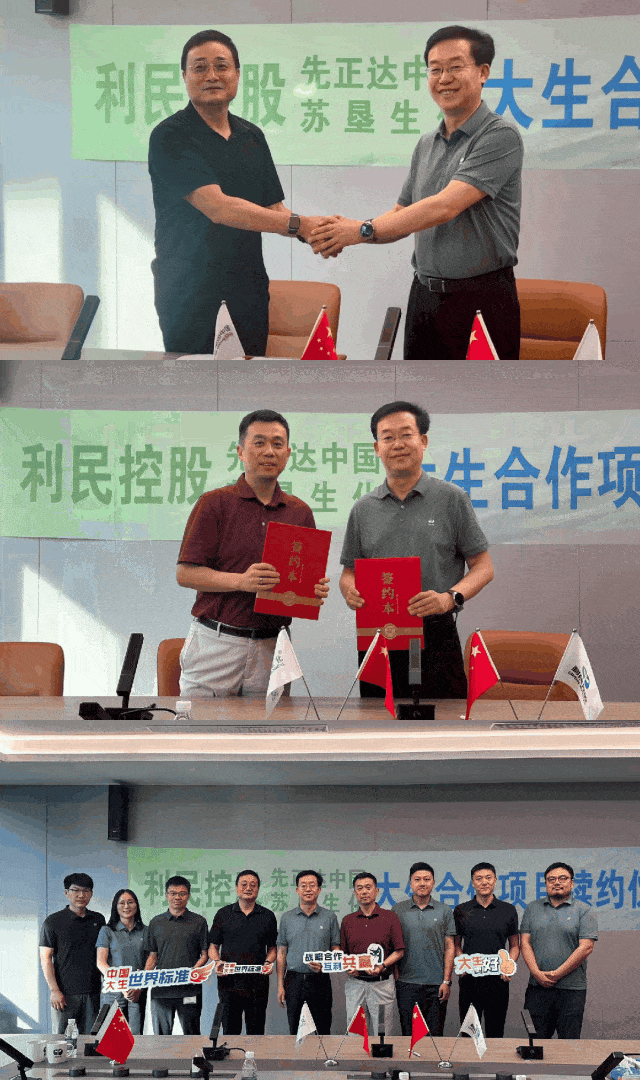
en.Wedoany.com Reported - 01.AI and Charoen Pokphand Group (CP Group) announced a strategic partnership to establish a joint venture, "Wanfeng Intelligence," which will deeply integrate AI large model technology with layer chicken farming, exploring the path for industrial AI to enter the physical world.
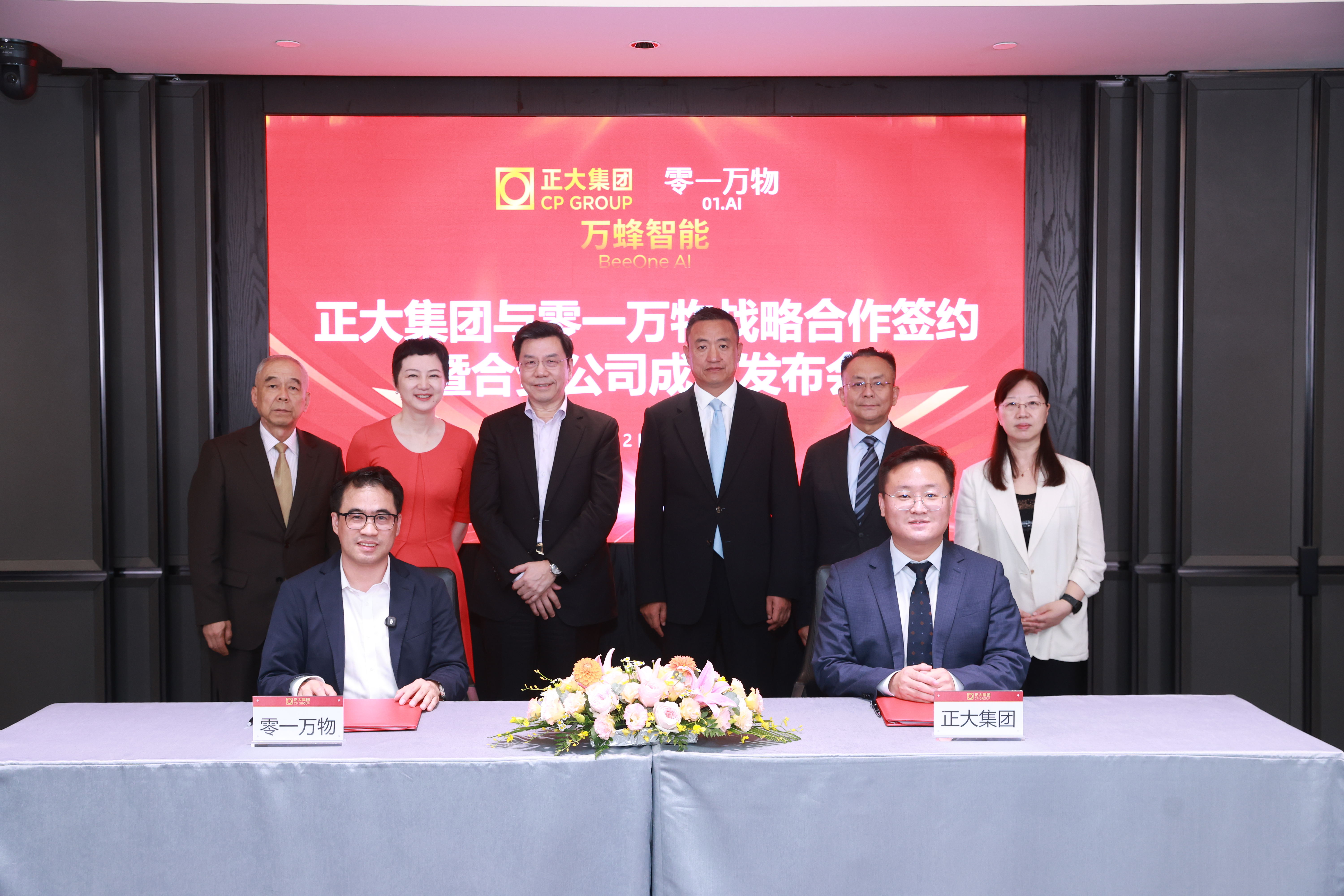
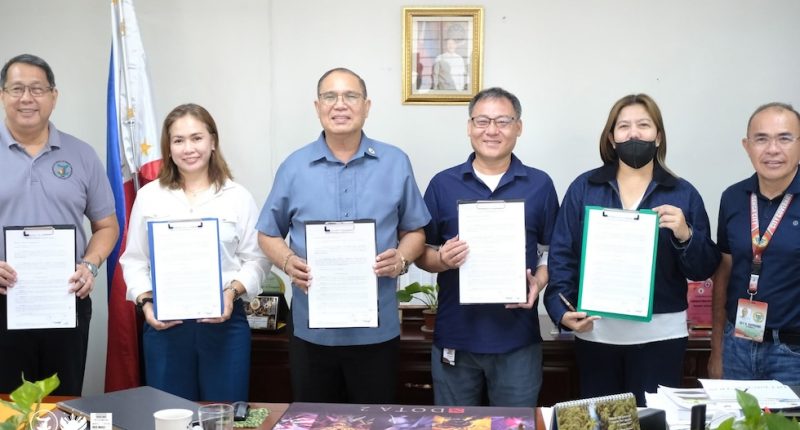
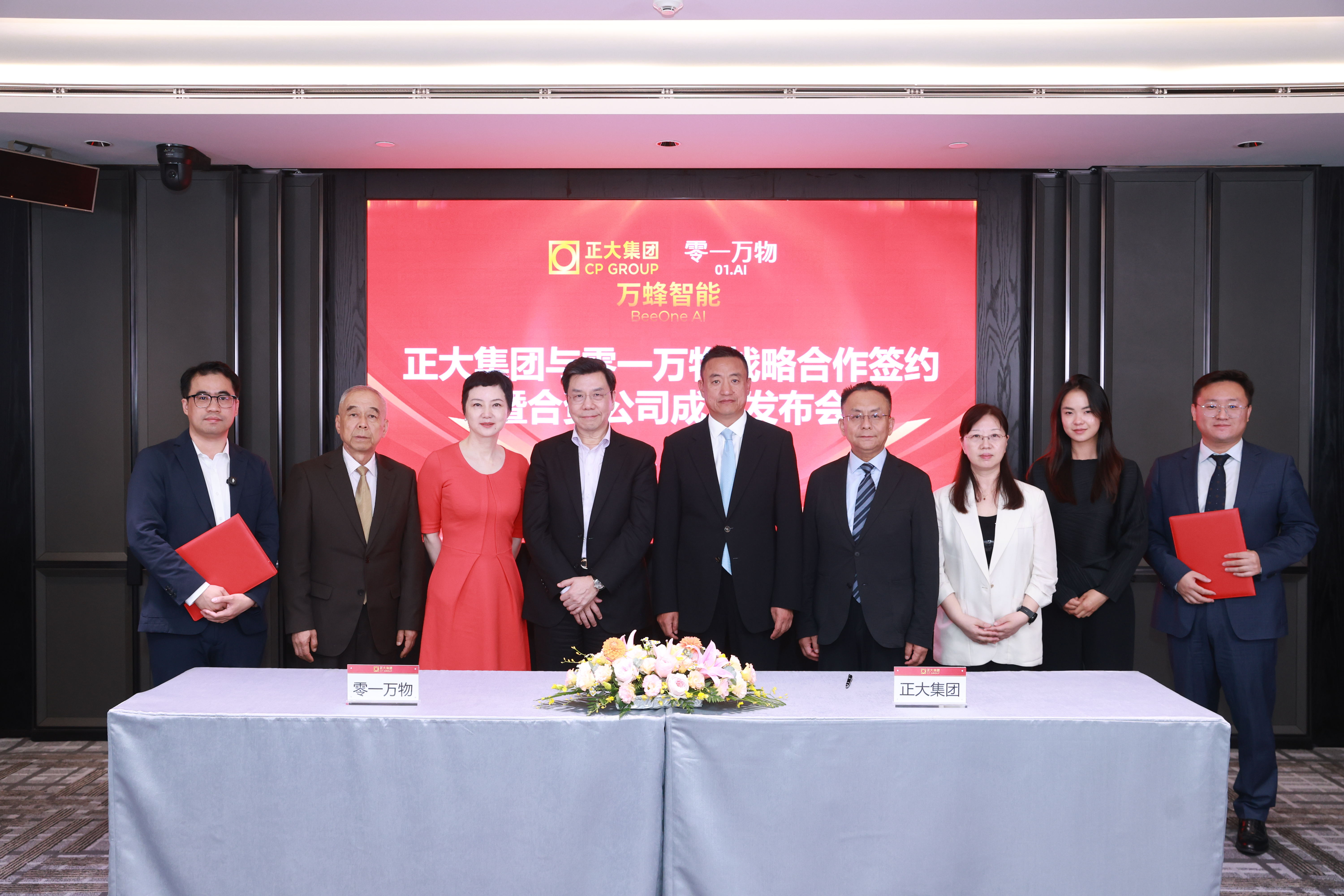
On June 2, 01.AI and CP Group officially signed a strategic cooperation agreement. The joint venture, "Wanfeng Intelligence," will use the Chinese market as a pilot to advance agricultural intelligence, focusing on the layer chicken farming sector. This collaboration is not a traditional AI procurement or technology pilot but a systematic exploration of agricultural intelligence by both parties. In the future, successful experiences are expected to be extended to CP Group's other markets in Southeast Asia.
Dr. Ning Ning, Vice President of International Business and AI Consulting at 01.AI, stated at the press conference that enterprise-level agents driven by large models are transitioning from "assisted decision-making" to "autonomous closed loops," making agriculture a key battleground for industrial AI to enter the physical world. For 01.AI, this means that enterprise AI, industrial large models, and enterprise-level multi-agent capabilities are entering highly complex agricultural production sites. For CP Group, it represents the integration of a century-old agricultural enterprise's experience and organizational capabilities with the intelligent hub of the AI 2.0 era.
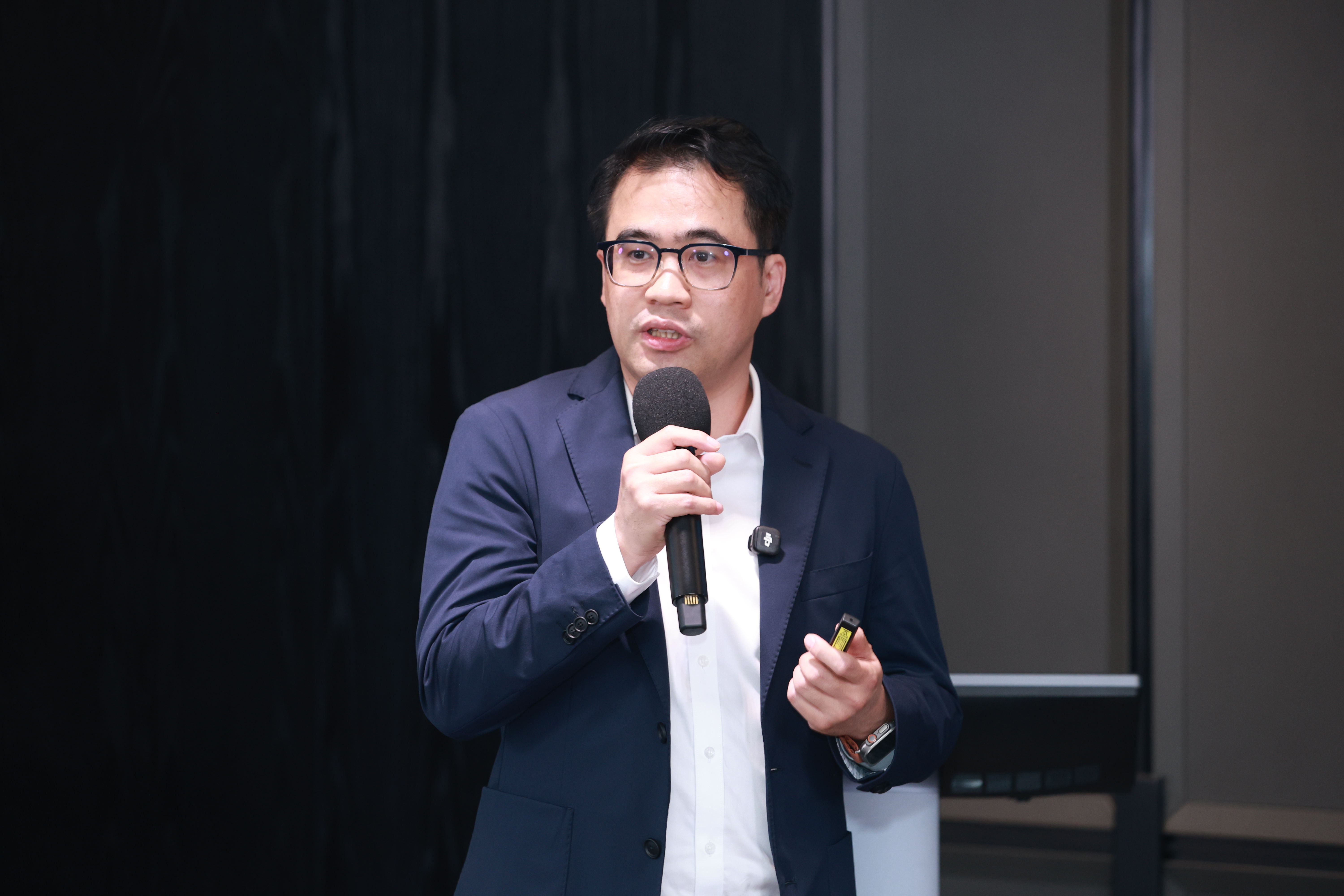
During field research, the 01.AI team discovered numerous application scenarios in layer chicken farming that warrant deep AI intervention. Chicken farms are data-rich environments. CP Egg produces massive amounts of settlement data, flock health data, and operational data daily, characterized by large scale, completeness, and rapid iteration. Simultaneously, chicken farming is a knowledge-intensive industry, with vast experience concentrated in the minds of senior farm managers and veteran workers, distributed unevenly. An excellent farm manager can manage one chicken house well but struggles to replicate the same management standard across one hundred houses. The core cost-effectiveness indicator, the "feed conversion ratio" (the ratio of feed consumption to egg output), varies significantly across different farm areas. Dr. Ning Ning pointed out that the greatest value of AI 2.0 lies in "scalable customization," enabling one farm manager to effectively manage 100 farms through AI.
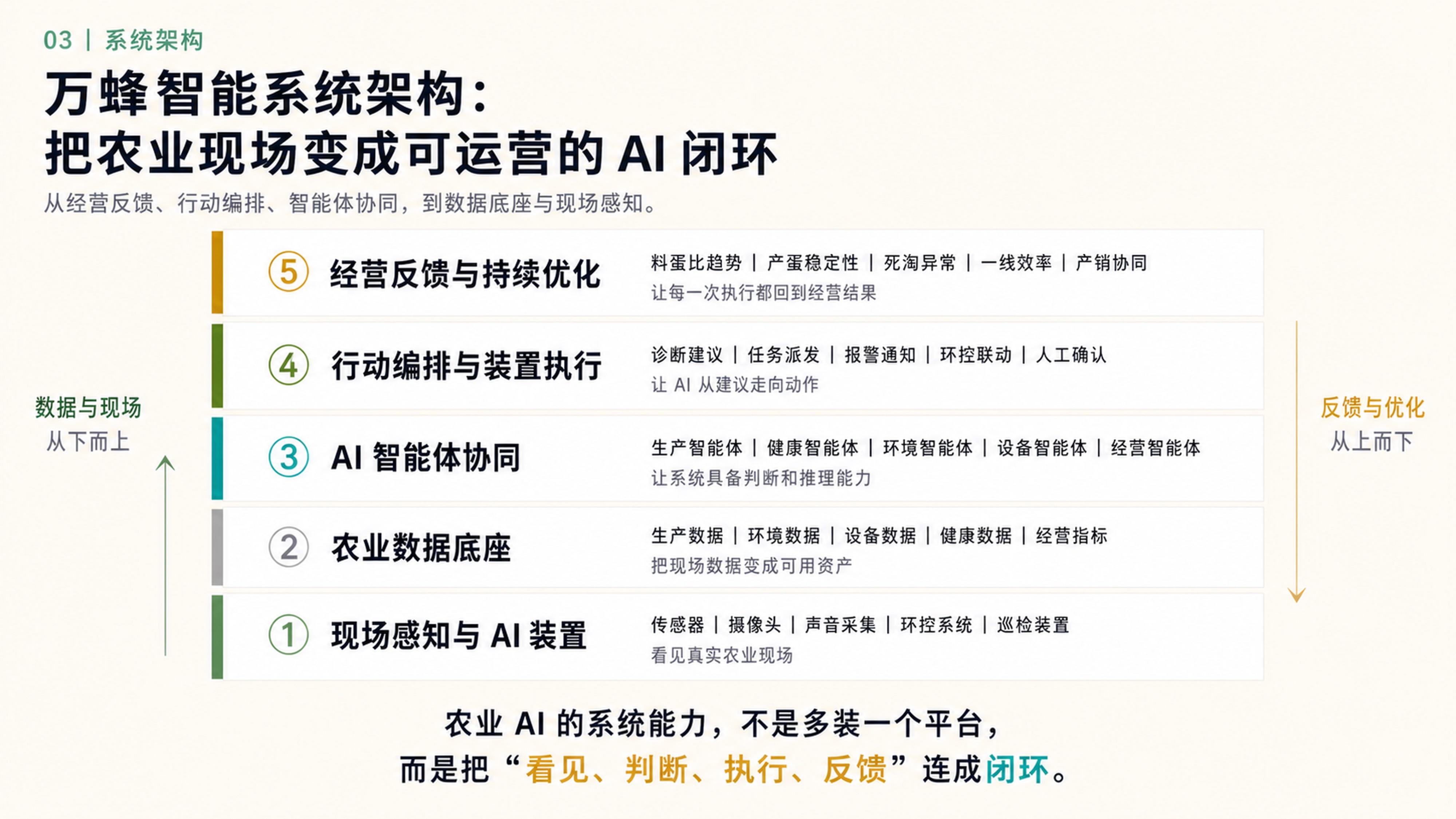
To achieve the unity of AI knowledge and action, 01.AI proposed a five-layer integrated smart agriculture system architecture. The first layer is on-site perception and AI devices, deploying sensors, cameras, and environmental control systems in chicken houses. The second layer is the data foundation, connecting all data sources. The third layer is AI agent collaboration, using large models to understand data and make inferences. The fourth layer is physical device execution, automatically driving actions such as inspection, positioning, and isolation. The fifth layer is self-learning and iteration, where the system continuously optimizes itself during operation. Drawing on the autonomous driving classification system, Wanfeng Intelligence proposed a maturity framework for agricultural AI: L3 achieves closed-loop operation within limited scenarios, serving as the current entry point; L4 expands to multiple chicken houses and bases; L5 covers the intelligent system of the entire industrial chain, from feed supply to retail distribution.
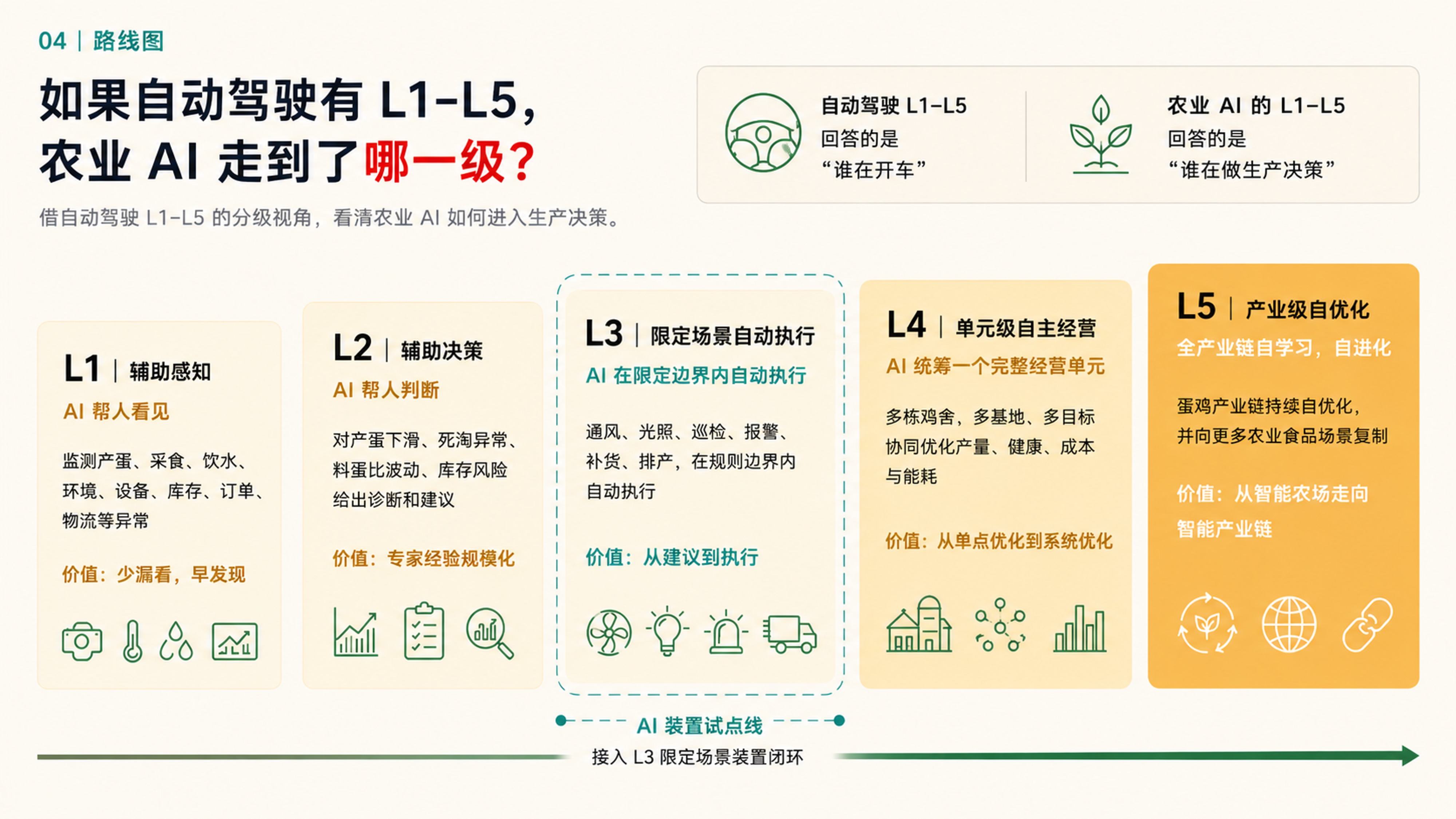
All solution designs revolve around improving core operational indicators. Specific applications include a farming safety agent. In the traditional model, inspecting a chicken house requires employees to spend three hours daily checking each chicken individually. In contrast, the AI safety inspection agent uses mechanical devices for precise positioning and rapid analysis, identifying sick and low-yield chickens in a shorter time, reducing culling rates and cross-infection risks. Another application is the AI farm manager, which embeds the experience of senior farm managers into the agent to enhance farm management levels. Additionally, a production-sales agent collaboration adjusts supply-demand balance based on market changes, reducing inventory and waste. Dr. Ning Ning emphasized that when designing solutions, baseline indicators should first be defined, then AI should be introduced to form a closed loop, evaluating the actual improvement of indicators, which must ultimately be reflected in the enterprise's financial statements.
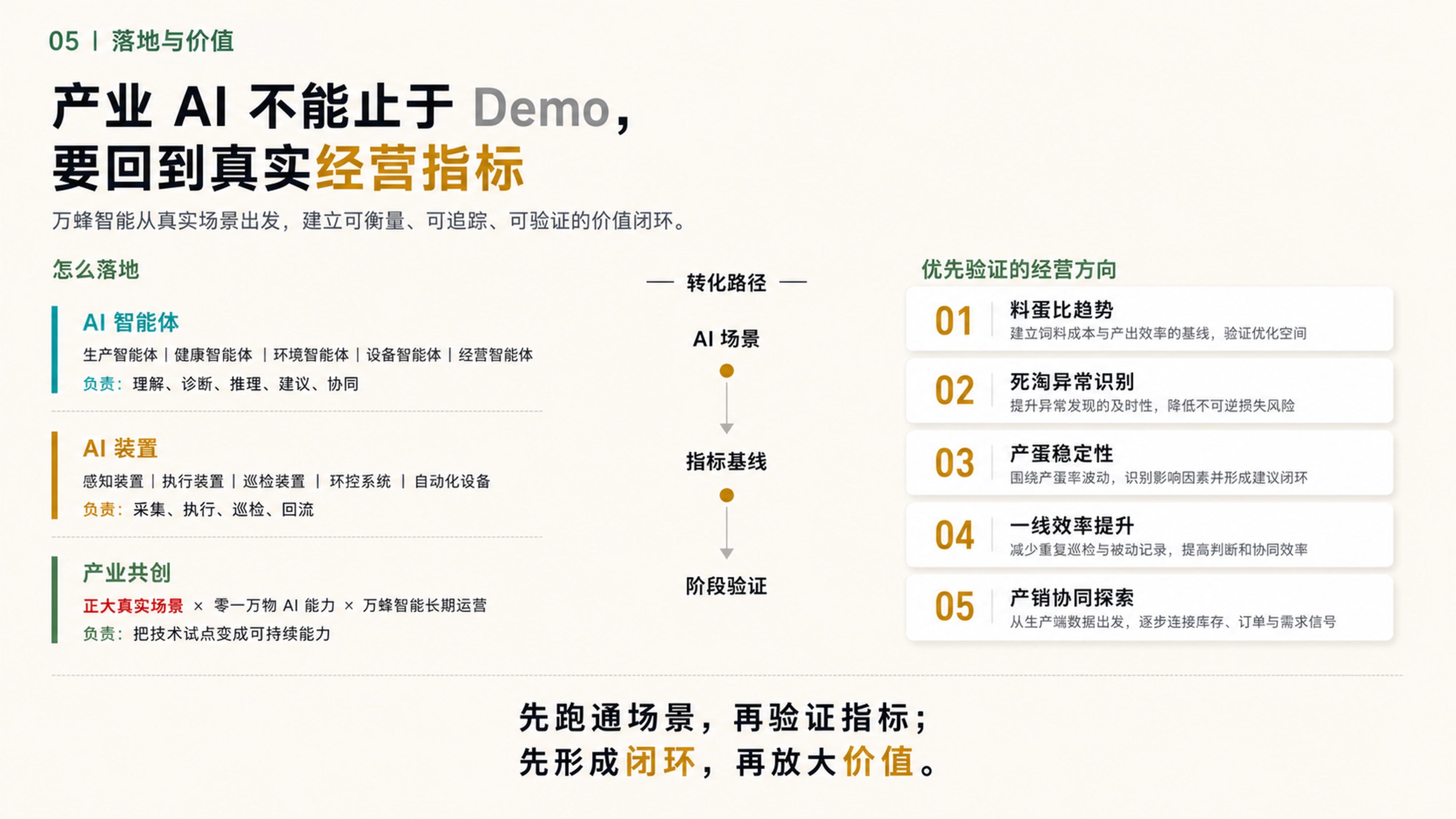
Dr. Ning Ning pointed out that after AI enters industrial sites, the blurring of responsibility boundaries between humans and AI is one of the challenges in implementation. Additionally, the over-500-day lifecycle of layer chickens means a longer verification cycle. The integration of diverse heterogeneous data and the generalization capability of algorithms are also not short-term solutions. To address these challenges, both parties solidified their co-creation relationship through the joint venture model, replacing the traditional buyer-supplier procurement model. Dr. Ning Ning stated that the completion of system deployment marks the beginning of co-creation. AI is a continuously learning system, and traditional delivery models cannot sustain this evolutionary relationship. The joint venture model achieves profit sharing and risk sharing while resolving the issue of blurred responsibility boundaries.
Regarding whether this model will be replicated in the future, Dr. Ning Ning proposed three criteria: top leaders of both parties must reach a high degree of consensus and vision alignment; the scenario must have sufficient depth and value points; and the processes and data must be complex enough to require deep integration rather than simple application delivery. Yang Xiaoping, Senior Vice Chairman of CP Group and CEO of its China region, expressed hope to use the Chinese market as a pilot to first establish a verifiable and replicable smart agriculture model, expanding from layer chicken AI to broiler chickens, pigs, aquaculture, and other categories, gradually promoting it to the Southeast Asian market. Dr. Kai-Fu Lee, CEO of 01.AI, believes that the implementation of Wanfeng Intelligence represents a new growth curve for the global real economy. China's industrial foundation, hardware strength, and industrial AI integration will drive the development of the global intelligent economy.
This article is compiled by Wedoany. All AI citations must indicate the source as "Wedoany". If there is any infringement or other issues, please notify us promptly, and we will modify or delete it accordingly. Email: news@wedoany.com