China's AIDC Construction Drives Demand for Fiber Optic and Solid-State Transformer Infrastructure
en.Wedoany.com Reported - Recently, the construction boom of AI computing centers continues to ripple through the infrastructure supply chain, with the optical communication and power supply/distribution sectors heating up simultaneously. The production cycle for fiber optic cable orders has been extended to 2027, and solid-state transformers (SSTs) are accelerating from technical pilots to computing power supply scenarios. AIDC is pushing "optical connectivity" and "electrical support" to a more central position.
The tight supply of fiber optics primarily stems from the rapid increase in connection demands both inside and outside AI data centers. Large-scale GPU clusters, campus-level data centers, cross-facility interconnections, and cloud-network collaboration all require higher density, lower loss, and more stable optical communication infrastructure. Since the fourth quarter of 2025, some companies in the Suzhou Optical Communication Industrial Park have maintained full-capacity production, with related orders scheduled through 2027; overall output in the first quarter increased by 35% year-over-year, and overseas shipments rose by 55%, primarily targeting the North American and Southeast Asian markets. For optical communication companies, this wave of demand is not simply a recovery in traditional broadband construction, but rather higher requirements imposed by AI computing clusters for high-speed interconnection, data center cabling, long-distance transmission, and internal data center connections. As the density of servers, switches, and optical modules in individual AI computing parks continues to increase, fiber optics have evolved from a relatively basic cabling material into a critical supporting resource for the stable expansion of AI data centers.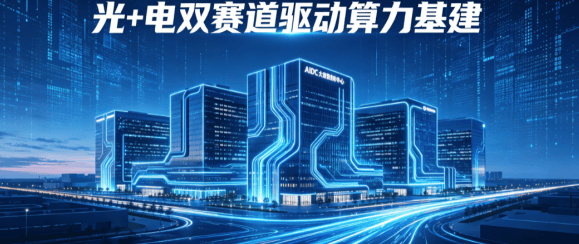
The key bottleneck in the supply-demand contradiction lies upstream in optical preforms. Optical fiber preforms determine the basic quality and production capacity elasticity of fiber optic products. Building new production lines and achieving stable operation typically requires a long period, making it difficult to rapidly release substantial new supply in the short term. Having experienced previous industry cycles of overcapacity, optical communication companies are more cautious about expanding production. This makes the optical preform segment more likely to form a periodic constraint when AI computing power demand rises. For the supply chain, changes in fiber optic prices and order cycles reflect not just a shortage of a single material, but the fact that AIDC construction is beginning to reshape the investment rhythm of communication infrastructure.
Concurrent with the boom in the "optical" sector, the power supply systems for AIDC are also undergoing changes. As the power per cabinet for AI servers continues to increase, traditional power distribution architectures face pressure in terms of footprint, losses, conversion efficiency, and expansion speed. By utilizing power semiconductors, high-frequency conversion, and power electronics control, solid-state transformers transform some functions of traditional line-frequency transformers into a more integrated, faster-responding power conversion system. They offer new solutions for medium-voltage access, DC output, power regulation, and equipment miniaturization. The industry calls them "energy routers" in the power field because they not only perform voltage conversion but also assume more active control functions in power quality, bidirectional regulation, DC power supply, and microgrid integration. As AIDC evolves from "server stacking" to an integrated design of "power supply, cooling, cabling, networking, and energy storage," SSTs are becoming a key technology option for upgrading power distribution in high-density computing centers.
Listed companies and industrial capital are already accelerating their deployment around this direction. A subsidiary of Daqo Energy recently announced plans to build a smart energy system manufacturing base in Kunshan, with a total investment of 6 billion yuan, covering products including energy storage systems, solid-state transformers, solid-state circuit breakers, and solid-state batteries. Several A-share listed companies are also advancing product launches or technical reserves related to SST core components, complete systems, and data center power supply scenarios. The commercial significance of SST lies in its potential to reduce multi-stage conversion in traditional power distribution chains, lower data center floor space and energy losses, and enhance dynamic adaptability to high-power AI loads. For megawatt-level or even higher-density data center clusters, the power supply system is no longer just a backend engineering task; it directly impacts the speed of computing power deployment, cabinet deployment density, and long-term operational costs.
However, SST still faces engineering constraints before large-scale adoption. High-voltage silicon carbide devices, high-frequency insulation design, thermal management, reliability verification, mass manufacturing costs, and customer-side certification will all affect its industrialization pace. Power supply equipment for data centers falls under highly reliable infrastructure, with customers demanding extremely high system stability, redundancy, fault protection, and maintenance convenience. New technologies require a lengthy testing and demonstration period to transition from prototypes to batch projects. Therefore, SST is more likely to be initially validated in high-power AI data centers, source-grid-load-storage integrated parks, DC power distribution pilots, and specific new construction projects, before gradually expanding to broader intelligent computing infrastructure scenarios.
The AIDC supply chain is expanding from a singular focus on GPUs, servers, and optical modules to the more fundamental "optical + electrical" resource base. Fiber optics determine whether data can flow efficiently, while SSTs determine whether high-density computing power can obtain more compact, efficient, and controllable electrical support. The former corresponds to data center network interconnection and external transmission capabilities, while the latter corresponds to the upgrade of the computing center's power supply architecture. As AI model training, inference, and enterprise applications continue to expand, competition in computing power infrastructure will increasingly depend on communication connectivity, power conversion, energy management, and engineering delivery capabilities. The simultaneous heating up of fiber optics and SSTs indicates that AIDC construction has entered a more refined phase of infrastructure upgrade, and supply chain opportunities are also spreading from chips and complete machines to upstream materials, core equipment, and system integration segments.
This article is compiled by Wedoany. All AI citations must indicate the source as "Wedoany". If there is any infringement or other issues, please notify us promptly, and we will modify or delete it accordingly. Email: news@wedoany.com
Related Products
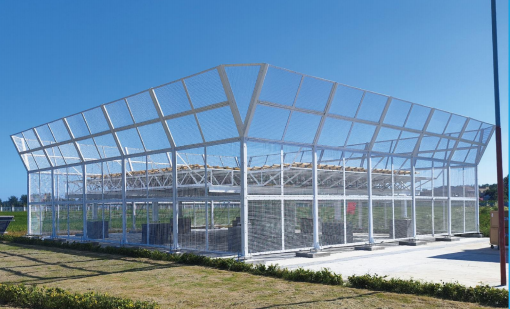

TWP16 P-Band Tropospheric Wind Profile Radar
China Huayun Meteorological Technology Group Co., Ltd.
Comprehensive Mining Automation Control System
Beijing Tianma Intelligent Control Technology Co., Ltd.
Industrial and Commercial Point-Type Gas Detector
Jinan Benan Technology Development Co., Ltd.
Automatic Aiming Laser Remote Obstacle Removal Robot
Pinggao Group Weihai High-Voltage Apparatus Co., Ltd.

GYTA Type Non-Self-Supporting Aerial/Duct Optical Cable
TONGDING INTERCONNECTION INFORMATION CO., LTD.