CAICT: AgenticCloud Drives Cloud Services Toward Agent-Based Delivery Transformation
en.Wedoany.com Reported - The China Academy of Information and Communications Technology (CAICT) points out that cloud computing is transitioning from "AI integration" to "AI autonomy," with agent technology driving cloud services from providing "resources" to delivering "capabilities," giving rise to the Agentic Cloud technical paradigm.
Over the past 20 years, cloud computing has gone through four stages: virtualization, platformization, cloud-native, and AI integration, delivering infrastructure resources based on the principle of "resource pooling and on-demand supply." Since 2026, large models and agent technology have entered the phase of large-scale production deployment, with major global cloud vendors reaching a consensus: the primary consumers of cloud are shifting from humans to agents. From April to May 2026, Google proposed the Agentic Cloud strategy at the Next '26 conference, launching Agent Engine and Agentic Data Cloud; Alibaba Cloud announced the completion of a full-stack agent-based upgrade; Amazon launched AgentCore for model-agnostic agent orchestration; and Microsoft's Foundry Agent Service became commercially available. This high degree of synchronization across vendors and regions indicates that Agentic Cloud has moved from conceptual discussion to industrial practice.
Agentic Cloud is a new generation of cloud computing service system based on cloud computing resources, with large model capabilities at its core and agent services as its fundamental units, possessing the ability to understand user intent and autonomously complete complex tasks. Its technical architecture has shifted from "containerization" to an AI cloud-native runtime system. A typical agent task involves a multi-round interactive closed loop of "perception-reasoning-action-feedback," requiring dozens of chained model inference calls and multiple rounds of external tool execution, with task lifecycles extending from milliseconds to minutes, hours, or even days. This necessitates a full-stack technical rewrite from chips to applications: at the chip level, Google's TPU v6e is specifically designed for inference scenarios, while Amazon's Trainium2 optimizes energy efficiency for large-scale inference clusters; at the cloud infrastructure level, major cloud vendors have introduced managed agent execution environments such as Agent Engine and AgentCore, supporting auto-scaling, state persistence, and model-agnostic orchestration; at the cloud platform level, technologies such as quantization compression, speculative decoding, KV cache sharing, and inference pipelines compress single inference latency to milliseconds.
In terms of service models, Agentic Cloud drives the transformation of cloud services from "designed for humans" to "designed for agents." Interaction logic shifts from technology-oriented API calls to semantic-oriented capability encapsulation, allowing users to automatically complete parameter matching, interface calls, and process orchestration through natural language. At the protocol level, MCP initiated by Anthropic and A2A jointly promoted by Google and the Linux Foundation have become de facto standards, enabling seamless cross-platform agent collaboration. The human role evolves from "instruction issuer" to "goal setter and result supervisor." In terms of ecosystem logic, Agentic Cloud drives cloud computing from "economies of scale" to "value effects." Value creation shifts from linear resource transmission to exponential intelligent collaborative value addition, ecosystem participants move from one-way resource supply-demand to two-way value co-creation, and industry competition transitions from cost-driven scale competition to intelligence-driven ecosystem competition. The measure of cloud service value shifts from resource density to value density.
Full-stack AI cloud capabilities cover the entire chain from chips, cloud infrastructure, and large models to applications. Core evaluation dimensions of underlying intelligent computing cloud resources include: cloud adaptation capabilities of heterogeneous chip matrices; integrated computing, storage, and networking coordination capabilities and comprehensive operational efficiency of intelligent computing clusters; and highly elastic inference scheduling capabilities. The platform layer needs to be upgraded to an agent-native service platform, providing a managed agent execution environment that supports autonomous task execution, cloud service agent-based transformation, and cross-platform native memory support (such as persistent memory storage provided by Google's Memory Bank). The application layer needs to provide enterprise-level comprehensive security governance capabilities (such as Microsoft's built-in MCP authentication full spectrum and Google's model protection features), agent operations and model monitoring capabilities, and open ecosystem adaptation capabilities (such as Amazon AgentCore's model-agnostic orchestration).
In terms of standardization, CAICT has been conducting artificial intelligence cloud technology research since 2019. In 2020, it successfully led the establishment of the AI Cloud Platform Technical Specification (AICP) standard system at ITU SG16, forming multiple industry standards and international standard proposals covering basic terminology, reference architecture, functional requirements, and performance evaluation. To date, more than seven standards in the AICP series have been released or are in progress, establishing a dual-track framework of "Chinese standards + international standards." Currently, Agentic Cloud is in its early development stage, with vendors adopting different approaches: Google emphasizes the agent-based transformation of data platforms, Amazon focuses on model-agnostic open orchestration, Microsoft has established a relatively complete system in security governance, and Chinese vendors are leading in full-stack vertical integration. CAICT stated that it will continue to build a full-stack standardized measurement system and evaluation framework based on the "chip, cloud, model, application" four-in-one coordination mechanism, driving the transformation of cloud computing from computing power enablement to intelligence enablement.
This article is compiled by Wedoany. All AI citations must indicate the source as "Wedoany". If there is any infringement or other issues, please notify us promptly, and we will modify or delete it accordingly. Email: news@wedoany.com
Related Products
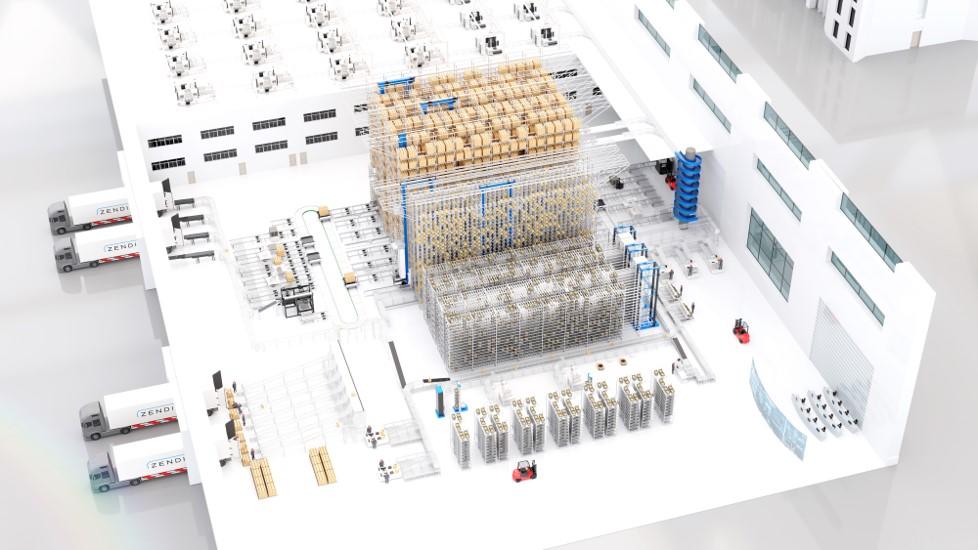

One-Stop Steward Service for the Entire Logistics System Integration Chain
Zhongding Intelligent (Wuxi) Technology Co., Ltd.
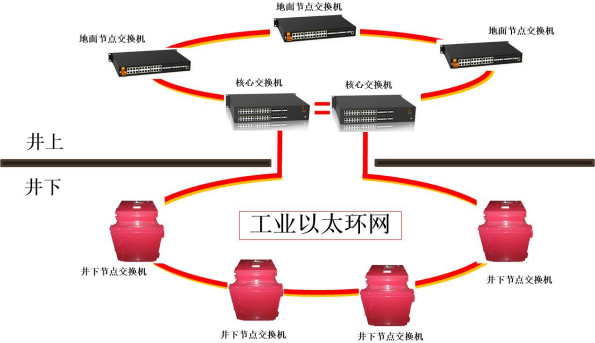
Mine Explosion-proof and Intrinsically Safe Industrial Ethernet Ring Network (10 Gigabit/Gigabit)
Chongqing Mas Sci&Tech Co., Ltd.




Automatic Aiming Laser Remote Obstacle Removal Robot
Pinggao Group Weihai High-Voltage Apparatus Co., Ltd.

20 Inch 1600*900 Full HD 60Hz TFT LED Monitor with VGA and DP Interfaces for Desktop Computers-Business Use
Guangzhou Zanying Optoelectronics Technology Co., Ltd.

Industrial and Commercial Point-Type Gas Detector
Jinan Benan Technology Development Co., Ltd.