China Society of Automotive Engineers: L3 is the Essential Path for Commercialization of Autonomous Driving in Passenger Vehicles
en.Wedoany.com Reported - L3-level autonomous driving in the passenger vehicle sector is not an option, but a necessity. At a recent press conference for the 33rd China Society of Automotive Engineers Annual Conference & Exhibition and the AITX Automotive Innovation Technology Exhibition, Zheng Yali, Deputy Secretary-General of the China Society of Automotive Engineers and Executive Dean of the National Automotive Strategy Research Institute, clearly stated that L3 lays three cornerstones for the mass production and deployment of L4: long-tail data from real-world road testing, practical samples of regulatory liability, and the psychological transition for users from "hands on the wheel" to "relinquishing driving control."

Zheng Yali pointed out that from January to April 2026, China's automobile sales reached 9.574 million units, with a narrowing decline. Among these, new energy vehicle sales totaled 4.304 million units, a year-on-year increase of 0.1%, with a market penetration rate of 45%. In terms of intelligence, the penetration rate of passenger vehicles equipped with L2-level combined driving assistance functions exceeded 70%, and those with navigation-based driving assistance functions surpassed 30%. Regarding internationalization, from January to April, vehicle exports reached 3.127 million units, a year-on-year increase of 61.5%.
She provided assessments on several current hot topics in the automotive industry. Regarding the HEV technology pathway, the Society believes that HEV is not a transitional technology but a key route with long-term value in the electrification transformation of conventional fuel passenger vehicles. High-capacity HEVs have become an important development direction, capable of improving vehicle power response and smoothness, enhancing energy recovery and scheduling capabilities, and providing electrical support for intelligent functions.
In terms of commercial vehicle electrification, domestic sales of new energy commercial vehicles in the first four months of 2026 reached 279,000 units, a year-on-year increase of 27.8%, with a penetration rate of 25.4%. The Society believes that battery electric commercial vehicles mainly cover short-distance scenarios with an average daily range of less than 500 kilometers. For medium-to-long-distance and heavy-load scenarios, fuel cell technology offers comprehensive advantages in refueling efficiency, driving range, and environmental adaptability, making it an important direction for the low-carbon transformation of commercial vehicles. It is necessary to rely on hydrogen energy comprehensive application pilot projects, focusing on typical scenarios such as trunk logistics, long-distance express delivery, and cold chain transportation, to build hydrogen highways and hydrogen corridors.
In the field of autonomous driving, Zheng Yali emphasized that in closed or specific scenarios such as Robotaxi, unmanned delivery, and mining ports, L4 commercial operations can be achieved by skipping L3. However, for L4 to achieve large-scale mass production and application in the passenger vehicle sector, L3 is an essential path. L3 realizes the transfer of driving control under limited conditions and represents a turning point in technological innovation, safety responsibility, and user perception. For a considerable period in the future, the industry will exhibit a development pattern where L3 mass production and application coexist and complement each other progressively with L4 commercial deployment in limited scenarios.
Regarding intelligent cockpits, AI Agents are accelerating their entry into the mass production application stage. The new generation of in-vehicle AI Agents continues to enhance capabilities in multimodal fusion interaction, long-context understanding, autonomous decision-making and execution, and cross-device collaboration. The interaction mode is evolving from "command-response" to a continuous, personalized service model that integrates user needs and scenario perception. Zheng Yali pointed out that the large-scale application of AI Agents is still in its early stages, requiring further verification in areas such as model reliability, end-cloud collaboration mechanisms, data security and privacy protection, and human-machine interaction boundaries.
Regarding in-vehicle storage chips, structural tightness emerged in the first half of 2026, driven by cross-domain capacity competition resulting from the explosion of the AI computing power industry and the rapid increase in the penetration rate of intelligent vehicles. This situation has created a strategic window for domestic storage chips. Domestic leaders such as Yangtze Memory Technologies Co., Ltd. (YMTC) and ChangXin Memory Technologies (CXMT) have achieved breakthroughs in key technologies and entered the supply chains of automotive companies. The automotive industry's response strategy should shift from short-term contingency to long-term capability system reconstruction, emphasizing deep collaboration with chip companies in demand definition, co-design, and supply chain mechanisms.
Regarding wire-controlled chassis, in the first half of 2026, wire-controlled braking (EMB) and wire-controlled steering (SBW) achieved mass production application in multiple vehicle models, marking the entry of this field into an accelerated industrialization phase. In the braking system, solutions based on EMB enable independent control of four wheels but face challenges in adapting to different 12V/48V low-voltage platforms and the cost of chassis domain controllers. In the steering system, a new national standard for wire-controlled steering officially took effect in July this year. The industry has reached a technical consensus on a dual 12V/48V redundant solution featuring physical isolation and heterogeneous design, which is now entering the implementation stage.
Looking to the future, the China Society of Automotive Engineers will systematically advance research on automotive technology innovation strategies, including conducting annual progress assessments, releasing special research reports on technology roadmaps, publishing the top ten technology trends for the automotive industry in 2027 and technology trends for the next 3 to 5 years, and issuing white papers on topics such as vehicle energy efficiency, powertrain intelligence, and battery safety. These outcomes will be released during the Society's annual conference in October this year. Zheng Yali stated that the Society has already produced results such as the "Technology Roadmap for Energy-Saving and New Energy Vehicles," "Automotive Technology Foresight," and "Automotive Technology Review," which will continue to support government industry management and corporate strategic decision-making.
This article is compiled by Wedoany. All AI citations must indicate the source as "Wedoany". If there is any infringement or other issues, please notify us promptly, and we will modify or delete it accordingly. Email: news@wedoany.com
Related Products
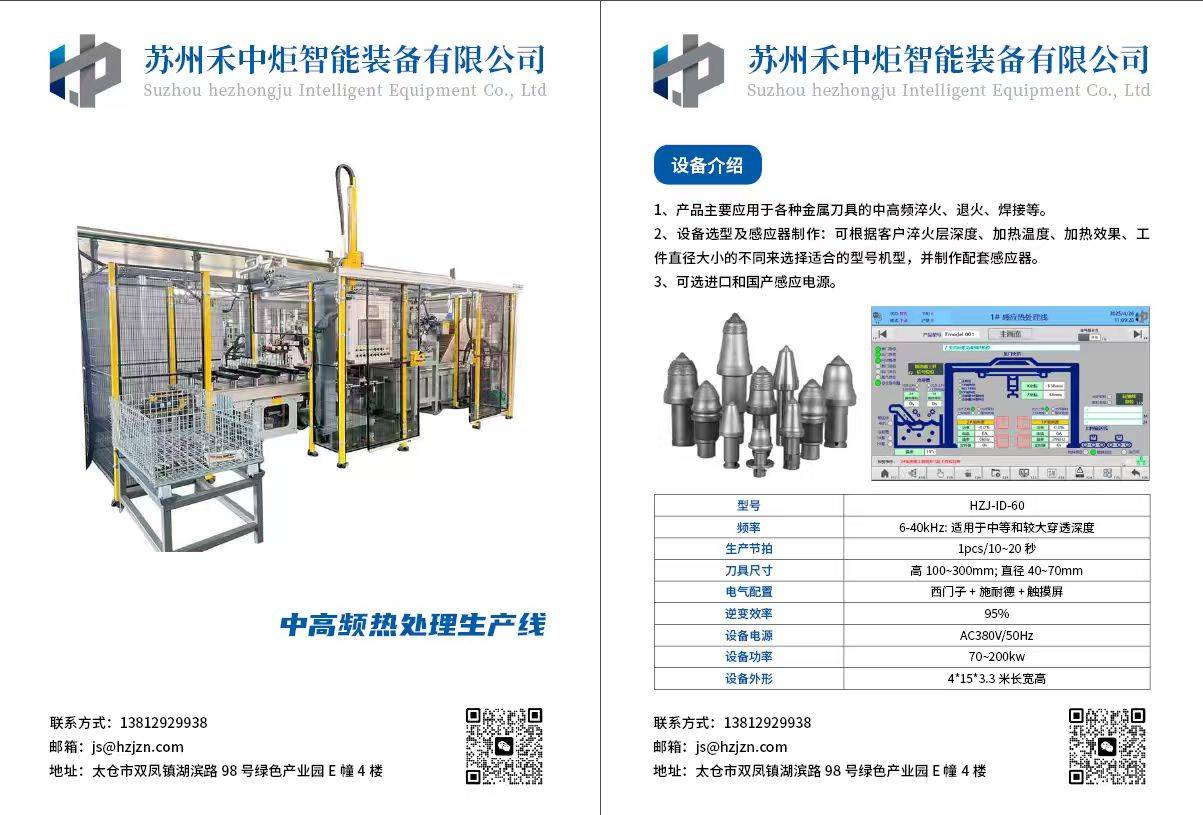

Excavator Bucket Teeth Heat Treatment Production Line
Suzhou Hezhongju Intelligent Equipment Co., Ltd.
Industrial and Commercial Point-Type Gas Detector
Jinan Benan Technology Development Co., Ltd.

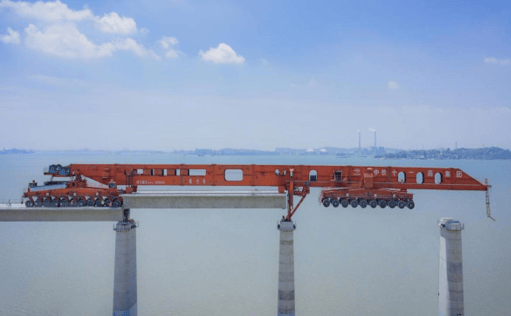
High-Speed Railway Lifting, Transporting, and Erecting Equipment: Integrated Transport and Erection Machine
Hanjiang Heavy Industry Co., Ltd. of China Railway 11th Bureau Group
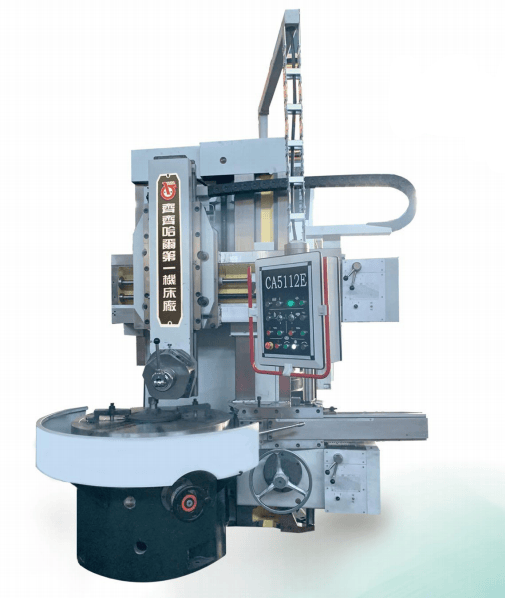
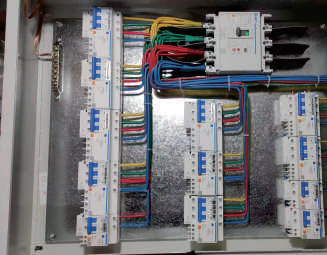
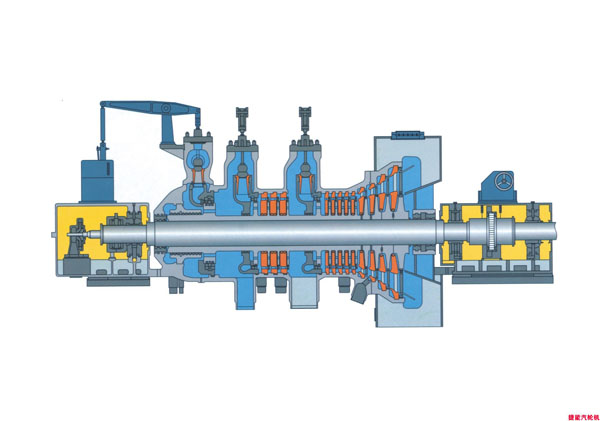
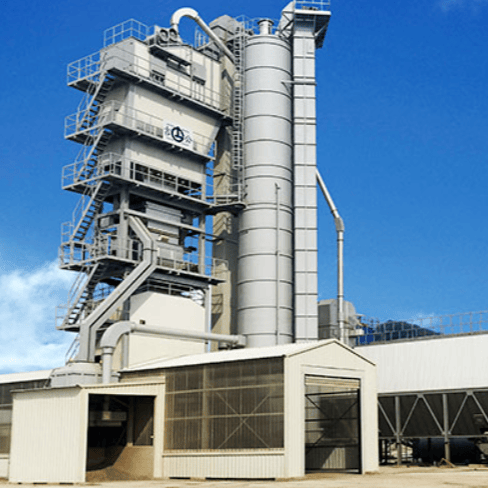
LBH4000 Batch Environmental Protection Asphalt Mixing Plant | Asphalt Batching Plant | Asphalt Mixing Plant
Jilin Province Road Construction Machinery Co., Ltd.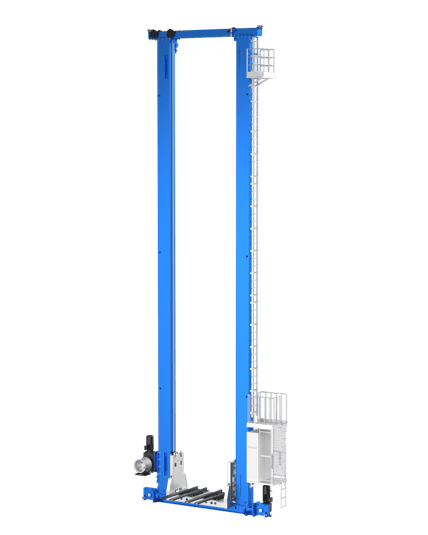
Pallet Solutions Product Line: HD3000 Double-Column Stacker Crane
Zhongding Intelligent (Wuxi) Technology Co., Ltd.