en.Wedoany.com Reported - Recently, the silicon-based gallium nitride (GaN) RF chip products for smart terminals, independently developed by the 55th Research Institute of China Electronics Technology Group Corporation (CETC 55), have surpassed 5 million units in delivery. These chips are used in the RF links of smart terminals, marking the entry of silicon-based GaN RF chips into large-scale commercial application on the terminal side. This also provides lower-cost, higher-performance RF power amplifier chip support for directions such as integrated space-air-ground information networks, 6G communications, commercial aerospace, the low-altitude economy, and emergency communications.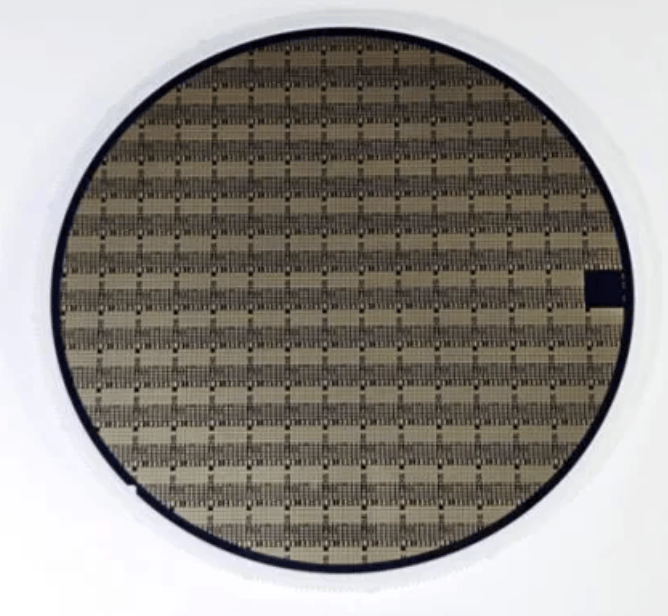
The key to this achievement lies not just in the "delivery volume exceeding 5 million units," but in the fact that the silicon-based GaN technology pathway is beginning to transition from high-end specialized scenarios to larger-scale smart terminal applications. RF power amplifier chips are often regarded as the "signal heart" of communication systems, determining the power, efficiency, linearity, and stability of the terminal's transmitted signal, directly impacting communication coverage distance, link quality, transmission rate, and device battery life. Traditional GaN devices offer high power density, high efficiency, and high-frequency characteristics, but their cost, process maturity, yield rate, and large-scale manufacturing capabilities have long constrained their application in larger terminal markets. Silicon-based GaN, by preparing a GaN material system on a silicon substrate, combines the high-performance advantages of GaN with the cost and manufacturing foundation of silicon-based processes, making it more suitable for supporting terminal RF chips in transitioning from small-batch applications to million-level and ten-million-level deliveries. CETC 55 and its subsidiary, Nanjing Guobo Electronics Co., Ltd., have conducted a full-chain research and development covering material epitaxial preparation, independent chip design, complete process verification, and product reliability testing. This has resulted in a series of products covering categories such as satellite payload communication subsystems, low-altitude platform communication terminals and data transmission modules, ground gateway stations, and smart terminal RF chips, laying the foundation for silicon-based GaN technology to move from single-point breakthroughs to engineering applications.
The integrated space-air-ground information network imposes more complex requirements on RF chips: terminals must maintain stable connections between terrestrial cellular networks, satellite communication links, low-altitude platforms, and emergency communication environments. The power amplifier chip must not only be highly efficient but also accommodate wide frequency bands, high linearity, and high reliability.
From an industrial application perspective, low-cost, high-performance PA chips are becoming key components for the upgrade of future communication terminals. 6G research and development, commercial aerospace, the low-altitude economy, unmanned systems, emergency communications, and broadband access in remote areas all require more terminals with cross-scenario communication capabilities. If RF chips are too costly, consume too much power, or lack sufficient reliability, it will be difficult to deploy integrated space-air-ground networks on a large scale in ordinary terminals, low-altitude platforms, portable devices, and industry-specific terminals. The large-scale commercial use of silicon-based GaN RF chips means that high power, high efficiency, ultra-wide bandwidth, and high reliability can potentially be integrated into a wider range of device systems at a more manageable cost. For terminal manufacturers, this helps improve communication link stability and multi-scenario adaptability; for operators and satellite internet companies, enhanced terminal-side RF capabilities can improve connection quality at coverage boundaries and in weak signal environments; for the low-altitude economy and emergency communication scenarios, high-performance PA chips are directly related to the reliable transmission capabilities of drones, low-altitude platforms, mobile command terminals, and on-site communication equipment.
The future value of this type of chip will depend on sustained mass production capabilities, the speed of adaptation by terminal customers, coverage across different frequency band products, and reliability verification results. The delivery of over 5 million units has already proven that silicon-based GaN RF chips have the foundation to enter the terminal mass market. However, moving from a single product breakthrough to an industrial ecosystem requires closer collaboration with module manufacturers, terminal OEMs, communication equipment companies, and system integrators. As the construction of integrated space-air-ground information networks accelerates, RF chips will evolve from basic components in the communication industry chain into a key underlying capability that determines future ubiquitous coverage and high-speed connectivity experiences.
This article is compiled by Wedoany. All AI citations must indicate the source as "Wedoany". If there is any infringement or other issues, please notify us promptly, and we will modify or delete it accordingly. Email: news@wedoany.com