en.Wedoany.com Reported - Deutsche Telekom recently announced that it will provide additional mobile network support for over 50 music festivals in Germany during the 2026 summer festival season. By deploying mobile communication containers, temporary base stations, intelligent network scheduling, and multi-beam antennas, the company aims to enhance mobile communication capacity in large crowd scenarios.
Deutsche Telekom is primarily deploying temporary mobile communication facilities for major festivals such as Rock am Ring, Hurricane Festival, Wacken Open Air, and Parookaville. The communication pressure at large outdoor events differs from that of daily urban networks. On-site users tend to upload videos, stream live content, send messages, use mobile payments, and access social platforms simultaneously within a short period, causing network load peaks that are often far higher than the usual demand at the venue. To address this sudden capacity pressure, Deutsche Telekom will add mobile antenna containers and temporary communication sites on top of existing coverage. Parookaville will be equipped with 15 temporary sites, Wacken Open Air with 10, and Hurricane, Southside Festival, Nature One, and Glücksgefühle Festival with 7 each. Rock am Ring and Rock im Park will also each activate 5 additional mobile communication sites in early June to ensure connection stability during the season's opening large-scale events.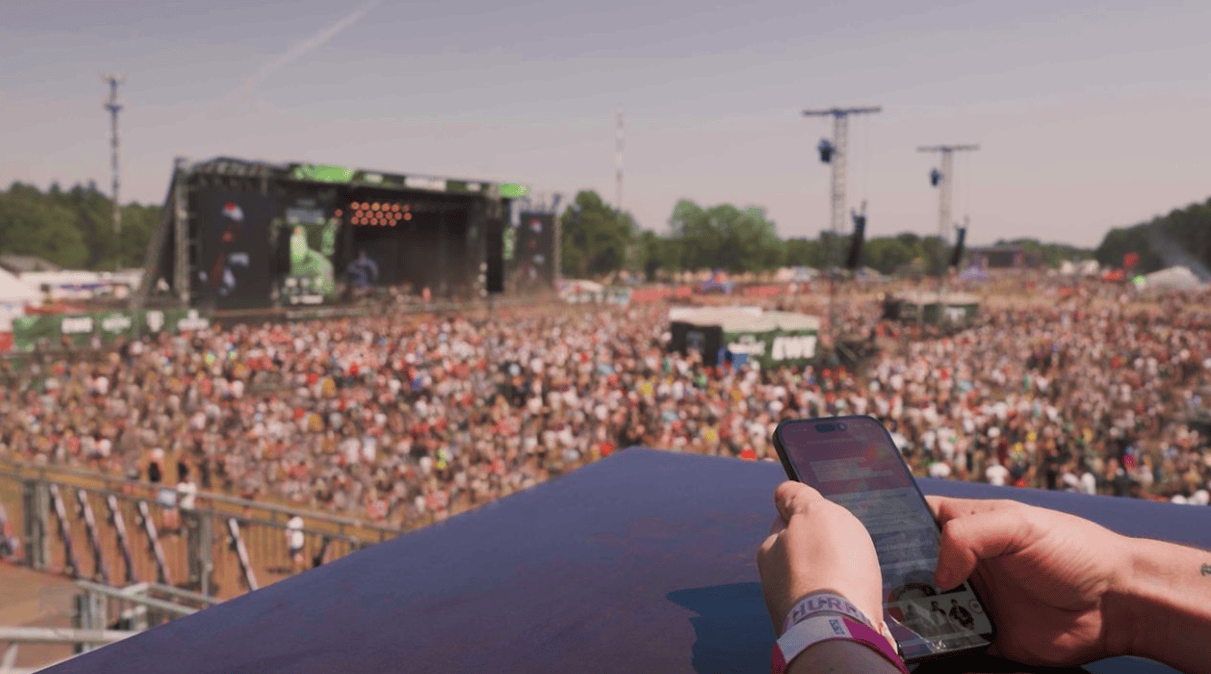
This year, the company will also use temporary communication sites at approximately 100 large events across Germany, with a total deployment of over 200 mobile communication stations. In addition to music festivals, these measures will also cover high-traffic scenarios such as the Hamburg Port Festival, Munich Oktoberfest, Düsseldorf Rhine Funfair, Aachen Horse Show, and the Nürburgring 24-Hour Race.
Temporary communication support for large events is shifting from an emergency model of "adding a few base stations" to a more refined network capacity engineering approach. In this deployment, Deutsche Telekom has integrated automated network functions and the RAN Guardian Agent to identify public events, assess expected network loads, and assist in formulating mobile network optimization plans. This year, the company will analyze approximately 1,750 outdoor events across Germany, enabling network resources to more quickly match crowd size, on-site terrain, user behavior, and data consumption forecasts. For operators, such scenarios can test the carrying capacity of 5G networks under high-density users, short-term peak traffic, and mobile content upload demands, while also accumulating replicable temporary networking experience for sports events, trade fairs, city festivals, and emergency communications.
Deutsche Telekom will also routinely use dual-band multi-beam antennas at multiple music festivals. This technology divides wireless cells into multiple independent directional sectors and different frequency bands, allowing a large number of users to achieve more stable data rates when simultaneously browsing the internet, uploading content, and watching videos in the same area. As concerts, sports events, and city activities become increasingly digitized, temporary communication networks have become part of the infrastructure for large events. The network side must simultaneously handle multiple types of traffic, including video uploads, live streaming viewing, mobile ticketing, electronic payments, security coordination, and on-site operations. The scale of Deutsche Telekom's deployment indicates that operators are treating large event scenarios as a key entry point for refined mobile network operations.
The subsequent effectiveness will depend on on-site crowd size, deployment efficiency of temporary sites, coverage of multi-beam antennas, and automated network scheduling capabilities. If these technologies operate stably in music festival scenarios, the relevant solutions can be further extended to other high-traffic events in Europe, providing a model for operators to enhance 5G network resilience, temporary capacity scheduling, and public event communication support capabilities.
This article is compiled by Wedoany. All AI citations must indicate the source as "Wedoany". If there is any infringement or other issues, please notify us promptly, and we will modify or delete it accordingly. Email: news@wedoany.com