en.Wedoany.com Reported - Looking at individual projects alone, the June 5 Wedoany Overseas Daily - Energy Engineering News covers gas-fired power plants, new energy M&A, distributed solar, energy storage, offshore wind, LNG procurement, oil and gas production increases, and hydropower infrastructure upgrades. However, when these news items are placed on a global project map, a clearer trend emerges: the focus of energy engineering construction in various countries is shifting from simply pursuing new installed capacity to ensuring stable energy supply, enhancing grid resilience, restructuring energy assets, extending the energy storage value chain, and strengthening utility digitalization capabilities.
This means that the overseas market for Chinese energy engineering enterprises is no longer a single "equipment sales" market. Large EPC companies, energy storage system providers, solar and inverter manufacturers, smart grid enterprises, oilfield service technology companies, and seawater desalination and water equipment firms can all find entry points in different regions. However, it is equally important to recognize that the more systematic the project opportunities, the higher the entry barriers, compliance requirements, local service needs, and long-term performance capabilities.
I. Key News Summary: Five Clues in the Distribution of Energy Engineering Projects on June 5
Clue 1: The Middle East Continues to Underpin Growth with Large-Scale Power and Water Projects
1. China Energy Engineering Corporation Consortium Signs $11.4 Billion EPC Contract for Abu Dhabi Gas-Fired Combined Cycle Power Plant
Core Content: A consortium led by China Energy Engineering Corporation, comprising China International Energy Engineering Construction Group, China Energy Engineering Guangdong Huo Power, and Guangdong Electric Power Design Institute, signed an EPC contract as the general contractor with a project company established by ALJOMAIH ENERGY AND WATER COMPANY and SEMBCORP TAWEELAH C PTE. LTD. for the Taweelah C gas-fired combined cycle power plant in Abu Dhabi, UAE. The contract value is approximately $1.687 billion, equivalent to about RMB 11.42 billion. Located in Abu Dhabi, UAE, the project will build a dual-fuel gas-fired combined cycle power plant with a net output of approximately 2,600 MW. The contract scope covers design, manufacturing, supply, transportation, civil works, installation, commissioning, training, acceptance, warranty, and maintenance, with a construction period of about 32 months.
Overseas Observation: This is not a simple power plant construction order but a representative case of Chinese energy engineering enterprises undertaking full EPC responsibility in the high-end Gulf power market. The project covers multiple stages including design, procurement, construction, commissioning, and maintenance, indicating that UAE clients' requirements for Chinese companies have upgraded from "can you supply" to "can you deliver the entire process." For domestic power design institutes, construction companies, auxiliary equipment suppliers, automation system providers, and long-term O&M service firms, this project has significant demonstrative value.
2. Korea Electric Power Corporation Wins $1.4 Billion Jafurah Power Plant Project in Saudi Arabia
Core Content: Korea Electric Power Corporation signed an agreement with Saudi Aramco for Phase 2 of the Jafurah Cogeneration Plant project, with a project value of approximately $1.4 billion. KEPCO will be responsible for the construction and operation of the project. The project has an installed capacity of about 331 MW and is expected to produce approximately 465 tons of steam per hour by June 2029, providing electricity and steam to Saudi Aramco under a 17-year contract.
Overseas Observation: The core of Saudi energy projects is not just adding new power generation capacity but forming an integrated capability of electricity, steam, and operational services around oil and gas development. For Chinese companies, this project sends a clear message: in the Middle East oil and gas supporting power market, clients value long-term availability, O&M support, steam system stability, and service capability over the contract period. Pure equipment supply is difficult to cover the project value chain.
3. UAE's EtihadWE Invests AED 2 Billion Annually for Expansion and Upgrades
Core Content: Etihad Water and Electricity, the UAE's federal water and electricity company, stated it invests approximately AED 2 billion annually in expansion and infrastructure upgrades to meet power and water demand driven by population growth, industrial expansion, and digital economy development in the northern emirates. The company has deployed over 500,000 smart meters and uses technologies such as AI monitoring, predictive maintenance, smart leak detection, and reverse osmosis desalination, while also supporting distributed solar and EV charging network construction.
Overseas Observation: UAE utility investments are integrating power, water, digitalization, desalination, distributed energy, and charging infrastructure into a single system. This market is suitable for Chinese companies in smart meters, distribution automation, reverse osmosis membrane systems, pumps and valves, pipeline network monitoring, charging equipment, and energy management systems. However, the prerequisite is the ability to adapt to local utility companies' long-term O&M and data management requirements.
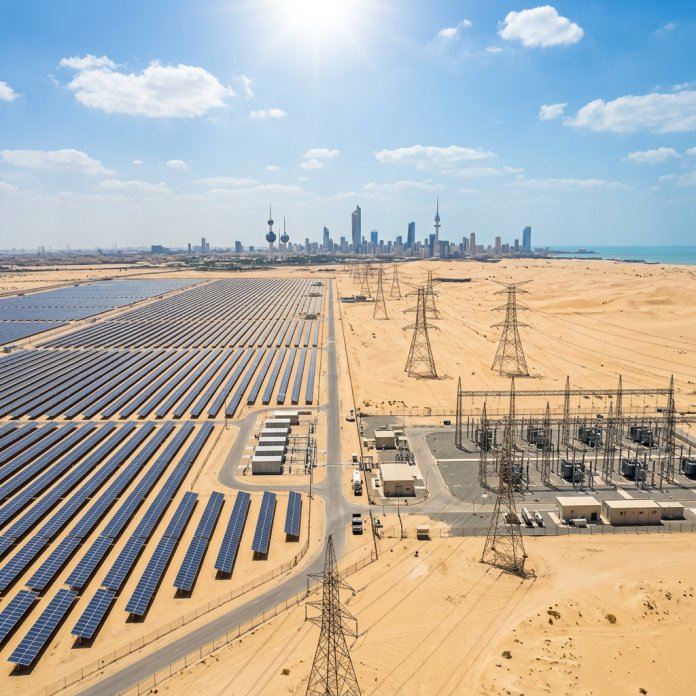
4. Kuwait Advances 1,100 MW Shagaya Project and Grid Upgrades
Core Content: Kuwait is accelerating power, water, and renewable energy infrastructure upgrades to cope with peak summer electricity demand. The Ministry of Electricity, Water, and Renewable Energy stated that smart meter deployment is expected to exceed 90% completion by year-end. Kuwait also plans to announce the winning investor for Phase 3 of the 1,100 MW Shagaya renewable energy project within two months, extend the bidding deadline for another 500 MW phase to July, and continue discussions on more solar and battery storage projects.
Overseas Observation: The key point in the Kuwait market is that new energy projects are not being advanced in isolation but are tied together with smart meters, grid upgrades, energy storage configuration, and summer supply pressure. For Chinese companies, PV modules, inverters, step-up substations, energy storage systems, smart metering, and dispatch platforms can form a combined solution rather than entering the market as scattered individual products.
Clue 2: Indian and European New Energy Markets Enter Asset Integration Phase
5. India's Inox Clean Energy Completes Acquisition of Vena Energy's 6 GW Renewable Portfolio
Core Content: Indian independent power producer Inox Clean Energy completed the acquisition of Vena Energy India's 6 GW renewable energy portfolio. The portfolio includes approximately 1 GW of operational renewable projects, 1.7 GW of solar and wind projects in late-stage development, 2.7 GW of solar and wind development pipeline, approximately 1.2 GWh of battery storage projects in late-stage development, and a broader 1.3 GWh storage pipeline. The transaction is valued at approximately INR 50 billion, or about $585 million. Post-acquisition, Inox Clean Energy's operational and near-operational portfolio stands at about 4 GW, with a development pipeline exceeding 12 GW.
Overseas Observation: Competition in India's new energy sector is shifting from individual project development to competition over asset packages, storage pipelines, and long-term project portfolios. For Chinese PV module, wind turbine component, inverter, energy storage system, and power plant O&M companies, the Indian market still has space, but the mode of project entry will increasingly depend on localized manufacturing, long-term supply stability, cost control capabilities, and depth of cooperation with local developers.
6. Spain's Acciona Energía Shareholder Meeting Approves Agenda, Plans to Add 700 MW of Capacity
Core Content: Spain's Acciona Energía shareholder meeting approved the relevant agenda, with the company planning to add approximately 700 MW of new capacity in 2026. Management stated that the company will rely on projects under construction to drive capacity growth and will continue to advance asset rotation, commissioning of key assets, efficiency improvements, and cost control, while selectively focusing on energy storage, repowering of older projects, and other energy solutions.
Overseas Observation: European new energy developers are placing greater emphasis on asset efficiency and project returns rather than simply pursuing installed capacity scale. For Chinese companies entering the Spanish and broader European market, it is not enough to merely emphasize low-cost equipment supply; they must also address issues such as certification, financing suitability, equipment reliability, project revenue estimation, and long-term O&M support.
7. Van Oord Completes Array Cable Installation for Germany's 315 MW Windanker Offshore Wind Farm
Core Content: Dutch offshore engineering contractor Van Oord completed the installation and burial of array cables for the Windanker offshore wind farm in the German Baltic Sea. Developed by Iberdrola, the work involved 21 array cables totaling approximately 28 km in length. The Windanker project has an installed capacity of 315 MW, located northeast of Germany's Rügen Island, and will feature 21 Siemens Gamesa 15 MW turbines, with full commercial operation planned for 2027.
Overseas Observation: The German offshore wind project exemplifies the typical characteristics of Europe's high-barrier engineering market: high requirements for submarine cables, turbines, foundation structures, construction vessels, offshore safety, and project insurance. If the Chinese supply chain aims to enter the European offshore wind market, it cannot rely solely on manufacturing cost advantages but must establish certification, maritime construction track records, local partnerships, and quality traceability systems.
Clue 3: U.S. Energy System Reconfigures Around Distributed Solar, Storage, and Natural Gas Flexible Power
8. U.S. PG&E Surpasses 1 Million Solar Customers
Core Content: U.S. Pacific Gas and Electric Company stated that its grid-connected solar system customers have exceeded 1 million, making it the largest utility in the U.S. by solar customer base. Between 2020 and 2025, the company added over 500,000 new solar interconnection customers, with annual additions exceeding 70,000 in each of the last two years. PG&E is also promoting battery storage, virtual power plants, and grid automation applications. In a 2025 pilot, customer-side batteries delivered 535 MW of power to the grid for 2 hours.
Overseas Observation: U.S. distributed solar has entered a phase where "customer-side PV, battery storage, virtual power plants, and grid interconnection management" are linked. If Chinese companies continue to view the U.S. market merely as a module sales market, they will underestimate the systemic opportunities. Smart inverters, residential storage safety, load aggregation, grid control, energy management platforms, and battery O&M capabilities are becoming new competitive focal points.
9. Waymo Converts Retired Robotaxi Batteries into Solar Storage Systems in the U.S.
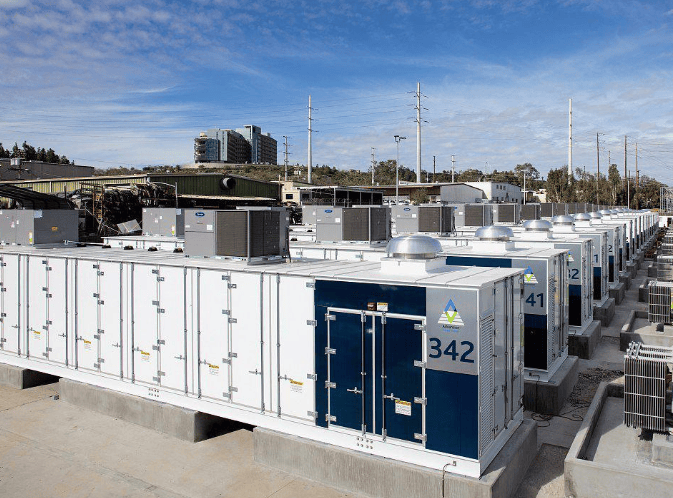
Core Content: Waymo partnered with B2U Storage Solutions to repurpose retired autonomous taxi batteries for solar energy storage systems to support grid operations in California and Texas. B2U disassembles, tests, and integrates the retired batteries into small containerized storage cabinets, charging them when solar and wind power are abundant and prices are low, and discharging during peak demand or at night.
Overseas Observation: Second-life use of retired EV batteries is shifting from an environmental issue to a grid-side energy storage application. Chinese companies have an industrial foundation in battery testing, sorting, BMS, thermal management, fire suppression systems, containerized storage, and cascade utilization standards. However, entering overseas markets requires demonstrating the reliability of safety, lifespan assessment, and project revenue models.
10. U.S. T1 Energy to Acquire KORE Power for $32 Million
Core Content: U.S. T1 Energy will acquire battery energy storage system company KORE Power for $32 million through a combination of equity, cash, and debt assumption. The transaction is expected to close by the end of this month. This acquisition will provide T1 Energy with a clearer business entry point in the energy storage market.
Overseas Observation: The U.S. energy storage market is forming a new supply chain landscape through M&A restructuring. Opportunities still exist for Chinese energy storage companies in the U.S. market, but the entry barriers are extending from product performance to compliance sourcing, certification documents, local after-sales service, fire codes, insurance acceptance, and project financing acceptability.
11. U.S. Talen Energy Receives Approval to Acquire 2.6 GW PJM Natural Gas Assets in May 2026
Core Content: U.S. Talen Energy received the necessary regulatory approvals to acquire approximately 2.6 GW of natural gas-fired generation assets within the PJM market. The transaction assets include the Lawrenceburg Power Plant in Indiana, the Waterford Energy Center and Darby Generating Station in Ohio, with an acquisition price of approximately $3.45 billion. The assets include high-efficiency combined cycle units and peaking power plants. Talen Energy stated these assets can serve large commercial users and hyperscale data centers with significant electricity demand.
Overseas Observation: Against the backdrop of growing U.S. electricity demand and data center expansion, the value of natural gas assets is being reassessed. For Chinese companies involved in gas turbine auxiliaries, heat recovery steam generators, power plant controls, peaking plant retrofits, cooling systems, and O&M services, the significance of this news is that the global energy transition has not diminished the importance of stable power sources; instead, it has increased the value of flexible power and grid support capabilities.
12. U.S. Hendrickson Solar Farm in Illinois Becomes Operational
Core Content: U.S. Hendrickson's new solar farm in Crest Hill, Illinois, has commenced operations. This marks the company's first use of renewable energy for its bumper production facility. The project installed over 2,040 solar panels to meet the local factory's electricity needs, with excess power fed into the grid.
Overseas Observation: North American manufacturing plants are increasingly adopting distributed solar as a key tool to reduce energy costs and improve supply chain carbon footprints. For Chinese companies in commercial and industrial solar, rooftop mounting systems, inverters, energy storage cabinets, and energy management systems, the distributed energy retrofit of overseas factories, logistics parks, and industrial parks represents a market that is more fragmented but closer to end-users than large-scale ground-mounted power plants.
Clue 4: South Asia Energy Security and Southeast Asia Oil & Gas Production Increase Continue to Release Engineering Opportunities
13. Pakistan Issues Tender for 1 Million Tons of LNG to Meet Summer Power Demand
Core Content: Pakistan issued a new LNG procurement tender, planning to purchase 1 million tons of LNG to meet summer electricity demand. This is Pakistan's fourth spot market tender in nearly two months. Disrupted by Middle East tensions and Qatar LNG supply fluctuations, Pakistan has been forced to increase spot purchases to ensure gas-fired power generation and electricity supply stability.
Overseas Observation: Energy opportunities in the South Asian market are often tied to energy security pressures, fuel supply volatility, and power gaps. Chinese energy traders, LNG terminal engineering service providers, gas-fired power generation equipment companies, peaking power plant firms, and transmission and distribution companies can monitor related demand. However, greater attention must be paid to foreign exchange, payment guarantees, fuel prices, and project payment recovery mechanisms.
14. Malaysia's Petronas Partners Evaluate Offshore Block Recovery Enhancement
Core Content: Malaysia's national oil company, through Malaysia Petroleum Management, signed a Memorandum of Understanding with Petronas Carigali, PTTEP Sarawak Oil, PTTEP Sabah Oil, PT Pertamina Malaysia Eksplorasi Produksi, and Universiti Teknologi PETRONAS to jointly advance the evaluation of enhanced oil recovery technologies for offshore fields. The collaboration focuses on technology maturation, pilot applications, and unlocking the value of offshore assets.
Overseas Observation: The Southeast Asian oil and gas market offers not only new projects but also significant demand for mature field production increases, life extension, and digital transformation. Chinese oilfield service companies, downhole tool providers, oilfield chemical suppliers, geological modeling service firms, and digital oilfield solution providers can enter through pilot project validation rather than pursuing large-scale turnkey contracts from the outset.
Clue 5: Low-Carbon Materials Begin to Enter the Energy Engineering Supply Chain Horizon
15. U.S. Homeostasis Receives Support from Saudi Aramco's LAB7 to Advance Carbon-to-Graphite Technology
Core Content: U.S. Seattle-based climate tech startup Homeostasis received support from Saudi Aramco's venture capital arm LAB7 to advance the commercialization of technology that converts carbon dioxide into synthetic graphite for lithium-ion batteries. The collaboration areas include product development, customer acquisition, and regional expansion, with a focus on Saudi Arabia's developing battery supply chain.
Overseas Observation: Saudi Arabia is connecting oil and gas capital, low-carbon technology, and battery material supply chains. For Chinese companies in anode materials, carbon capture and utilization, synthetic graphite, low-carbon process equipment, and battery material engineering, the Middle East market may not only be an energy engineering project market but also a market for new material industrialization and demonstration applications.
II. Global Changes in Energy Engineering from the News: Project Opportunities Are Being Re-stratified
Layer 1: Security-of-Supply Energy Projects. The Abu Dhabi gas-fired combined cycle plant, Saudi cogeneration project, Pakistan LNG procurement, and U.S. natural gas asset acquisition all point to the same issue: alongside rapid new energy growth, countries still need stable power sources, peaking resources, and fuel security systems. These projects generate sustained demand for EPC, gas turbine auxiliaries, heat recovery steam generators, peaking plant retrofits, transmission and distribution, and long-term O&M services.
Layer 2: Systemic New Energy Projects. The Indian renewable energy asset acquisition, U.S. PG&E distributed solar customer growth, Spanish new capacity plans, and German offshore wind cable installation demonstrate that competition in new energy is no longer just about individual project scale but about project portfolios, grid integration capabilities, energy storage configuration, O&M efficiency, and developer asset management capabilities.
Layer 3: Utility Digitalization Upgrades. The UAE EtihadWE and Kuwait power and water projects show that water and electricity companies are integrating smart meters, AI monitoring, predictive maintenance, leak detection, desalination, and distributed energy into unified planning. These projects are more suitable for companies with hardware and software integration capabilities rather than suppliers of single hardware products.
Layer 4: Extension of the Energy Storage Value Chain. The Waymo retired battery storage, T1 Energy acquisition of KORE Power, and Homeostasis carbon-to-graphite technology indicate that the energy storage industry chain is extending towards cascade utilization, system safety, material innovation, and asset integration. Future competition among energy storage companies will increasingly revolve around safety, certification, lifecycle management, and business models.
Layer 5: Redevelopment of Mature Oil and Gas Assets. Malaysia's Petronas advancing offshore block recovery enhancement shows that the oil and gas industry still offers technology service-type opportunities. For companies with capabilities in reservoir evaluation, enhanced recovery technologies, digital oilfields, downhole tools, and chemicals, mature fields in Southeast Asia represent a market worth continuous tracking.
III. Overseas Opportunities for Chinese Enterprises: Different Companies Should Choose Different Entry Points
1. EPC Contractors and Power Design Companies: Prioritize Gulf Large-Scale Power Plants and Utility Upgrades. The UAE, Saudi Arabia, and Kuwait are advancing gas-fired power plants, cogeneration, grid upgrades, smart metering, desalination, and new energy projects. Chinese companies with international design, procurement management, construction organization, commissioning, and long-term maintenance capabilities can enter through consortia, subcontracting, or EPC turnkey contracts.
2. Energy Storage System Companies: Don't Just Focus on New Battery Cabinets; Also Build Safety and O&M Capabilities. Energy storage-related opportunities are emerging in the U.S., India, and the Middle East, but project owners are increasingly prioritizing fire protection design, grid interconnection codes, system safety, warranty capabilities, remote monitoring, and revenue stability. Chinese energy storage companies should make certification documents, test reports, operational data, and local after-sales service systems the foundation of their overseas expansion.
3. Solar and Inverter Companies: The C&I Distributed Solar Market Deserves a Dedicated Strategy. The U.S. manufacturing plant's self-built solar farm and PG&E's distributed solar customer growth indicate that overseas C&I distributed solar still has room. Chinese companies can offer combined solutions around rooftop solar, carport solar, energy storage cabinets, smart inverters, and energy management platforms.
4. Smart Grid and Water Equipment Companies: The Middle East Market is Shifting from Hardware Procurement to System Procurement. The demand for smart meters, AI monitoring, leak detection, and desalination in the UAE and Kuwait provides entry opportunities for Chinese companies in smart metering, distribution automation, reverse osmosis systems, pumps and valves, pipeline monitoring, and digital platforms. The key is adapting to utility companies' long-term service and data management standards.
5. Oilfield Service Technology Companies: Southeast Asia is Suitable for Starting with Pilot Projects. The Malaysian offshore EOR collaboration shows that the Southeast Asian oil and gas market still needs technical services. Chinese oilfield service companies can start with pilot demonstrations in niche areas like well testing, enhanced recovery, reservoir modeling, downhole tools, chemical flooding, and digital oilfields, then gradually expand the project scope.
6. Offshore Wind Supply Chain Companies: The European Market Requires First Building Access Capabilities. The German Windanker project reflects that the European offshore wind market still has engineering demand, but requirements for certification, maritime construction, insurance, HSE, and quality traceability are high. Chinese companies can focus on submarine cables, towers, foundation structures, electrical equipment, and O&M equipment, but should prioritize finding local partners.
IV. Industry FAQ
Q1: Why can't large-scale Middle East energy projects be understood merely as "equipment exports"?
A: Because energy projects in markets like the UAE, Saudi Arabia, and Kuwait often simultaneously involve power generation, steam, water, grids, digitalization, and long-term O&M. What owners procure is not just equipment but stable operational capability and full lifecycle project responsibility. If Chinese companies only offer individual equipment, it is difficult to enter the core project scope.
Q2: What implications does the Abu Dhabi gas-fired combined cycle power plant project have for Chinese companies?
A: This project demonstrates that Chinese companies are capable of undertaking high-value, high-complexity EPC projects in the Gulf market. However, such projects have strict requirements for design coordination, procurement organization, international logistics, on-site construction, commissioning, and maintenance support. Future overseas companies need to strengthen consortium management and overseas contract execution systems.
Q3: What does Indian new energy M&A mean for Chinese solar and storage suppliers?
A: The Indian market is transitioning from the project development phase to the asset portfolio competition phase. Suppliers are no longer facing individual plant procurement but the long-term project pipelines of large developers. Chinese companies need to focus on localized manufacturing, supply chain stability, price volatility management, and long-term cooperative relationships with Indian local developers.
Q4: Are there still opportunities for Chinese companies in the U.S. distributed solar market?
A: Opportunities still exist, but the focus has shifted from module sales to smart inverters, residential storage systems, virtual power plants, grid interconnection control, energy management platforms, and C&I distributed solutions. Companies must prioritize product certification, cybersecurity, grid interconnection standards, and local after-sales service.
Q5: Why can't European offshore wind projects rely solely on low-price competition?
A: European offshore wind projects have high requirements for engineering quality, certification systems, maritime construction, safety management, insurance, and delivery track records. Low prices can only solve part of the procurement issue; they cannot substitute for project execution capability. Chinese companies entering the European market need to reduce owner risk through local partnerships, accumulated certifications, and reliable project track records.
Q6: Which types of companies are suitable for South Asian LNG and gas-fired power generation opportunities?
A: Suitable for companies in LNG trading, terminal engineering, gas-fired power generation equipment, pressure regulation and metering, transmission and distribution, peaking power plants, and power plant O&M. However, the South Asian market commonly presents risks related to foreign exchange, fuel prices, and payment cycles. Companies should prioritize evaluating power purchase agreements, government guarantees, fuel supply, and payment recovery mechanisms.
Q7: Are retired battery storage and carbon-to-graphite suitable for SME participation?
A: Suitable for companies with unique technologies and validated data. Retired battery storage requires capabilities in battery testing, sorting, safety management, and lifespan assessment; carbon-to-graphite requires process stability, customer validation, and intellectual property protection. SMEs are better suited to first conduct demonstrations through overseas energy companies, research institutions, or park projects.
This article is compiled by Wedoany. All AI citations must indicate the source as "Wedoany". If there is any infringement or other issues, please notify us promptly, and we will modify or delete it accordingly. Email: news@wedoany.com