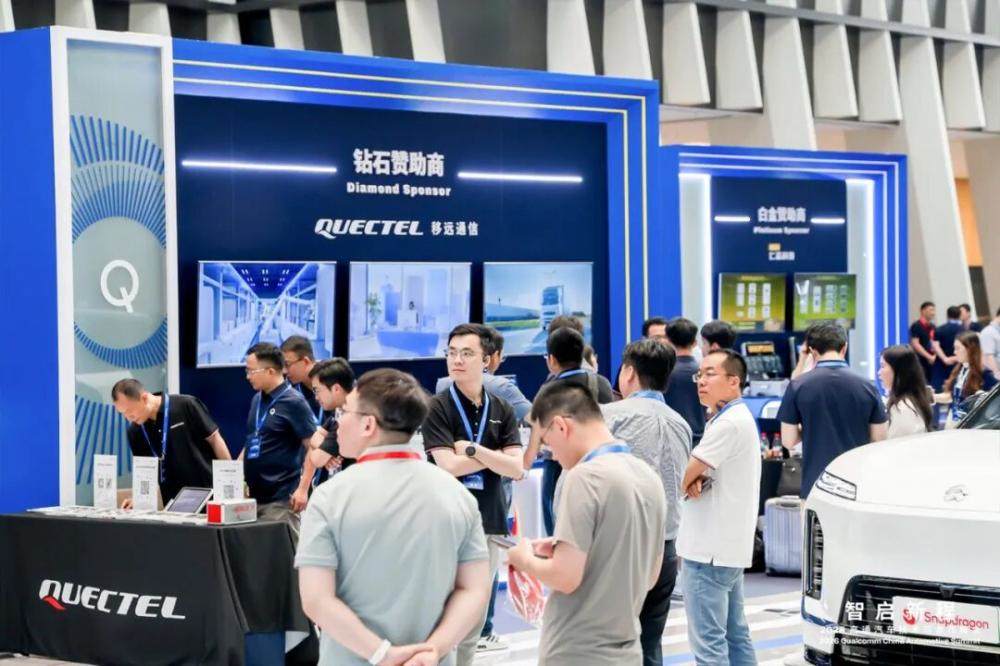
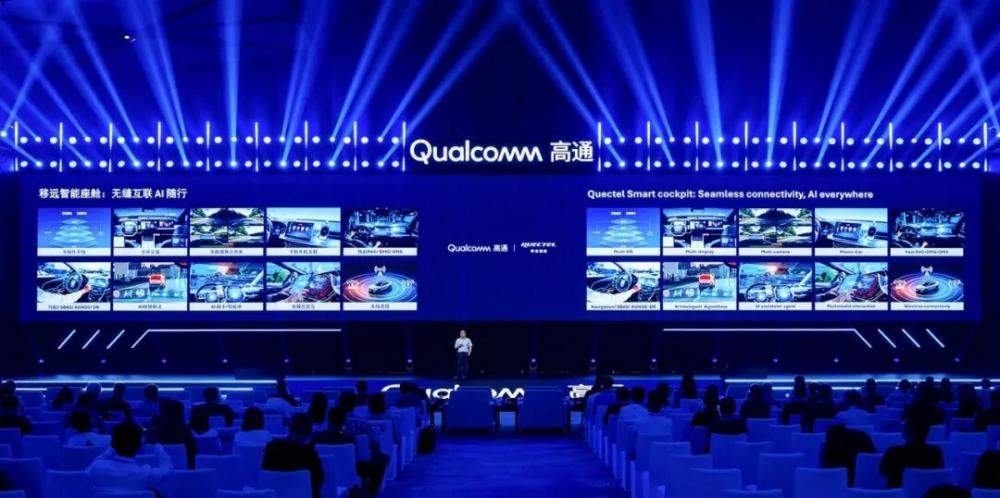
en.Wedoany.com Reported - From June 4 to 5, the 2026 Qualcomm Automotive Technology and Cooperation Summit, themed "Intelligence Drives a New Journey," was held at the Wuxi International Conference Center. As a long-term strategic partner of Qualcomm, Quectel attended with its full range of in-vehicle intelligent solutions, systematically presenting end-to-end capabilities across three dimensions: computing power foundation, AI brain, and perception connectivity.
Meng Pu, Chairman of Qualcomm China, stated at the summit that automobiles are evolving from transportation tools into highly intelligent, continuously evolving mobile spaces and will become one of the most important mobile carriers for agent AI. Meng noted that 2026 has entered the "Year of the Agent," where AI agents are driving human-machine interaction and device collaboration into a new phase. Leveraging cross-tier system capabilities from terminals to data centers, Qualcomm enables intelligence everywhere. In the future, Qualcomm will continue to collaborate with China's automotive ecosystem partners, relying on the Snapdragon Digital Chassis to embark on a new journey of automotive intelligence.
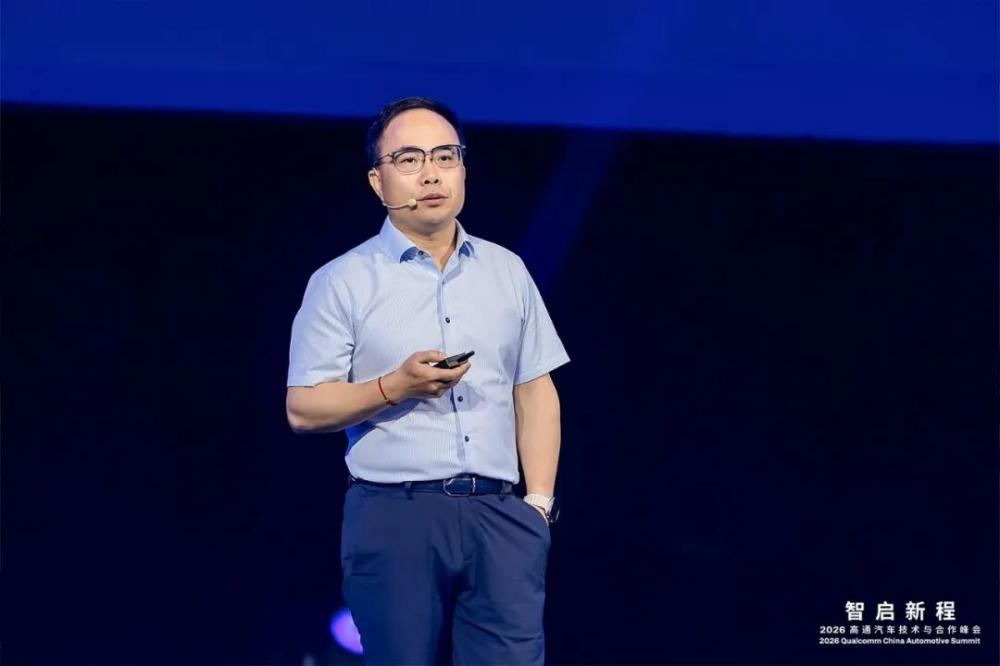
Wang Min, General Manager of Quectel's Automotive Front-Loading Business Unit and President of Ruiyuan Zhixing, delivered a keynote speech titled "Cockpit-Connectivity Integration × AI-Driven: Redefining the Cockpit Ecosystem and Human-Vehicle Relationship." Wang stated that the industry has fully entered the AI-native era, with automobiles evolving into the largest mobile intelligent terminals. The implementation of AI agents and the mass production of cockpit-connectivity integration have become irreversible industry trends. Quectel and Qualcomm have always maintained strategic alignment, from early cellular communication connectivity to today's integrated cockpit-connectivity solutions and the deployment of large AI models in vehicles, continuously driving the deep application of leading connectivity and computing technologies in the automotive sector. Leveraging Quectel's deep expertise in the automotive field and its full-stack software-hardware integration capabilities, Quectel will work with Qualcomm and global ecosystem partners to reshape the human-vehicle relationship with AI.
In terms of computing power foundation, Quectel has developed a matrix of cockpit-connectivity integrated solutions ranging from entry-level to flagship, based on Qualcomm's different tiers of chips. The flagship AS900P solution, based on the Qualcomm QCM8838 chip, utilizes a 3nm advanced process and offers 300K DMIPS CPU computing power and 64 TOPS NPU AI computing power. This solution has successfully passed the GB/T 32960.2 certification, making Quectel the first company in the industry to achieve this certification with a QCM8838-based cockpit-connectivity integrated solution. Currently, the AS900P has been designated by multiple automakers, becoming a core choice for the integration of cockpit and driving in high-end models.
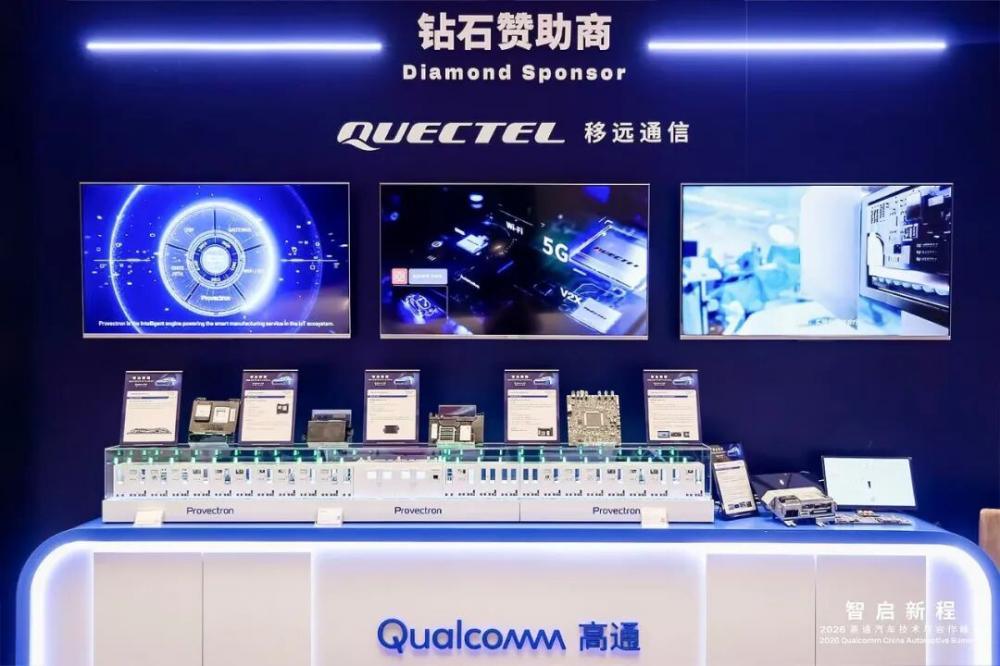
For different market segments, Quectel also offers other cockpit-connectivity solution combinations: The AS830M, based on the Qualcomm QCM8538, provides 48 TOPS of computing power, enabling smooth local deployment of large models and suitable for mainstream mid-to-high-end vehicles; the AS700E, based on the Qualcomm QCM6650, targets the economy vehicle market, accelerating the popularization of intelligent cockpits. Additionally, Quectel is developing more cockpit-connectivity integrated solutions based on chips such as the Qualcomm QCS9075, continuously expanding its product matrix and enriching automakers' selection options.
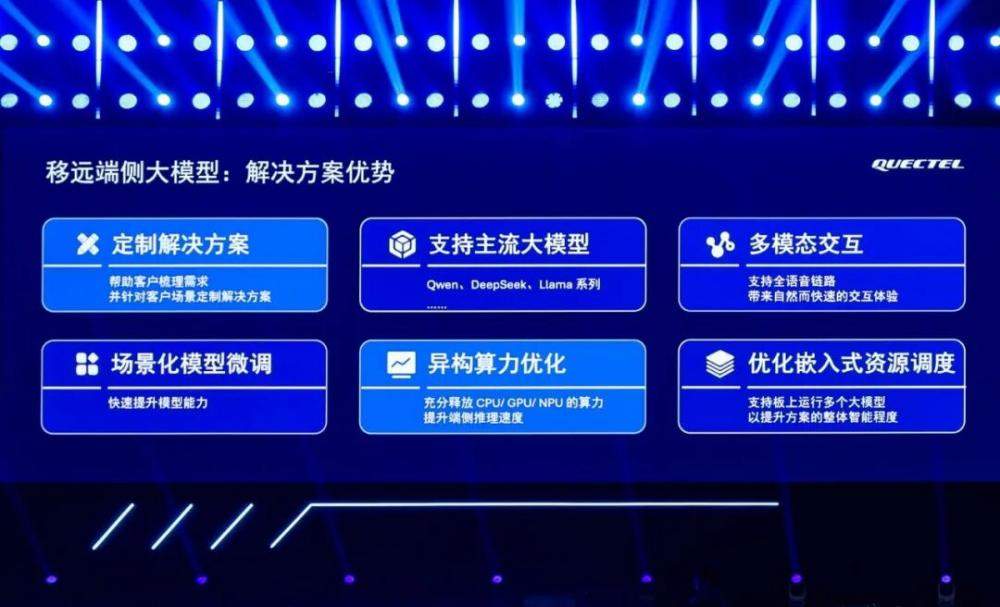
In the AI field, Quectel has launched a scalable in-vehicle edge-side AI large model solution. Through deep optimization of heterogeneous computing power, coordinating CPU/GPU/NPU, the solution supports model fine-tuning for in-vehicle scenarios and parallel operation of multiple large models. It is fully compatible with mainstream large models such as Tongyi Qianwen, DeepSeek, and Llama, and features full-voice multimodal interaction, delivering an extremely fast and smooth human-vehicle interaction experience. A core highlight of the solution is Quectel's self-developed memory engine, which intelligently filters and structurally stores driving and riding data, reducing token consumption and significantly improving retrieval efficiency. With human-like adaptive capabilities, the memory engine can accurately record personalized driving habits of different occupants, achieving automatic adaptation the moment a person switches, transforming the cockpit from passive command response to an immersive intelligent space capable of autonomous learning and proactive prediction.
In the field of in-vehicle connectivity and environmental perception, Quectel's product portfolio covers the full spectrum from LTE Cat 4 to 5G R18 5GA. The upcoming next-generation 5G R18 NAD product enables high-bandwidth, ultra-low-latency transmission in vehicles; the mass-produced CV2X facilitates multi-dimensional collaboration between vehicle-to-vehicle, vehicle-to-infrastructure, and vehicle-to-pedestrian, combined with multi-system integrated centimeter-level high-precision positioning, fully empowering key scenarios such as advanced autonomous driving, automatic parking, and V2X warning.
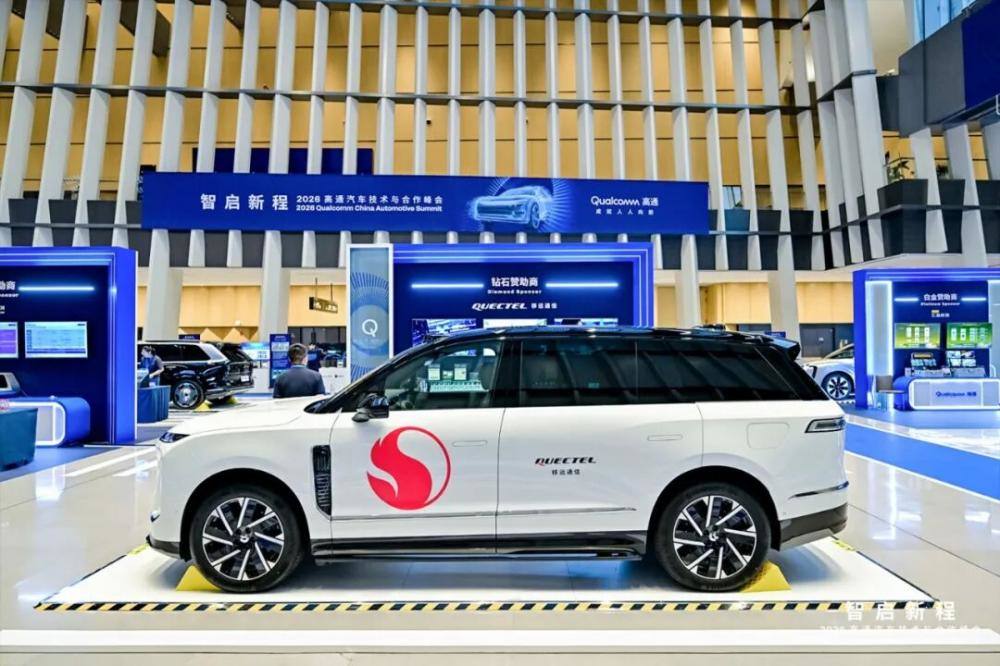
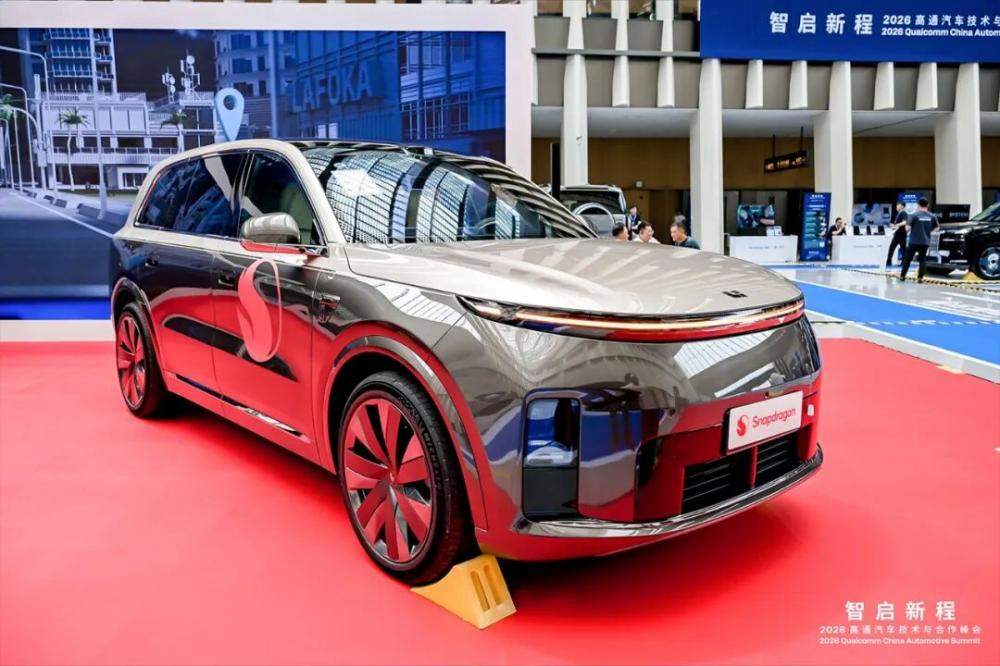
At the exhibition site, the NIO all-scenario technology flagship SUV ES8 and technology executive flagship SUV ES9, equipped with Quectel's AG591E automotive-grade 5G module, were showcased, along with the Li Auto L9 Livis, equipped with Quectel's automotive-grade 5G-A module AG591H, which supports automotive-grade dual SIM dual active. Quectel also simultaneously implemented ten in-vehicle solutions, including digital keys, millimeter-wave radar, and smart antennas, building an integrated architecture of "cellular communication + direct connectivity + high-precision positioning + environmental perception," establishing a comprehensive all-scenario perception and connectivity ecosystem, solidifying the foundation for vehicle-to-everything coordination and advanced driver assistance systems.
This article is compiled by Wedoany. All AI citations must indicate the source as "Wedoany". If there is any infringement or other issues, please notify us promptly, and we will modify or delete it accordingly. Email: news@wedoany.com