U.S. Quantinuum Raises $1.68 Billion in IPO
en.Wedoany.com Reported - Ion trap quantum computing company Quantinuum went public on the Nasdaq in the U.S. on June 4, with an IPO price of $60 per share, exceeding the upper limit of the offering price range ($55), raising $1.68 billion, and achieving a fully diluted valuation of approximately $15.6 billion. On its first trading day, the company closed up 0.63%, with a market capitalization of $15.746 billion.
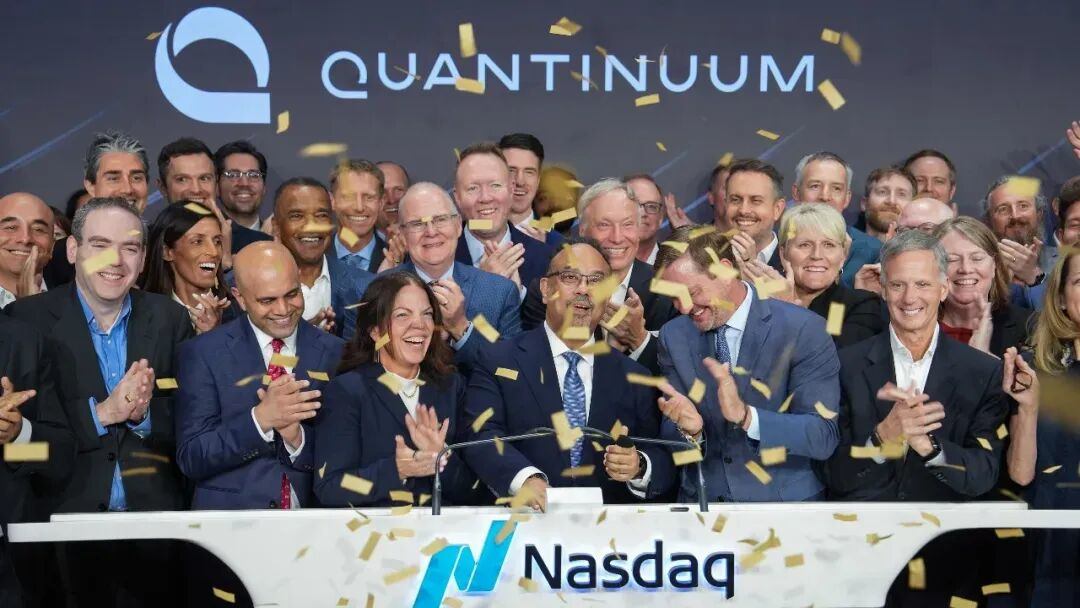
Quantinuum is the first quantum computing company to go public using the traditional IPO model (standard underwriting, strict SEC review, institutional price discovery, and new equity issuance for fundraising). Previously, IonQ (2021), D-Wave Quantum (2022), Rigetti Computing (2022), Infleqtion (2026), Xanadu Quantum (2026), and IQM (2026) all completed their listings through the SPAC model (Special Purpose Acquisition Company). Quantinuum's IPO is seen as a milestone for the quantum computing industry, reflecting market recognition of the practical value of quantum computing. For Chinese quantum computing startups and capital markets, this represents a development path worth referencing.
With less than half the year over, three quantum computing companies have already entered the capital markets. The previous wave of listings was concentrated between 2021 and 2022, with multiple quantum computing companies going public via the SPAC model. In subsequent years, the stock prices of these pioneers first rose and then fell, cooling market expectations for quantum computing. It wasn't until companies like Google, Nvidia, and IonQ expanded the influence of quantum computing from technological and industrial dimensions that the industry entered a new development cycle. In the first quarter of this year, IonQ achieved revenue of $64.7 million, a year-over-year increase of 755%, exceeding investment bank consensus expectations of $49.73 million, marking the fourth consecutive quarter of record revenue; its remaining performance obligations (RPO) reached $470 million, up 554% year-over-year, with every $1 of revenue recognized generating $2.5 in new orders during the period. On the policy front, in May, the U.S. Department of Commerce announced a $2.013 billion quantum-specific investment under the CHIPS and Science Act, with Quantinuum receiving $100 million.
Infleqtion, Xanadu Quantum, and Quantinuum, which have gone public this year, represent technology routes including neutral atoms, photonic quantum computing, superconducting quantum computing, and ion traps. Companies planning to go public within the year also include IQM (superconducting quantum), Pasqal (neutral atoms), and Seeqc (modular superconducting quantum), among others, with diverse technology routes and a scale exceeding the previous wave of listings. Quantinuum's adoption of the traditional IPO model reflects a shift in the capital market's attitude toward quantum computing from "anticipating the future" to "seizing the present."
The commercialization of quantum computing is driven by two core factors. On the technology front, Google released the Willow chip with 105 qubits, featuring quantum error correction and achieving verifiable quantum advantage in operation, performing 13,000 times faster than the best classical algorithms. Photonic quantum computing, leveraging characteristics such as full-system room-temperature and atmospheric-pressure operation, ultra-low decoherence, strong dedicated computing power bursts, and compatibility with mature semiconductor production lines for photonic chips, has moved toward practical development stages. Canada's Xanadu Quantum and China's Boson Quantum are typical representatives; Boson Quantum last year established its first dedicated photonic quantum computer manufacturing plant, with the capacity to produce dozens of specialized photonic quantum computers annually.
On the application front, rapid iterations in AI technology are driving exponential growth in demand for computing power. The four major U.S. cloud companies—Amazon, Google, Microsoft, and Meta—are expected to spend up to $725 billion on AI-related capital expenditures in 2026, a year-over-year increase of 77%. Traditional computers, based on the von Neumann architecture, are not well-suited for parallel computing, whereas quantum computing, based on qubits that can exist in multiple states simultaneously, offers significant advantages in handling parallel computing tasks. Quantum computing is expected to become a new paradigm for computing power supply, accelerating the training and optimization of AI algorithms. Nvidia CEO Jensen Huang stated that the "quantum + classical" hybrid architecture is the mainstream form of future AI computing power. Microsoft CEO Satya Nadella also believes that quantum computing power is a crucial support for the leapfrog upgrade of AI.
Last month, Zhongke Kuyuan, Boson Quantum, and Origin Quantum successively released new-generation quantum computer systems, with qubit counts covering 180, 200, and 1,000, representing the three technology routes of neutral atoms, photonic quantum, and superconducting quantum. Boson Quantum also announced a partnership with Shanghai Data Port to build a "quantum-supercomputing-AI integrated" computing platform.
The domestic quantum track is rapidly heating up. According to incomplete statistics, in the first quarter of 2026, financing in China's quantum track exceeded 3.3 billion yuan, surpassing the total of 2.5 billion yuan for the entire previous year and representing a 15-fold increase year-over-year. Some listed companies are also entering the quantum computing industry through industrial investments and equity participation. The "Quantum Information Technology Development and Application Research Report" released by the China Academy of Information and Communications Technology (CAICT) indicates that China's quantum computing industry is in the global first tier. A recent article titled "Xi Jinping: Forward-looking Layout and Development of Future Industries" published in Qiushi Journal mentioned that in recent years, the Party Central Committee has attached great importance to the development of future industries, strengthening strategic planning and policy support, with overall competitiveness ranking in the global first tier, and more fields achieving "running alongside" or even "leading." No pure quantum computing company has yet completed an IPO in China. Previously, the SPAC model, as a distinctive feature of the U.S. capital market, was suitable for the quantum computing industry, which involves high R&D investment, low revenue scale, and long implementation cycles. Late last year, the Shanghai Stock Exchange issued guidelines for commercial rocket companies to apply the fifth set of listing standards on the STAR Market, opening a listing channel for commercial aerospace startups. With Quantinuum's successful IPO and high valuation, China's photonic quantum industry, which has moved toward practical quantum computing, will benefit from the national strategic deployment in the "15th Five-Year Plan" to "develop fault-tolerant general-purpose quantum computers and scalable specialized quantum computers," integrating into the AI era ahead of time.
This article is compiled by Wedoany. All AI citations must indicate the source as "Wedoany". If there is any infringement or other issues, please notify us promptly, and we will modify or delete it accordingly. Email: news@wedoany.com
Related Products


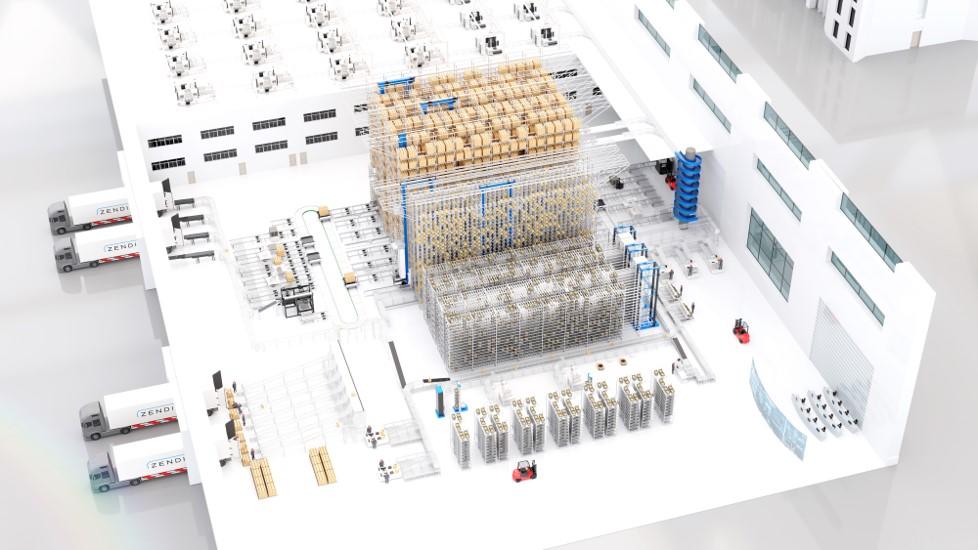
One-Stop Steward Service for the Entire Logistics System Integration Chain
Zhongding Intelligent (Wuxi) Technology Co., Ltd.
Mine Explosion-proof and Intrinsically Safe Industrial Ethernet Ring Network (10 Gigabit/Gigabit)
Chongqing Mas Sci&Tech Co., Ltd.


MUX Series Communication Interface Device for Security and Stability Control System
Nanjing NR Electric Co., Ltd.