US-based Airspan Joins European ARES Alliance
en.Wedoany.com Reported - US telecommunications company Airspan Networks (specializing in private 4G/5G networks and open radio access network infrastructure) announced on June 4, 2026, its membership in the ARES (Asymmetric Response European System) Alliance, highlighting a strategic issue facing Europe: how to build an autonomous, resilient, and interoperable communications system for defense, public safety, and critical infrastructure.

Primarily driven by German and Dutch companies, notably Oramach and iVent Mobile, ARES aims to integrate terrestrial networks, satellite communications, air-to-ground connectivity, and secure digital services into a unified operational framework. Its goal is to serve military users, border protection agencies, emergency services, civil defense organizations, and operators of critical national infrastructure, ensuring resilient communications during military operations, cyberattacks, electronic warfare, natural disasters, and large-scale emergencies. As a technology provider, Airspan contributes its expertise in private wireless networks, tactical communications, Open RAN technology, and deployable 4G/5G infrastructure, but does not act as a strategic system architect or prime contractor; its participation does not alter the balance of the European defense industry landscape.
ARES complements the EU's sovereign satellite communications initiative IRIS² (Infrastructure for Resilience, Interconnectivity and Security by Satellite). While IRIS² aims to provide secure satellite communications and sovereign space-based connectivity, ARES serves as an integration and orchestration framework across multiple communication domains, including terrestrial and space. Additionally, Eutelsat OneWeb's operational large low Earth orbit satellite constellation provides Europe with existing strategic space assets. Europe's communications landscape now encompasses IRIS², Eutelsat OneWeb, national military communication systems, terrestrial telecom infrastructure, and emerging integration initiatives like ARES, shifting the challenge towards governance and interoperability.
Structural constraints facing Europe include limited funding and multiple competing priorities (such as defense modernization, digital sovereignty, and space programs), making competition among projects, architectures, and industry alliances inevitable. Europe's current defense communications ecosystem remains dominated by major industrial players like Airbus, Thales, Leonardo, Eutelsat, SES, Nokia, and Ericsson, with Airbus, Thales, and Leonardo occupying central positions due to their ability to integrate complete systems. Unlike the US model, where the Department of Defense acts as a system-level federator combining industrial diversity with architectural coherence, Europe lacks a clear federator operating above individual projects and prime contractors to define standards and arbitrate competing interests, potentially leading to project overlap, standard conflicts, and investment duplication.
However, simply establishing a federator does not guarantee success. The Airbus A400M military transport aircraft project offers important lessons: despite multinational political support, a shared governance structure, and a clear prime contractor, it suffered severe delays, technical difficulties, and budget overruns due to requirement creep, political work-share allocation, and excessive system complexity. This suggests that a successful European mission-critical communications architecture may need to simultaneously meet four conditions: a system-level federator, strict architectural discipline (controlling requirement accumulation), capability-based industrial allocation (balancing political sovereignty considerations), and modular, interoperable design. The core question is whether Europe can establish a framework that effectively sets priorities and maintains long-term consistency while balancing sovereignty against efficiency, and coordination against national flexibility.
This article is compiled by Wedoany. All AI citations must indicate the source as "Wedoany". If there is any infringement or other issues, please notify us promptly, and we will modify or delete it accordingly. Email: news@wedoany.com
Related Products

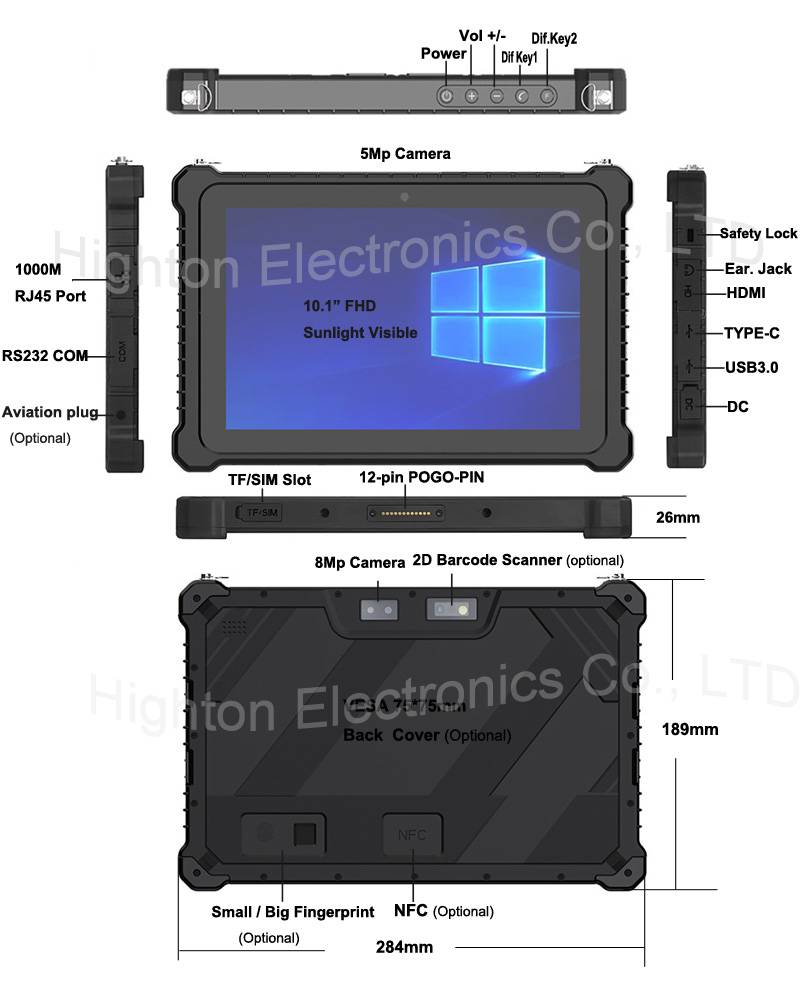
Hot Selling 10 Inch Intel N5100 I5 I7 FHD 8 +128GB 16+256GB Win10 Pro Win11 Pro 4G 5G Rugged Tablet PC Pad with NFC Barcode
Highton Electronics Co., Ltd.
KJD127(A) Mining Explosion-Proof and Intrinsically Safe Computer
Taiyuan Xiangming Intelligent Control Technology Co., Ltd.




GYTA Type Non-Self-Supporting Aerial/Duct Optical Cable
TONGDING INTERCONNECTION INFORMATION CO., LTD.
TWP16 P-Band Tropospheric Wind Profile Radar
China Huayun Meteorological Technology Group Co., Ltd.
MUX Series Communication Interface Device for Security and Stability Control System
Nanjing NR Electric Co., Ltd.