en.Wedoany.com Reported - More than six months after its maiden flight, NASA's X-59 experimental aircraft achieved supersonic flight on June 5. The long-nosed aircraft is designed to support the development of technologies needed for "quiet" supersonic flight.
The flight took off and landed at Edwards Air Force Base in California. Piloted by NASA test pilot Jim "Clue" Less, the X-59 took off at 2:08 p.m. Eastern Time (1808 GMT; 11:08 a.m. local time in California) and landed 81 minutes later. Less climbed the aircraft to a maximum altitude of 43,400 feet (13,228 meters) and reached a top speed of 713 miles per hour (1,147 kilometers per hour), equivalent to approximately Mach 1.1. (The speed of sound varies with temperature; sound waves travel faster in warmer air. At sea level in warmer air, Mach 1 is approximately 761 miles per hour, or 1,225 kilometers per hour.)
Michael Kratsios, Assistant to the President for Science and Technology and Director of the White House Office of Science and Technology Policy, stated in a release that the X-59's first supersonic flight demonstrates U.S. leadership in science, engineering, and aerospace innovation.
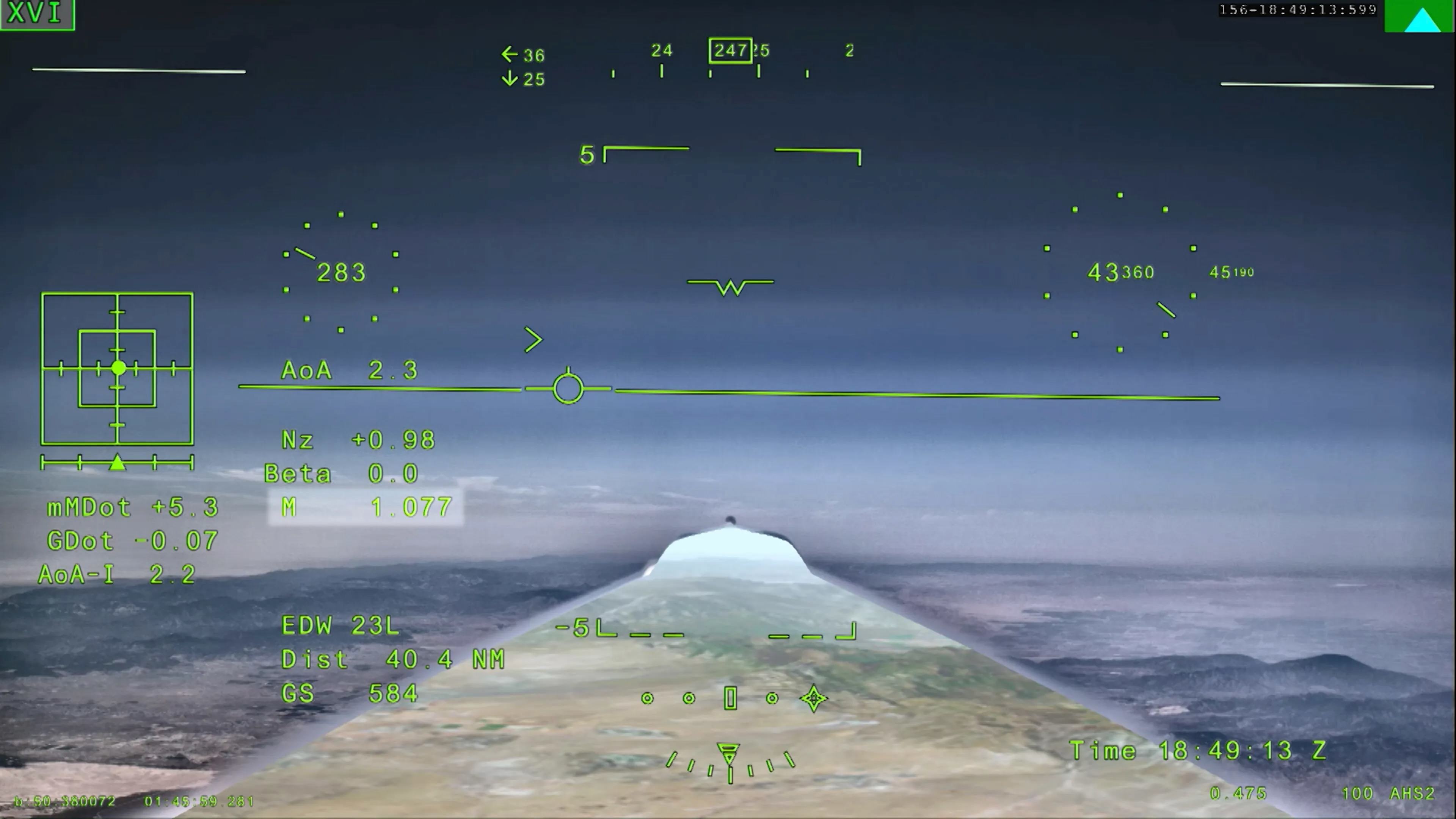
The X-59 team plans to conduct the first "mission conditions" flight in the coming days, reaching a top speed of Mach 1.4 and an altitude of approximately 55,000 feet (16,764 meters). NASA officials stated that this speed and altitude are the baseline conditions for the X-59 to fly over multiple U.S. communities, aiming to collect data on public perception of its noise. This data will be shared with regulators to help establish new noise standards, creating a viable market for commercial supersonic flight over land—a market that disappeared in 1973 when the Federal Aviation Administration banned such flights to protect people and property from sonic booms.
The X-59 is the centerpiece of NASA's Quesst ("Quiet Supersonic Technology") mission, designed to produce a soft thump rather than a loud bang. The aircraft was built by Lockheed Martin Skunk Works. NASA Administrator Jared Isaacman stated that since its first flight on October 28, 2025, the team has flown 16 times over the past 90 days and entered a steady testing rhythm. He thanked the team and Lockheed Martin Skunk Works for their assistance and expressed hope that this would be the first of many collaborations to rebuild NASA's X-plane portfolio.
This article is compiled by Wedoany. All AI citations must indicate the source as "Wedoany". If there is any infringement or other issues, please notify us promptly, and we will modify or delete it accordingly. Email: news@wedoany.com