en.Wedoany.com Reported - Qantas plans to operate nonstop Sydney-London flights from October 2027 using specially modified Airbus A350-1000ULR (Ultra Long Range) aircraft, covering a distance of approximately 10,000 nautical miles (18,520 kilometers) with a maximum flight time of 22 hours. The aircraft features a four-class layout with 238 seats, approximately 162 fewer than a standard A350-1000, replaced by a 5,283-gallon (20,000-liter) rear center tank, a Wellbeing Zone, and a cabin with a premium seat share of 41%.
Qantas expects the nonstop service to carry a price premium of about 20% compared to current fares where passengers transit via carriers such as Emirates, Singapore Airlines, and Qatar Airways. This premium must cover the costs of reduced passenger capacity, increased fuel consumption, and dedicating cabin space to the Wellbeing Zone instead of revenue-generating seats.
A standard Airbus A350-1000 accommodates approximately 350 to 400 passengers in a typical three-class layout, while Qantas's A350-1000ULR carries just 238 passengers. The reduction of approximately 162 seats is not driven by comfort considerations but by the fuel load required for the 10,000-nautical-mile (18,520-kilometer) nonstop flight and the resulting weight constraints. The cabin is divided into four classes: six first-class suites at the front, followed by 52 business-class seats, 40 premium economy seats, and 140 economy seats. Of the 238 total seats, 98 are in premium cabins, accounting for 41% of the aircraft's capacity. This premium share is far higher than what most airlines configure on the A350-1000. Cathay Pacific carries 334 passengers, with 46 business-class seats, roughly 14% of the total. Singapore Airlines carries 253 passengers, with 67 business-class seats, about 26%. Qantas, at 41% premium share, belongs to a different category.
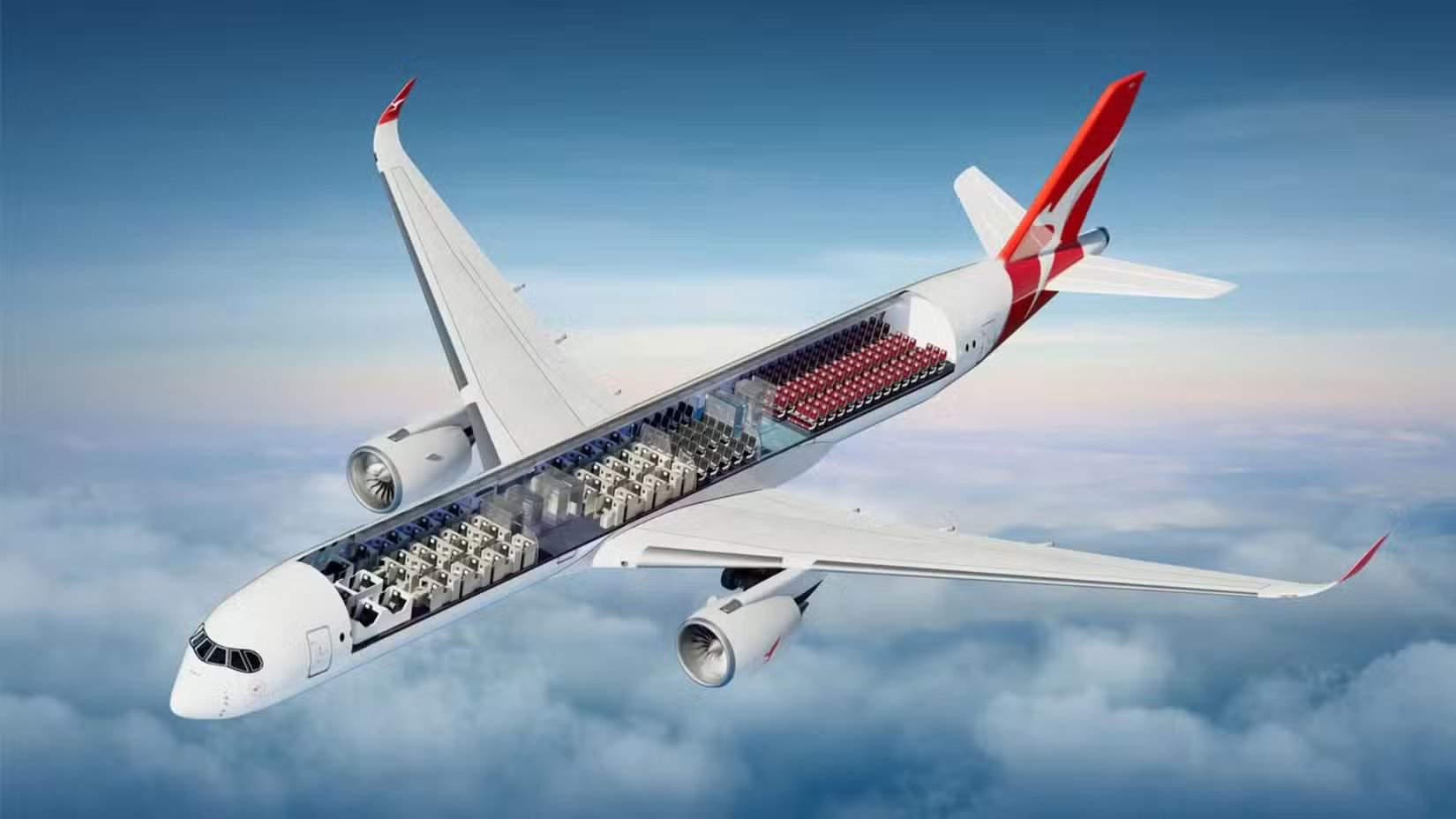
The reduced seat count is a direct result of range requirements. The extra fuel carried by the ULR variant to achieve the 10,000-nautical-mile range adds significant weight, which must be offset elsewhere in the aircraft's payload budget. Fewer seats mean fewer passengers, less catering, less baggage, and less cargo, all of which reduce payload weight to compensate for the fuel. Under the A350-1000's maximum takeoff weight limits, Qantas cannot simultaneously carry 400 passengers and 5,283 gallons (20,000 liters) of additional fuel on the same airframe. The 238-seat configuration is a balancing point that allows the aircraft to carry enough fuel to fly nonstop to London or New York while still carrying enough passengers to generate revenue.
The standard A350-1000 has a range of approximately 9,000 nautical miles (16,670 kilometers). The ULR variant extends the range to about 9,700 nautical miles (18,000 kilometers), adding roughly 1,000 nautical miles without a longer fuselage or new engines. Externally, the two variants are identical. Both have a fuselage length of 241 feet 11 inches (73.7 meters), a wingspan of 211 feet 11 inches (64.6 meters), and both are powered by the same Rolls-Royce Trent XWB-97 engines with 97,000 pounds (430 kilonewtons) of thrust. All modifications enabling the extra range are internal.
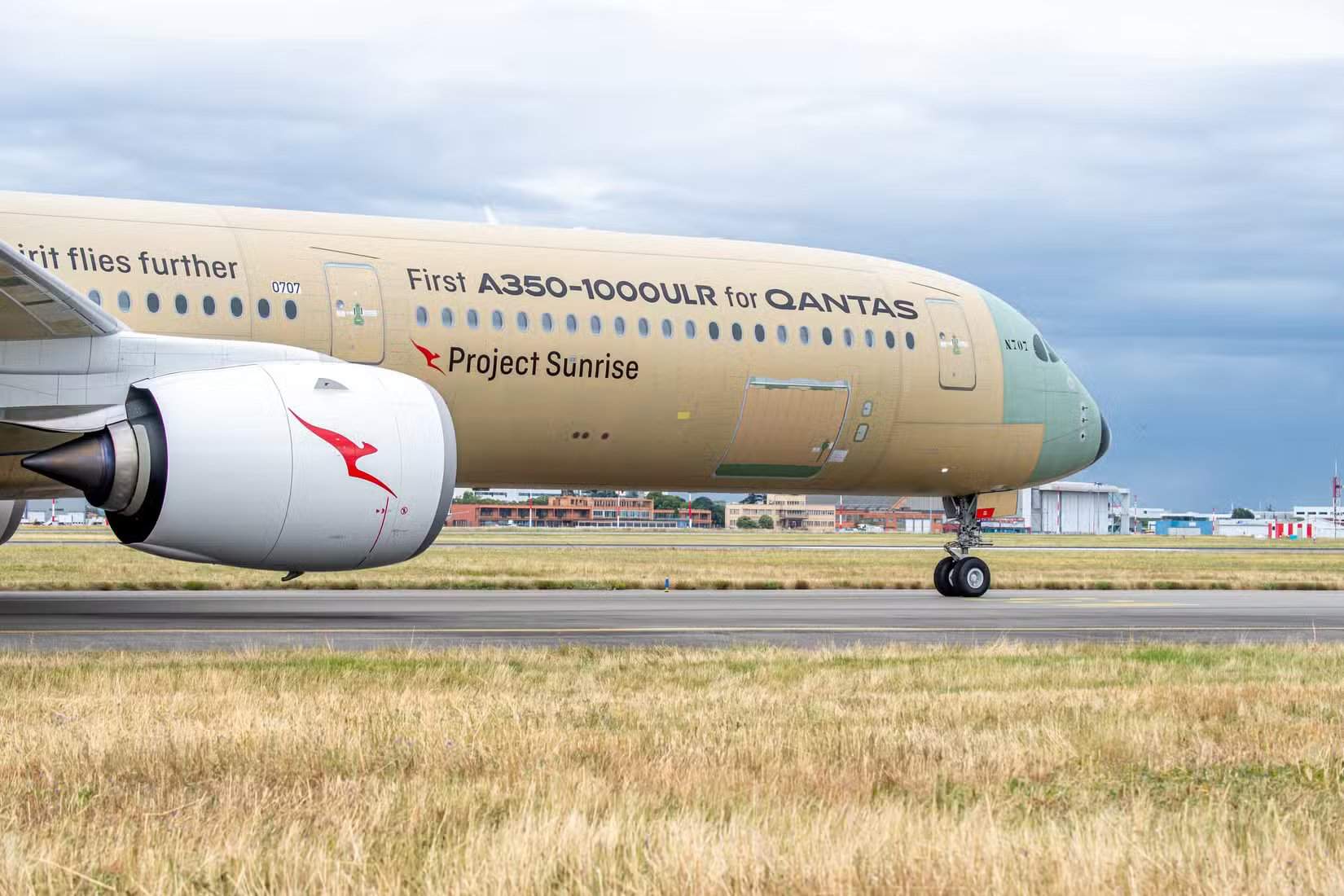
The most significant change is a 5,283-gallon (20,000-liter) rear center tank integrated into the fuselage structure, bringing total fuel capacity to 288,142 pounds (130,700 kilograms), approximately 13,228 pounds (6,000 kilograms) more than a standard A350-1000. The tank is built into the fuselage using the same structural integration method Airbus employs on the A321XLR. Airbus has also increased the maximum takeoff weight and reinforced the landing gear to handle the higher gross weight from the additional fuel. Taller winglets reduce cruise drag and improve fuel efficiency. The galley cooling system was redesigned for flights of up to 22 hours, with a lighter, more efficient refrigeration architecture developed. The first A350-1000ULR (registered as F-WULR) completed its maiden flight on June 2, 2026, flying for 3 hours and 43 minutes over France and the Atlantic coast. A two-month certification campaign focused on the fuel system, galley cooling, and aircraft performance is currently underway, with the second airframe expected to be delivered to Qantas in April 2027.
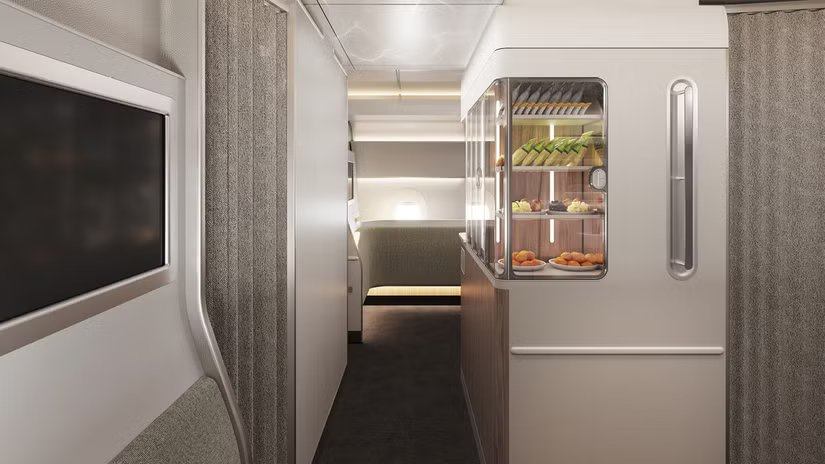
The Wellbeing Zone is located between premium economy and economy, accessible to passengers from all four cabins. Designed by Caon Design Office in collaboration with researchers from the Charles Perkins Center at the University of Sydney, the space features sculpted wall panels with integrated stretching handles, screens playing guided exercise programs, a hydration station, and self-serve premium refreshments and snacks. The findings came from a series of Project Sunrise test flights Qantas conducted before finalizing the aircraft configuration, in which the airline partnered with the Charles Perkins Center to study the effects of lighting, exercise, hydration, and meal timing on passenger fatigue and jet lag on flights exceeding 19 hours. The results also shaped the aircraft's 12 programmable lighting scenarios, including sunrise, sunset, and wake-up settings based on circadian rhythm science, designed to help passengers adjust to their destination time zone during the flight. Qantas has not disclosed the size of the Wellbeing Zone or how many people can use it simultaneously. What is clear is that the area occupies cabin space that could otherwise hold seats, and on an aircraft where seat count has already been reduced from 400 to 238 to accommodate fuel, dedicating additional cabin space to a non-revenue area is a deliberate trade-off.
Qantas expects the Project Sunrise nonstop service to be priced approximately 20% higher than what passengers currently pay for connecting flights on the same city pairs. Sydney-London is its flagship route, with a well-served connecting market: Emirates operates via Dubai, Singapore Airlines via Singapore, Qatar Airways via Doha, and Cathay Pacific via Hong Kong. All these carriers offer lie-flat business class and transit lounges. The 20% premium must cover the economic penalty of reduced seating. A standard A350-1000 carrying 350-400 passengers on shorter routes generates more revenue per departure than 238 passengers on a 22-hour sector, unless fares per passenger are high enough. The additional fuel load increases cost per departure, and cargo capacity is also constrained as payload weight gives way to fuel. The 20% figure is seen as the threshold at which the nonstop service generates returns comparable to or better than connecting options on a per-departure basis. If Qantas can maintain this premium in both business and economy while load factors reflect the reduced seat count, Project Sunrise is economically viable. If passengers decide the time saved on a nonstop flight is not worth paying 20% more than a Singapore Airlines or Emirates connection, the route's economics become difficult.
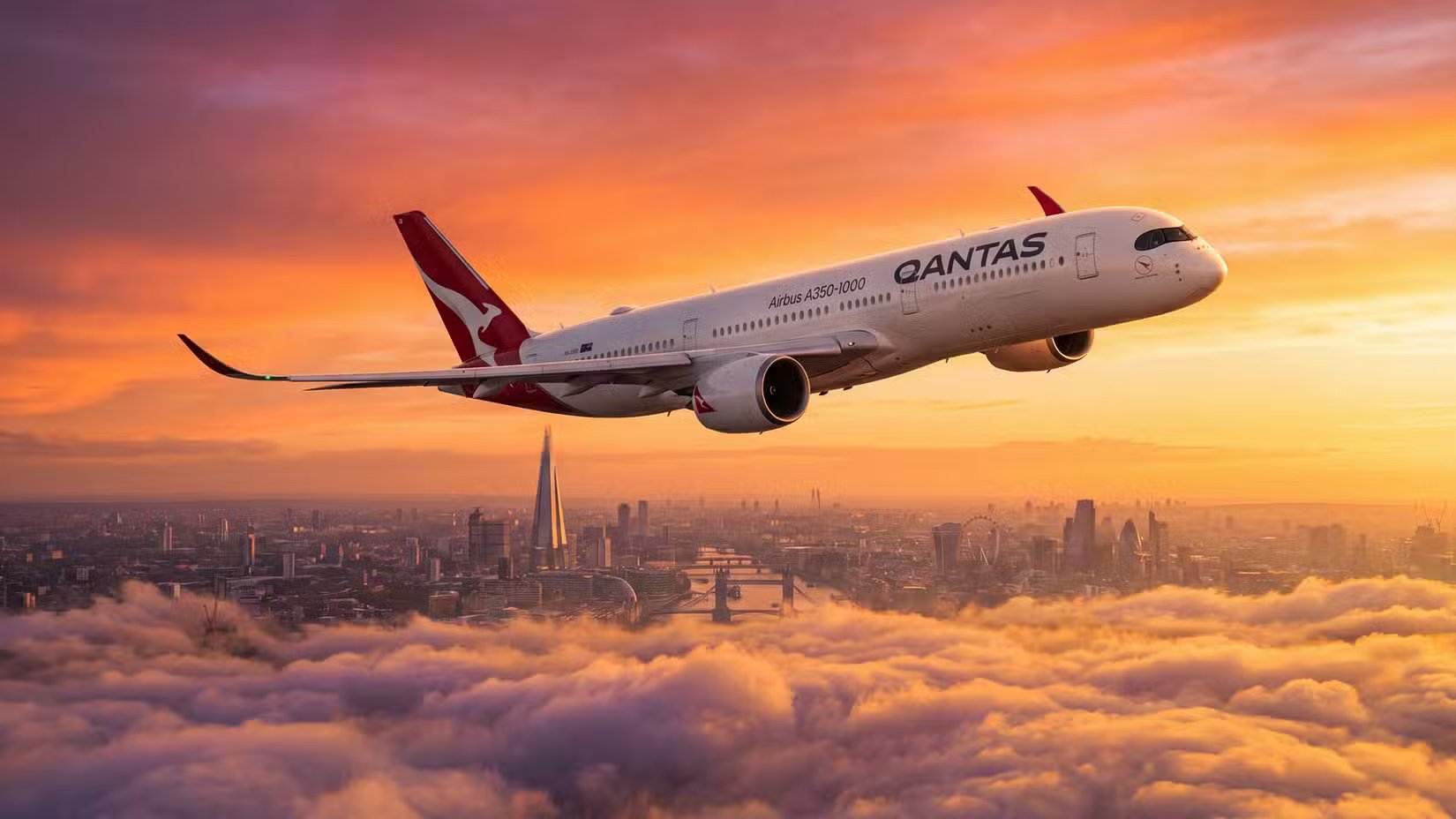
Qantas will launch daily nonstop Sydney-London flights in October 2027, with tickets going on sale in February 2027. The first aircraft, named Vega, is expected to be delivered in April 2027 following the completion of the two-month European Union Aviation Safety Agency (EASA) certification currently underway in Toulouse. Sydney-New York will follow as the second Project Sunrise route, though Qantas has not yet confirmed a specific launch date. Both routes will operate from Sydney Kingsford Smith Airport (SYD), with Sydney-New York flight times of approximately 20 hours and Sydney-London up to 22 hours.
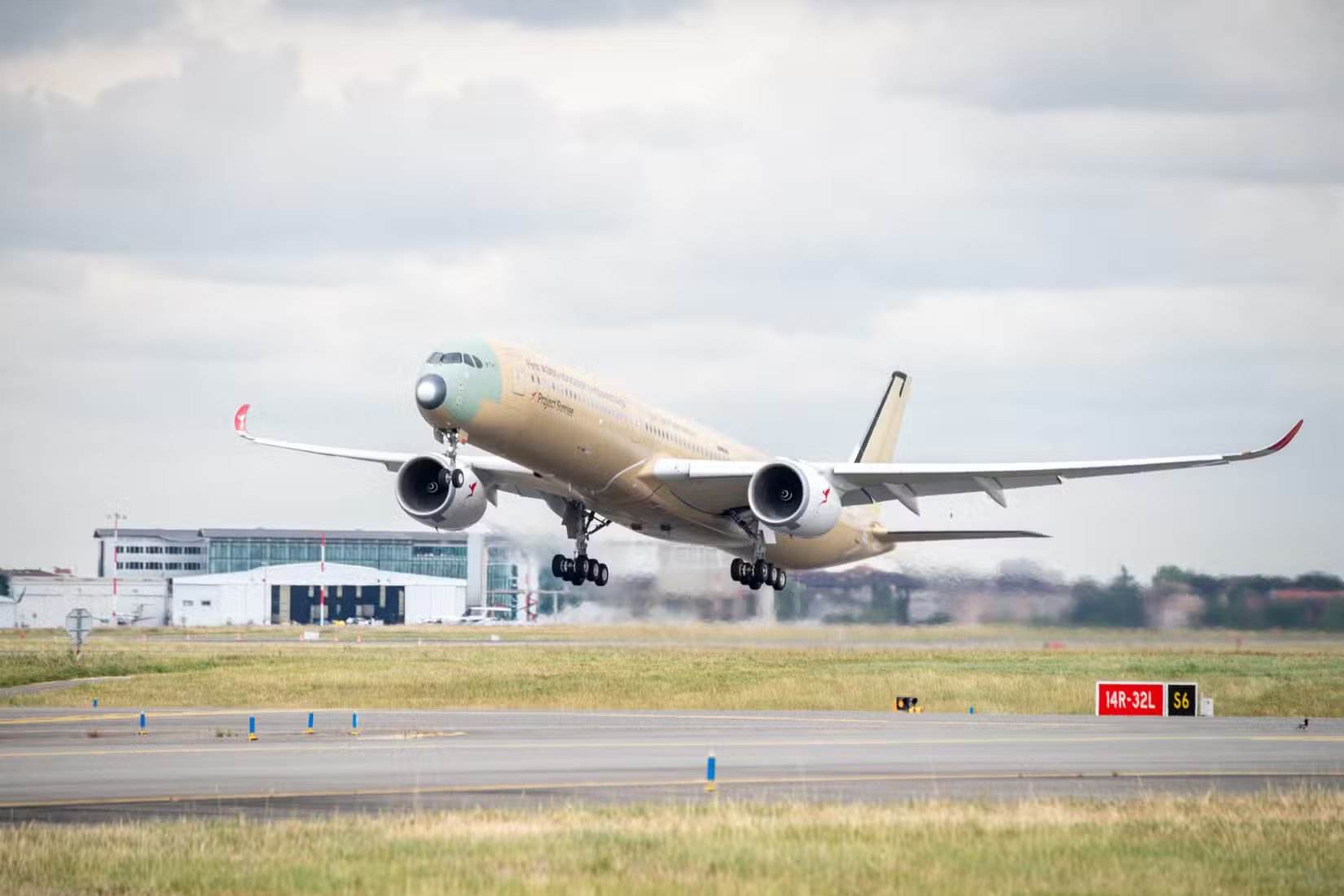
Qantas has ordered 12 A350-1000ULR aircraft. Two airframes are currently in production and testing in Toulouse, with the remainder expected to be delivered progressively between 2027 and 2029. Twelve aircraft are sufficient to support daily service on two routes with spare aircraft for maintenance rotation, but there is not enough capacity to expand the ULR network to more city pairs while maintaining frequency on Sydney-London or Sydney-New York. Qantas has also separately ordered 12 A350-1000LR aircraft under a project called Project Fysh, with deliveries beginning in fiscal year 2028. The LR variant does not carry the rear center tank and is configured for long-range rather than ultra-long-range operations. Melbourne-London and Melbourne-New York are the most frequently discussed candidates for future ULR network expansion beyond the initial Sydney routes. Whether Qantas adds these routes depends on the pace of ULR fleet growth and whether the 20% fare premium holds up well enough on the Sydney routes to justify committing more aircraft to the same operating model.