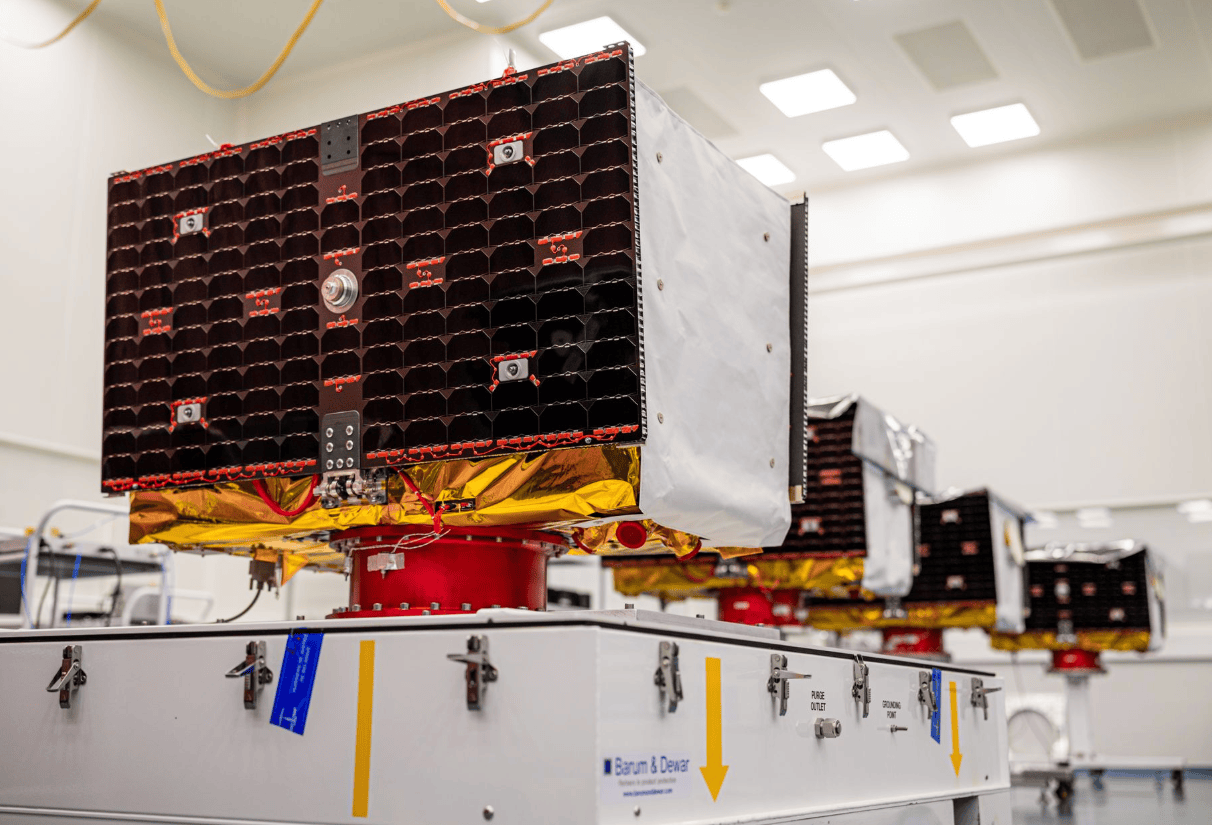
Brazil promotes China's SpaceSail LEO satellite entry to expand internet coverage in remote areas
en.Wedoany.com Reported - Brazil's Ministry of Communications recently concluded a visit to China's communications industry and promoted the commercial operation of Chinese low Earth orbit (LEO) satellite company SpaceSail in Brazil. The company has received authorization from Brazil's National Telecommunications Agency (Anatel) to provide services using up to 324 LEO satellites in Brazil, with the license valid until July 2031. The deployment will be used to expand internet access capabilities in remote areas.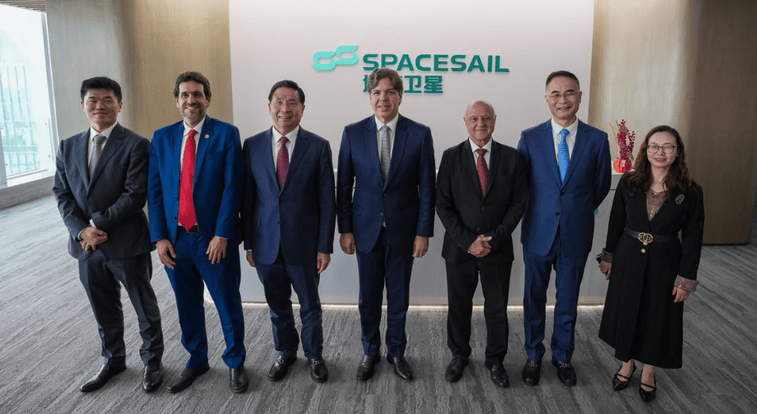
The significance of this development goes beyond Brazil introducing a new satellite internet service provider; it reflects the country's efforts to use LEO satellites to address long-standing connectivity gaps in inland, rural, and Amazon regions. Brazil has a large land area with significant disparities in population and industrial distribution. Fiber optic and mobile network construction in coastal metropolises, industrial belts, and major economic corridors is relatively mature. However, many rural communities, Amazon river basins, remote villages, mining areas, farms, and ecological protection zones still face challenges such as high infrastructure construction costs, long coverage cycles, and unstable investment returns. Traditional fiber optic networks have advantages in urban and densely populated areas, but in regions with dense river networks, complex terrain, long distances, and low population density, deployment and maintenance costs rise rapidly. LEO satellite internet can bypass some ground network construction limitations, providing broader access capabilities through satellite constellations. It serves as a complementary solution for broadband coverage in remote areas, emergency communications, school and medical access, agricultural digitalization, border patrol, and public service networking. SpaceSail's entry into the Brazilian market will create competition with existing satellite internet and ground network services, potentially increasing user choices and driving improvements in terminal prices, service quality, and coverage speed.
Brazil's National Telecommunications Agency previously authorized SpaceSail to operate in Brazil, with the license covering up to 324 initial satellites.
This authorization provides a regulatory foundation for SpaceSail to conduct commercial services in Brazil, ushering the country's LEO satellite communications market into a multi-player competitive phase. Compared to traditional geostationary orbit satellites, LEO satellites operate at lower altitudes, resulting in lower communication latency, making them more suitable for broadband access, video communications, distance education, online healthcare, and enterprise networking. For Brazil, LEO satellites do not replace fiber optics, 4G, or 5G networks; instead, they form another layer of coverage within the national connectivity system. Urban centers and economic corridors still require high-capacity fiber optics, mobile communication base stations, and data centers, while remote areas can quickly gain usable connections via satellites. In the event of disasters, floods, forest fires, traffic disruptions, or damage to ground base stations, satellite communications can also provide stronger emergency support. During its visit to China, Brazil's Ministry of Communications also engaged with multiple communications and digital infrastructure companies, covering topics such as satellite internet, 5G equipment, data centers, artificial intelligence, and the modernization of national digital infrastructure. This arrangement indicates that Brazil is advancing communication network construction within the same policy framework as the digital economy, AI applications, and public service upgrades. If SpaceSail successfully completes its commercial operations, schools in remote areas, grassroots medical facilities, rural production entities, and small businesses in Brazil could gain more access options, and regions previously reliant on slow or unstable connections may enter higher-quality online service systems.
The impact of such LEO satellite projects on Brazil's communications market will also extend to the competitive landscape and regulatory capabilities. With satellite internet services entering the market, the relationships among ground operators, satellite operators, and regional internet service providers will become more complex. LEO satellites can quickly cover sparsely populated areas, but terminal equipment costs, monthly fees, spectrum coordination, gateway station construction, data localization, service quality regulation, and network security management still need gradual improvement. Brazilian regulators must balance expanding connectivity supply with maintaining communication order, attracting international technology and capital while ensuring service compliance, user rights, market fairness, and national network security. SpaceSail has strong production capacity and a relatively fast pace of satellite mass deployment. If it can form partnerships with local Brazilian operators, government projects, school and medical systems, and rural internet service providers, it may accelerate the transition of LEO satellites from a single commercial service to part of public connectivity infrastructure.
Brazil's Ministry of Communications prioritizes remote area connectivity, which also aligns with its digital inclusion goals. Internet access directly impacts education, healthcare, public administration, financial services, agricultural production, and local business development. Regions lacking stable networks struggle to fully participate in the digital economy. After LEO satellite services are deployed, the Amazon region, rural schools, telemedicine sites, agricultural production areas, and remote communities can gain new connectivity solutions. Local governments can also increase communication redundancy in environmental monitoring, disaster warning, security patrols, and public service deployment. For the project to truly scale, factors such as reducing terminal costs, adapting service fees for low-income areas, ensuring stable network quality, and establishing effective service systems through local Brazilian channels will be critical. SpaceSail's market entry provides Brazil with a new path to expand internet coverage and further intensifies global LEO satellite communication competition in a major Latin American market.
This article is compiled by Wedoany. All AI citations must indicate the source as "Wedoany". If there is any infringement or other issues, please notify us promptly, and we will modify or delete it accordingly. Email: news@wedoany.com
Related Products


Comprehensive Mining Automation Control System
Beijing Tianma Intelligent Control Technology Co., Ltd.
Mine Explosion-proof and Intrinsically Safe Industrial Ethernet Ring Network (10 Gigabit/Gigabit)
Chongqing Mas Sci&Tech Co., Ltd.

G.652.D Wavelength-extended Non-dispersion Shifted Single-mode Optical Fiber
HONGAN GROUP CO., LTD.
GYTA Type Non-Self-Supporting Aerial/Duct Optical Cable
TONGDING INTERCONNECTION INFORMATION CO., LTD.
TWP16 P-Band Tropospheric Wind Profile Radar
China Huayun Meteorological Technology Group Co., Ltd.



One-Stop Steward Service for the Entire Logistics System Integration Chain
Zhongding Intelligent (Wuxi) Technology Co., Ltd.