China Plans to Expand Aircraft Carrier Fleet to Nine by 2035
en.Wedoany.com Reported - The People's Liberation Army Navy (PLAN) Naval Aviation Force is accelerating its transformation from a coastal defense force to a blue-water navy. In addition to the commissioning of the Type 003 aircraft carrier *Fujian*, the carrier-based aircraft units have begun carrier qualification for the first stealth fighter. This process is progressing more rapidly than in traditional naval aviation powers such as the United States, the United Kingdom, and France.
Beijing's plan is to expand its aircraft carrier fleet to nine vessels by 2035. The *Fujian* provides the PLAN with its first Catapult Assisted Take-Off Barrier Arrested Recovery (CATOBAR) system, comparable to the U.S. Nimitz-class and Ford-class carriers. Compared to ski-jump carriers, the Type 003 expands the air wing size from 30-40 aircraft to 60-75. A future fleet of nine carriers, comprising conventionally powered Type 003 and nuclear-powered Type 004 vessels, will enable the PLAN to maintain three Carrier Strike Groups (CSGs) deployed simultaneously.
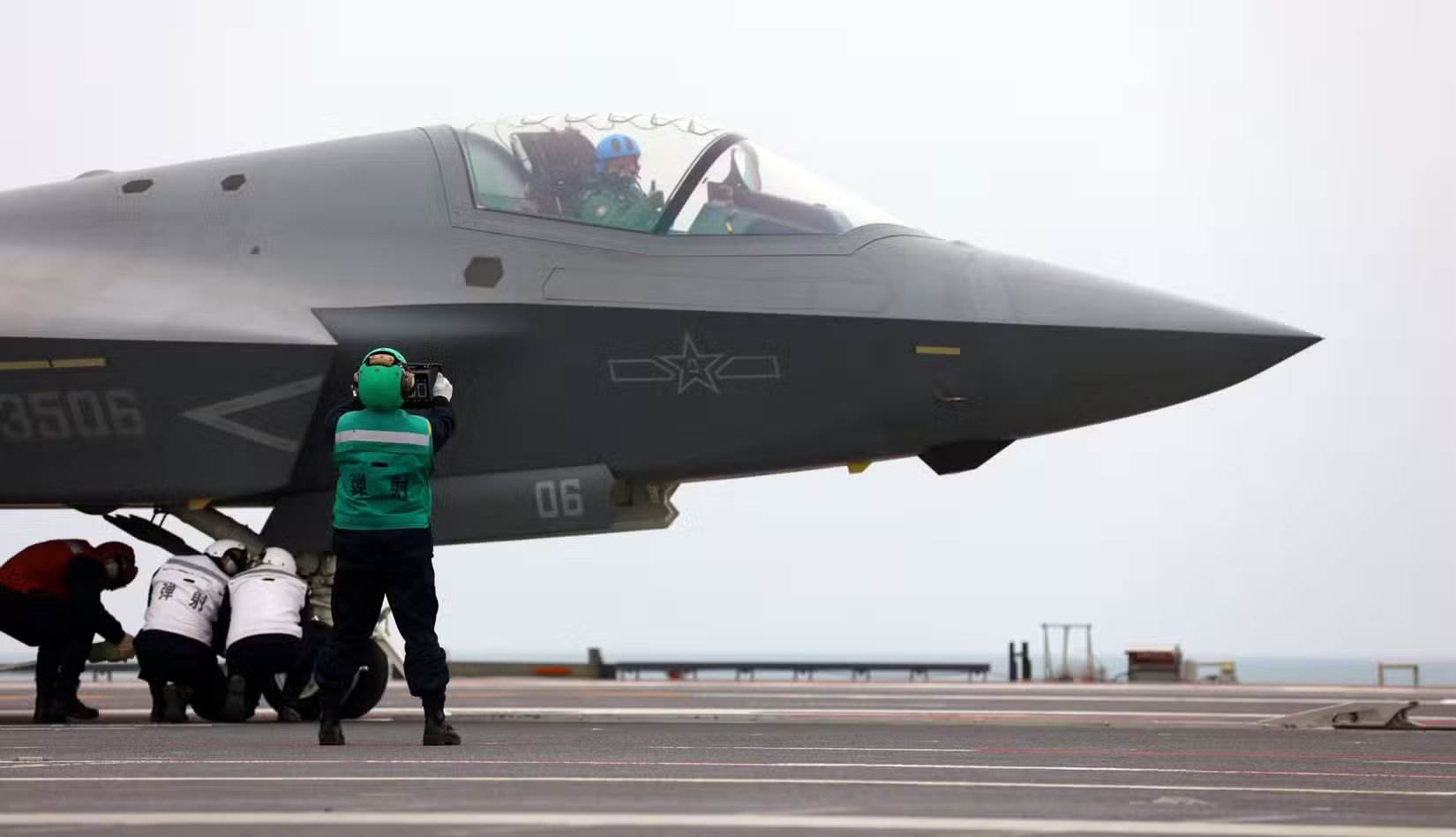
With the electromagnetic catapult system replacing the ski-jump deck, the maximum payload capacity has increased by approximately 30%. Fighters can now take off fully loaded with heavy anti-ship missiles and fuel, extending their combat radius. The *Fujian* can also deploy a more diverse air wing, including airborne early warning aircraft and unmanned aerial vehicles. Its straight flight deck significantly enhances the operational tempo and mission flexibility of the carrier air wing.
With a full-load displacement exceeding 80,000 tons, the *Fujian* features modifications to its hull structure and propulsion system to support a larger air wing. Three Electromagnetic Aircraft Launch Systems (EMALS) can operate independently, achieving a peak launch rate of four to six aircraft per minute. Construction has begun on the fourth hull, which will be equipped with nuclear propulsion and is widely speculated to be the Type 004. A joint task force deploying just three supercarriers can field 250 to 300 advanced aircraft on the front line.
Ski-jump decks rely entirely on an aircraft's high thrust-to-weight ratio for low-speed takeoffs. On the *Liaoning* and *Shandong*, heavy fighters like the J-15 must rely on their own engine thrust to ascend the ramp, resulting in a significantly reduced allowable takeoff weight. A J-15 "Flying Shark" has an empty weight of approximately 17,500 kg, and the weight restriction imposes a payload penalty of about 5,000 kg, directly reducing its combat radius and mission capability. Commanders must choose between long range and heavy firepower. Turboprop-powered platforms like the KJ-600 early warning aircraft are completely unable to use ski-jump takeoffs, limiting the strategic diversity of the carrier air wing.
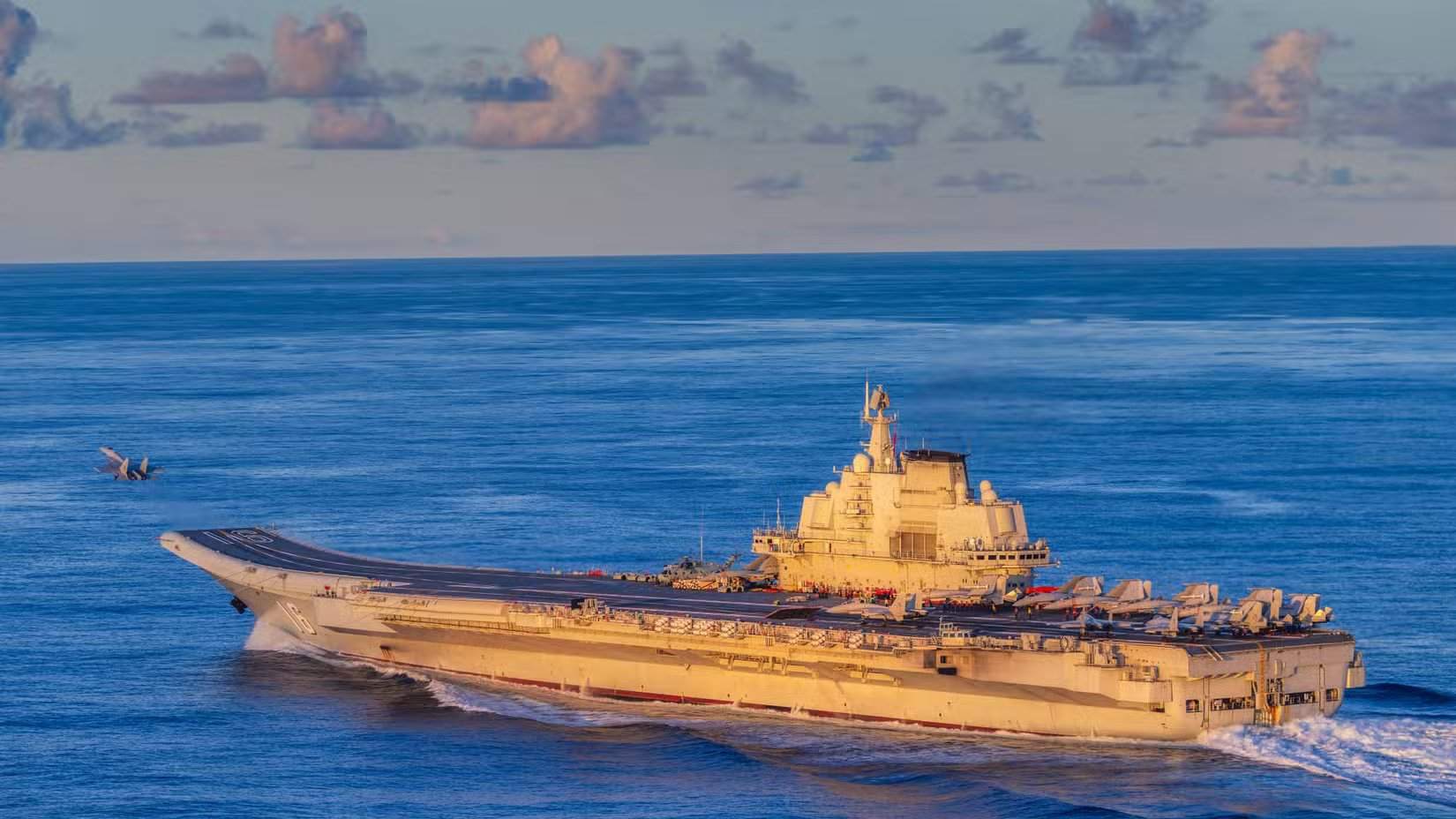
Ski-jump carriers cannot simultaneously conduct takeoff and recovery operations on the flight deck. Taking off at maximum takeoff weight requires the longest launch track, which is the same as the landing track, preventing the recovery of returning aircraft while a heavy fighter is taxiing or taking off. The *Liaoning* and *Shandong* rely entirely on helicopters for airborne radar, resupply, and other tasks. Helicopters have low ceilings, short ranges, and small radar arrays, making the formation vulnerable to threats. The *Fujian*'s straight flight deck also features dedicated storage and command nodes for unmanned platforms.
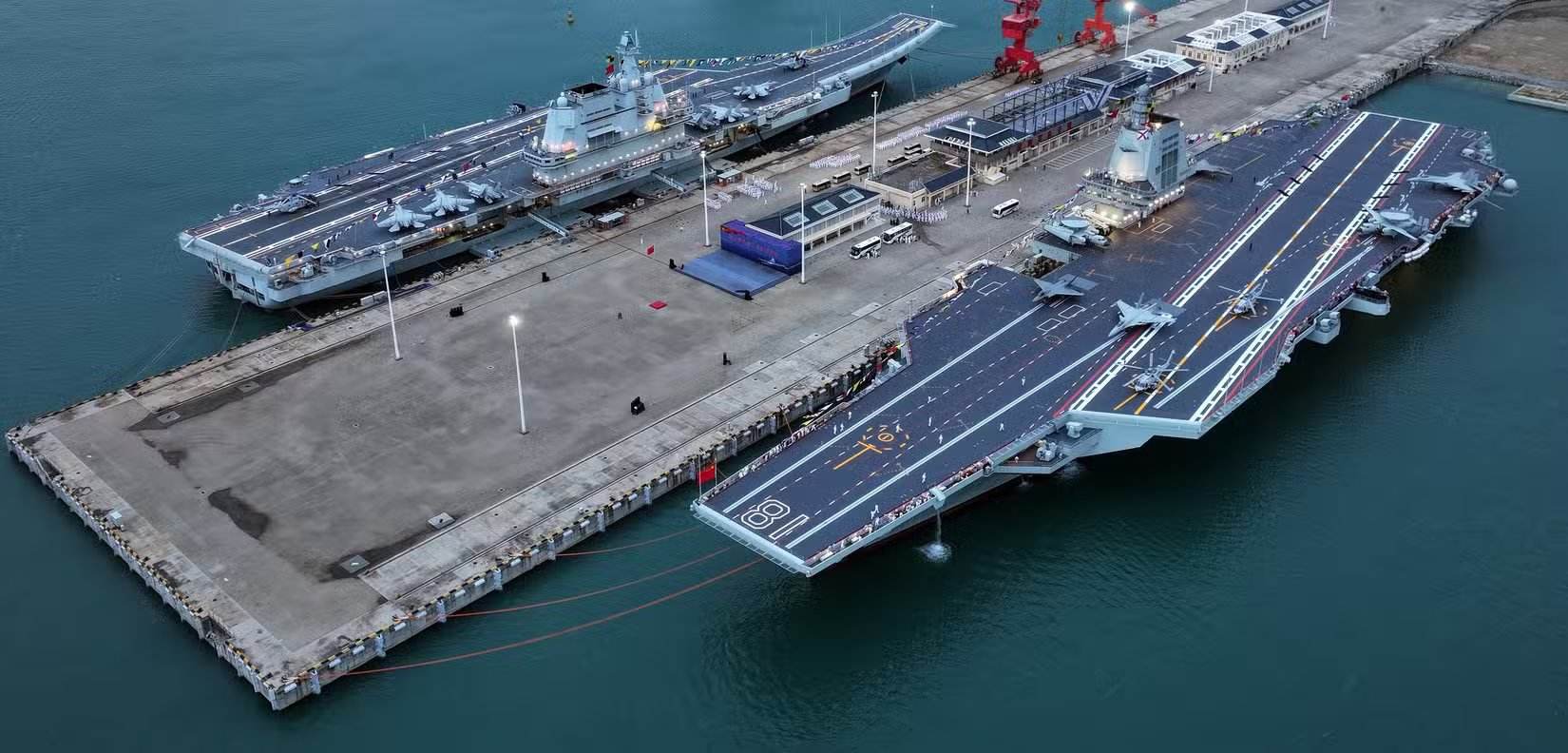
The "three-ship rule" dictates that for every carrier deployed, one is in maintenance and one is in training. The U.S. Navy operates 11 supercarriers, allowing it to deploy three to four simultaneously. When the PLAN reaches full strength, one to two carrier strike groups will be permanently stationed in the first and second island chains. The nuclear-powered Type 004, not constrained by fuel replenishment, can be dispatched to the Indian Ocean, the Persian Gulf, or even the Atlantic, as analyzed by the Jamestown Foundation. In a conflict, nine carriers would allow the PLAN to accelerate the readiness of training ships while deploying up to five or six, creating a deterrent against the U.S. fleet.
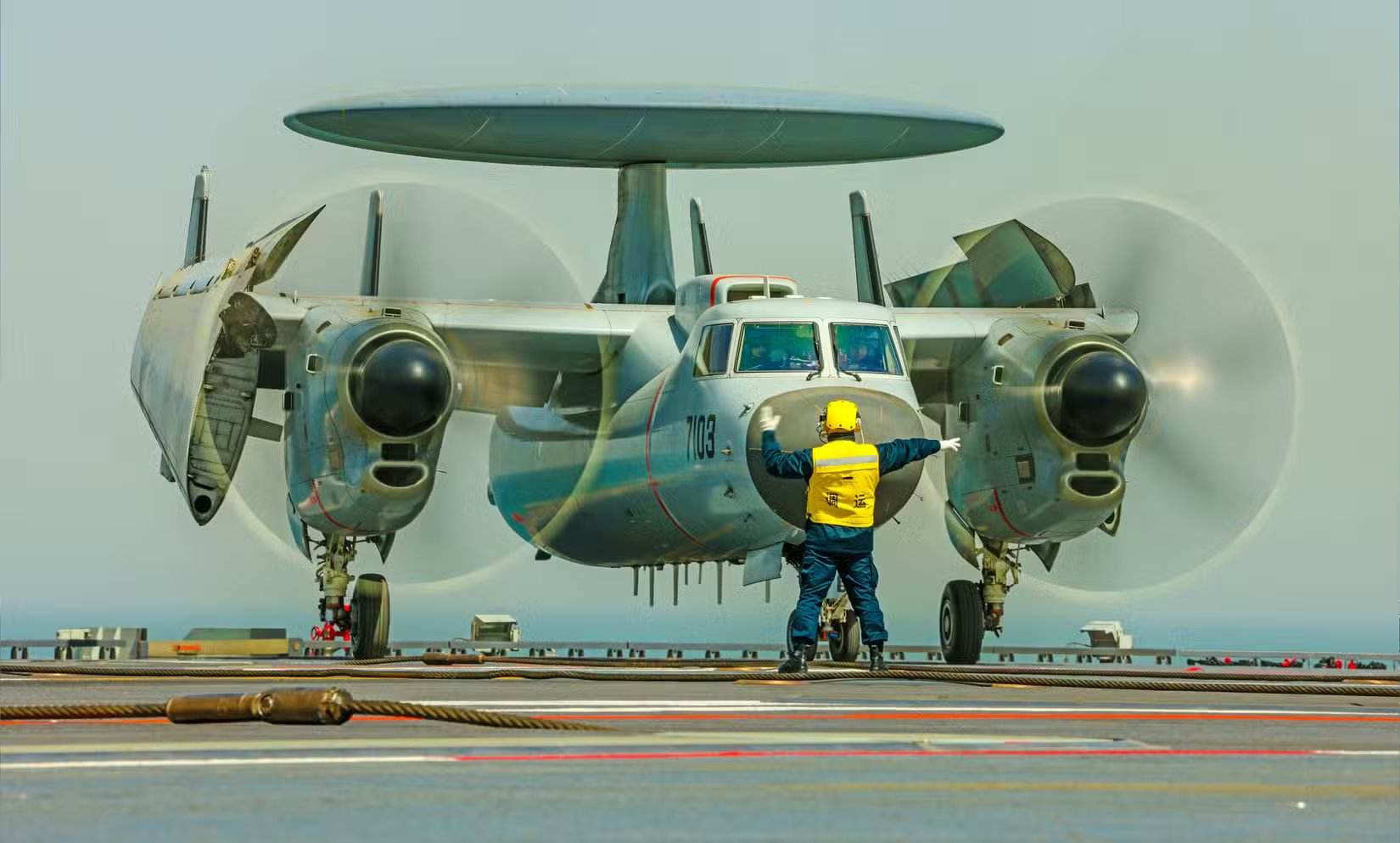
Unlike the Soviet-style single-level layout of the *Liaoning* and *Shandong*, the *Fujian*'s construction is closer to the U.S. Nimitz-class and Ford-class. The internal space of the electromagnetic catapults is about half that of steam catapults, saving volume for expanding the hangar, aviation fuel, and ammunition storage. The Type 003 features two large, high-speed starboard aircraft elevators, spaced apart to minimize interference with the flight deck. The Type 003 and Type 004 are being built with climate-controlled clean zones for maintaining the radar-absorbing material of fifth-generation stealth fighters, as such coatings are susceptible to damage in the salty maritime air.
The electromagnetic catapults can adjust the launch profile to match the weight and payload configuration of each aircraft, allowing smaller, lighter unmanned aerial vehicles to be deployed safely, whereas deploying UAVs with steam catapults on Nimitz-class carriers carries higher risks.
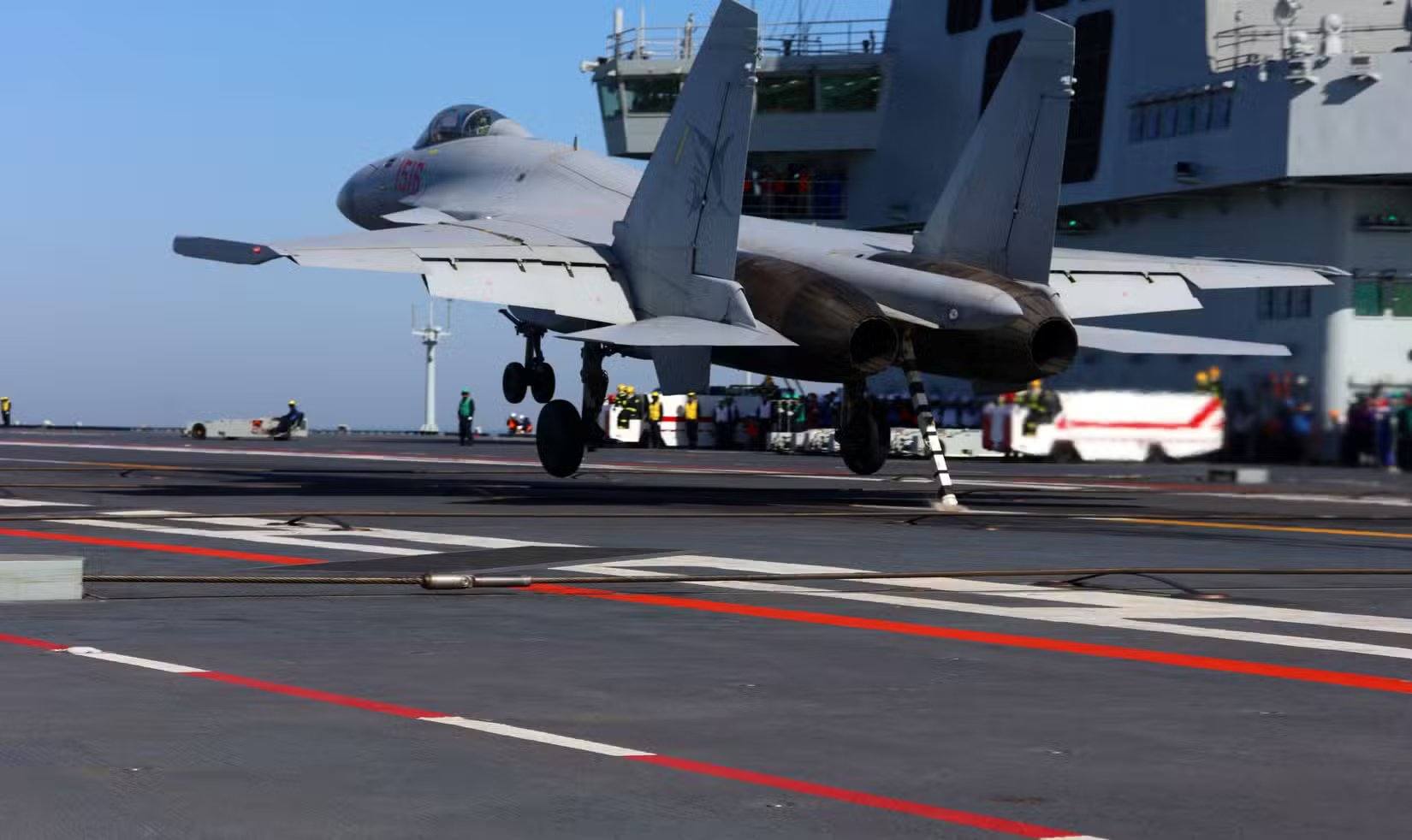
Supercarriers enable the PLAN to project an air defense umbrella hundreds of miles beyond the first island chain. New carrier strike groups can penetrate deep into the second island chain as far as Guam, home to Andersen Air Force Base and one of the airfields where Northrop Grumman B-2 "Spirit" stealth bombers land, posing a major challenge to the U.S. military's strategic hegemony in the region. The Type 004 may be equipped with four catapult tracks, optimizing the starboard side for aircraft elevators and helicopter operations to keep pace with the operational tempo of its U.S. counterparts.
New carrier strike groups provide Beijing with political and military tools similar to those of the U.S. Navy. Deploying supercarriers near the coasts of smaller nations can project power signals, expanding China's diplomatic influence in Africa, the Middle East, and Latin America. Carrier strike groups offer a controllable deterrent within China's military arsenal, serving as a reusable tool of "gunboat diplomacy." As the world's largest trading nation, China relies on open sea lanes, and carrier strike groups can protect Chinese interests globally by establishing no-fly zones, conducting maritime patrols, launching drone strikes, or providing humanitarian assistance.
This article is compiled by Wedoany. All AI citations must indicate the source as "Wedoany". If there is any infringement or other issues, please notify us promptly, and we will modify or delete it accordingly. Email: news@wedoany.com
Related Products


Excavator Bucket Teeth Heat Treatment Production Line
Suzhou Hezhongju Intelligent Equipment Co., Ltd.
Industrial and Commercial Point-Type Gas Detector
Jinan Benan Technology Development Co., Ltd.
Pneumatic high-pressure wear-resistant ball valve
Zhejiang Deca Control Valve Meter Co., Ltd.
Strip Coating and Plating Production Line Equipment
MCC-SFRE HEAVY INDUSTRY EQUIPMENT CO., LTD.
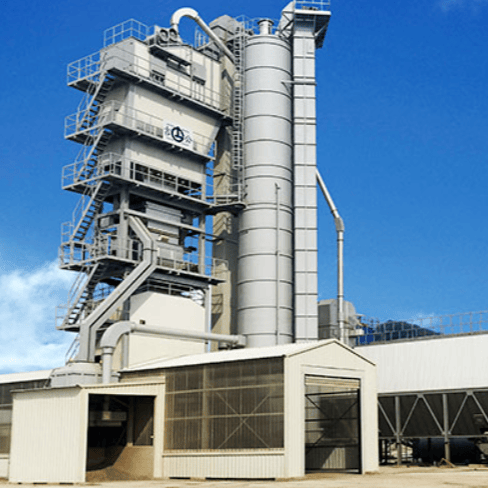
LBH4000 Batch Environmental Protection Asphalt Mixing Plant | Asphalt Batching Plant | Asphalt Mixing Plant
Jilin Province Road Construction Machinery Co., Ltd.
Standard Nozzle Flowmeter
Jinggong Automatic Control Instrument Complete Technology Development Company