en.Wedoany.com Reported - The Foothill Gold Line Construction Authority awarded a construction management contract to SSH Joint Venture on May 27 for the Pomona to Claremont A Line Extension. This 2.3-mile extension is part of the San Gabriel Valley light rail segment. The joint venture consists of Skanska USA Civil West California District Inc., Stacy and Witbeck Inc., and Herzog Contracting Corp. The authority's board selected the Construction Manager at Risk (CMAR) delivery method for the project last year, aiming to achieve stricter risk allocation and cost control. If SSH and the authority negotiate a construction services contract after reaching the 85% design milestone in fall 2027, major construction is planned to begin later that year and is expected to take approximately four years.
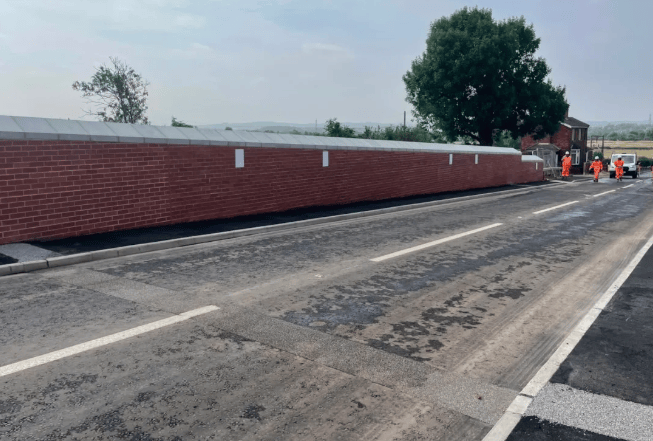
The core challenge of the project involves construction within an approximately 100-foot-wide corridor currently shared by Metrolink and freight trains. Two existing commuter and freight rail tracks must be relocated to the southern half of the corridor with minimal disruption to existing services, to make room for a new overhead-powered light rail system. Once completed, the corridor will accommodate four parallel tracks, including two light rail lines and two conventional heavy rail lines. According to Christopher Burner, the authority's Chief Project and Planning Officer, the SSH joint venture's contract will apply the CMAR process, aiming to eliminate unexpected costs typical of standard infrastructure projects by waiting to lock in the final construction price. The total project construction cost will only be determined after SSH submits a Guaranteed Maximum Price (GMP) bid, expected around fall 2027 when the project design reaches approximately 85%. The advantage of locking in the price after the design is largely complete is that SSH can be deeply involved in the design process, ensuring it is efficient and easy to construct, while the GMP bid can reduce or eliminate uncertainties that might otherwise lead to risk premiums being added to the bid. SSH's contract includes an initial allocation of $6.3 million to support pre-construction activities such as constructability reviews, value engineering, third-party coordination, and cost estimation by Parsons Transportation Group.
Early construction challenges involve relocating and protecting various utilities along the narrow alignment, including electric, gas, communications, sewer, and water lines. Some third-party utility companies are already planning their own relocation efforts. Although the Los Angeles County Metropolitan Transportation Authority (LA Metro) already owns most of the rail corridor, a small amount of property acquisition is still needed to support equipment such as new grade crossings. In downtown Claremont, the corridor width narrows to less than 100 feet, potentially requiring larger-scale property acquisitions, and current design work is critical to understanding the final acquisition needs. Regarding project funding, while the final construction price has not yet been determined, the overall funding for the extension is secured through a $798 million capital injection from LA Metro via California's SB 125 program, covering the entire budget including construction, design, administration, third-party costs, and train procurement. This extension will mostly run at grade with no tunnels, requiring the reconstruction of four grade crossings, and the tracks will be elevated to cross three major streets with new light rail bridges. The new Metro A Line station in Claremont will be built at the location of the existing Metrolink station, requiring the Metrolink station to be moved several hundred feet east to make room. A new parking structure with 539 parking spaces, equipped with electric vehicle charging and bicycle parking facilities, will serve both transit systems. Upon completion, the Metro system will operate on the north side of the shared corridor, with the Metrolink system on the south side, and the relocated Metrolink station will be closer to the parking facilities.
This article is compiled by Wedoany. All AI citations must indicate the source as "Wedoany". If there is any infringement or other issues, please notify us promptly, and we will modify or delete it accordingly. Email: news@wedoany.com