en.Wedoany.com Reported - Bangladesh Prime Minister Tarique Rahman called in Dhaka for the development of a practical, employment-oriented education system based on skills and technology to replace the traditional certificate-centric model, in order to address the challenges posed by the Fourth Industrial Revolution.
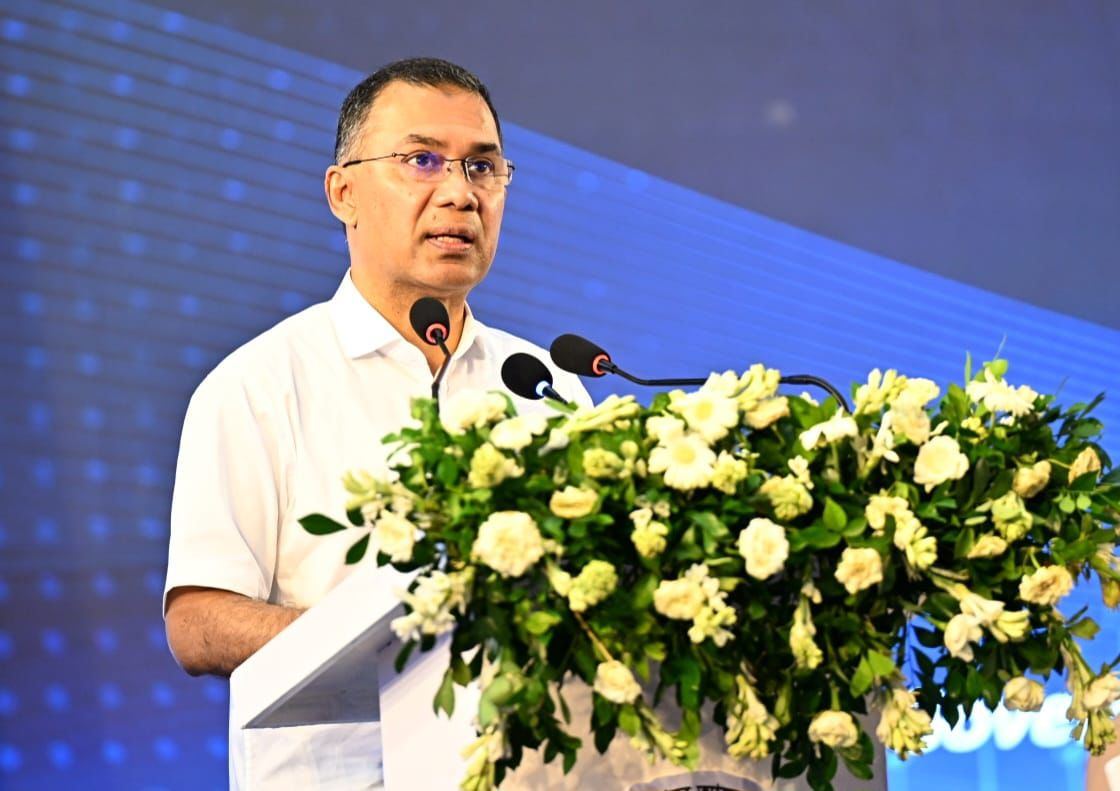
Speaking at the inauguration of the Teacher Employment-Oriented and Technical Education Training Program at the Bangladesh-China Friendship Conference Center, Rahman stated that in the face of the development of artificial intelligence (AI) and automation, traditional educational curricula must be modernized and updated. The training program, organized by the National University (NU) under the theme "We will receive employment-oriented education, we will work around the world," aims to transform 12,000 university teachers across the country into skilled instructors. He noted that the political environment over the past 15 years or more had not only deprived the people of their democratic rights but also damaged the education system, calling for a reversal of this situation in a democratic Bangladesh. He emphasized the need to prepare for education, knowledge, science, and technology to honor those who sacrificed for establishing democracy and protecting the nation and people's freedom, warning that otherwise, it would be difficult to survive global competition.
Elaborating on the role of the National University in expanding higher education, Rahman mentioned that the university was established in 1992 by the late former Prime Minister Khaleda Zia to address the crisis in higher education management and ensure education for all. Currently, over 4 million students study at the university across more than 2,000 affiliated colleges nationwide. This institution can play the most significant role in expanding modern and technology-based higher education. He advocated for incorporating subjects such as artificial intelligence, cybersecurity, programming, digital entrepreneurship, quantum computing, nanotechnology, and 5G technology into the educational curriculum to address the changes in employment structure brought about by the technological revolution. The current government has begun reforming the educational curriculum from primary to the highest levels to make it more practical and technology-based.
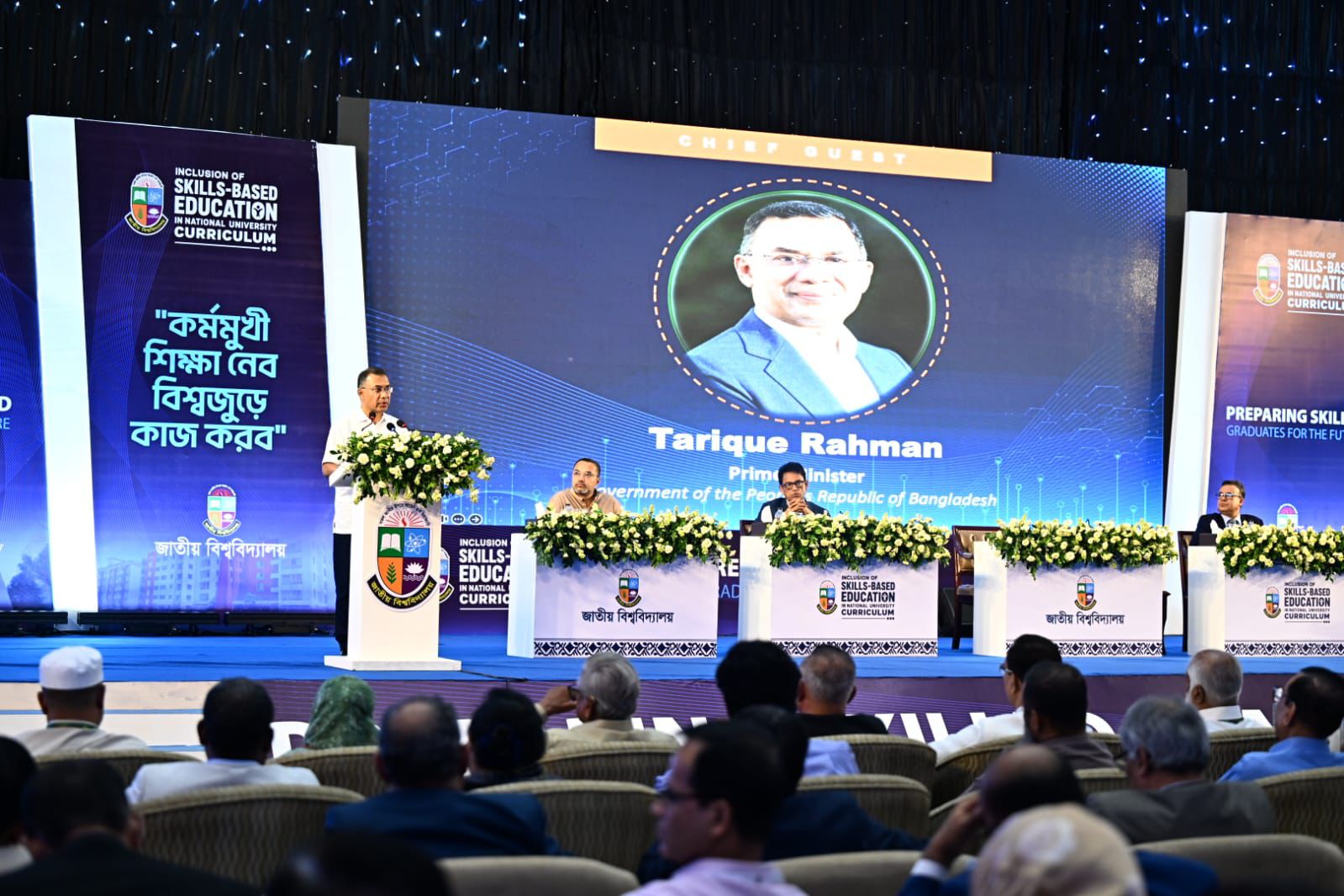
To reduce the unemployment rate among highly educated individuals, Rahman emphasized that although many have obtained the highest academic certificates, they remain unemployed due to a lack of practical skills. To overcome this situation, the government is strengthening apprenticeships, internships, and industry-academia collaboration, initially being implemented in divisional cities. The government also plans to provide "seed funding" or "innovation grants" through a competitive process to commercialize innovative business ideas in colleges and universities, fostering entrepreneurial graduates so that young people can create their own jobs. He also called for strengthening moral education while pursuing technical education, focusing on students' ethics, mental health, social inclusion, and environmental protection. Rahman suggested that if a third language is learned in addition to Bengali and English, there will be no shortage of employment opportunities. He urged teachers to act as pioneers and role models for social change, stating that if students and youth are transformed into a workforce with technical skills, a prosperous and self-reliant Bangladesh will become a model for the world. Finally, he called for unity and cooperation among universities, teachers, students, guardians, civil society, and industry to jointly build a knowledge and competency-based society. Education Minister ANM Ehsanur Haque Milon, Prime Minister's Education Advisor Mahdi Amin, and National University Vice-Chancellor Professor ASM Amanullah also spoke at the inauguration.
This article is compiled by Wedoany. All AI citations must indicate the source as "Wedoany". If there is any infringement or other issues, please notify us promptly, and we will modify or delete it accordingly. Email: news@wedoany.com