en.Wedoany.com Reported - On June 8, Apple released the new generation of Apple Intelligence at the WWDC26 Global Developers Conference, along with a brand-new version of Siri AI. Apple describes it as a smarter, more knowledgeable, and more capable voice and conversational assistant, with related features set to be integrated into software ecosystems including iOS, iPadOS, macOS, watchOS, visionOS, and tvOS.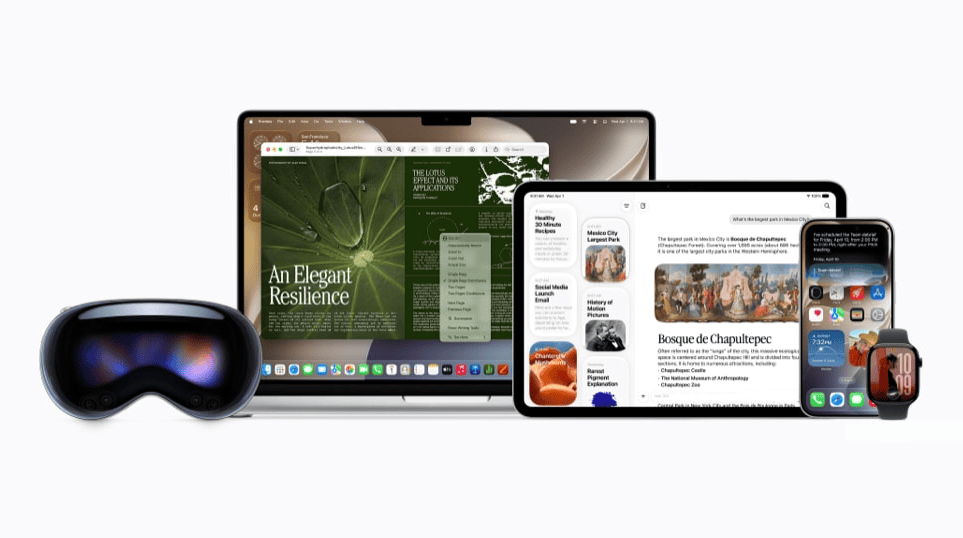
The core change in Siri AI is its evolution from a traditional voice assistant to a personal intelligent entry point more deeply embedded in the system. The new version can understand user needs by combining personal context, on-screen content, and web information. Users can ask Siri to find relevant content in messages, emails, or photos, ask questions based on current on-screen content, or complete tasks through more natural continuous conversations. Apple has also designed a dedicated app for Siri AI, allowing users to review conversation history across devices, continue previous tasks, and privately sync via iCloud across different devices. For the Apple ecosystem, this means Siri is no longer just a tool for setting timers, checking weather, or executing simple commands. Instead, it has been repositioned within app operations, content understanding, file retrieval, image recognition, and cross-device task flows, becoming a key entry point for Apple Intelligence to connect users, devices, and application capabilities.
Apple emphasized that the new generation of Apple Intelligence adopts a new privacy architecture to support Siri AI and system-level AI features.
This AI capability will be integrated into high-frequency apps such as Photos, Safari, Image Playground, Messages, and Mail. Users can perform smarter editing and composition adjustments in Photos, manage multi-tab browsing content in Safari, receive writing, organizing, and reply assistance in Messages and Mail, and use visual intelligence to understand content on screen, in images, or through the camera. On iPad and Mac, Siri AI will be integrated with Spotlight, allowing users to ask more complex questions directly from the search entry point. In system-level menus, users can also invoke Siri to explain, organize, or perform next steps on images, files, or text. Apple's approach remains centered on on-device experiences, personal data understanding, and system-level integration, embedding AI capabilities into apps and operation entry points users are already familiar with, rather than relying solely on an external chat window to handle all tasks.
In terms of release pace, Siri AI and some new Apple Intelligence features are now available for developer testing, with a public beta planned for later this year. Apple stated that Siri AI will initially support English, with rapid expansion to more languages. Compatible devices include the iPhone 16 series and newer models, iPhone 15 Pro and iPhone 15 Pro Max, iPad mini with A17 Pro, iPad and Mac with M1 and newer chips, Apple Vision Pro, and some Apple Watch models when paired nearby with an Apple Intelligence-supported iPhone. For the Chinese market, Apple officially stated that Siri AI and new Apple Intelligence features will not be available until relevant regulatory requirements are met.
This release also clarifies Apple's positioning in the AI competition. Rather than solely pursuing open large model entry points, Apple emphasizes embedding AI capabilities into the operating system, device permissions, and app actions, allowing users to directly invoke intelligent capabilities in writing, search, image processing, travel planning, information organization, and cross-app operations. For developers, the integration of Siri AI with Spotlight, system menus, and app actions will bring new adaptation requirements. Whether future apps can be accurately understood, invoked, and tasked by Siri may become a new variable in service distribution and user experience within the Apple ecosystem.
Key subsequent milestones will focus on beta stability, the speed of multilingual expansion, the effectiveness of third-party app integration, and availability across different regions. As Siri AI gradually enters iPhone, iPad, Mac, and Vision Pro, Apple's AI strategy will transition from feature demonstration to large-scale system experience validation.
This article is compiled by Wedoany. All AI citations must indicate the source as "Wedoany". If there is any infringement or other issues, please notify us promptly, and we will modify or delete it accordingly. Email: news@wedoany.com