en.Wedoany.com Reported - Founded in 1951, the Shenyang Aluminum and Magnesium Engineering Institute of China Aluminum International (hereinafter referred to as "Shenyang Aluminum and Magnesium Institute") has evolved from scratch into the technological engine of China's aluminum industry over 75 years. Its technological foundation supports approximately 40% of global electrolytic aluminum capacity. This institution, possessing tens of thousands of blueprints and extensive experience in constructing aluminum plants both domestically and internationally, has its history co-authored by key participants in the development of China's aluminum industry.
In 1951, Luo Xueqiang, a graduate of Tsinghua University, joined the former Civil and Architectural Design Company of the Northeast Ministry of Industry. His first project was the "first aluminum-magnesium alloy processing enterprise in New China"—the Northeast Light Alloy Processing Plant. In 1954, while reviewing Soviet design drawings, he found the Soviet design overly conservative. Leading his team through repeated calculations, he proposed his own plan, saving over 600 cubic meters of reinforced concrete for the project. Luo later served as the institute's director. Through repeated discussions with experts, he jointly recommended the policy of "prioritizing the development of aluminum in China's non-ferrous metals industry," which was eventually established as a national strategy. During his tenure, five major national key aluminum plants in Fushun, Zhengzhou, Shanxi, Qinghai, and Baotou were successively completed. He also personally organized expert lectures, sent young technical personnel to Tianjin University and Nanjing University for targeted training, established an English speaking class at Northeastern University, and selected key personnel for further studies in the United States and Germany. Concurrently, he and the leadership team built 3.1 million square meters of dormitories for employees over five years and invested in the best primary and secondary schools in Shenyang to ensure priority enrollment for employees' children.
In 1962, Li Jinlian, a Korean ethnic woman, graduated from Yanbian University and was assigned to the Shenyang Aluminum and Magnesium Institute. At that time, she could barely speak Chinese. Twenty years later, she took on the construction task for the Shanxi Aluminum Plant—Asia's largest alumina production base. In 1982, her annual workload was equivalent to 539 days of work for an average employee; in 1983, she completed the workload of 1 year and 8 months. In July 1987, before the trial operation of the Shanxi Aluminum Plant, Li Jinlian, along with an assistant engineer, inspected nearly 600 pieces of equipment and about 2,000 pipelines one by one, resolving over 100 issues. After the trial operation began, risking high temperatures and the potential eruption of high-pressure slurry, she stayed on-site for three consecutive days and two nights. At 5 a.m. on the third day, she detected an abnormal temperature in the carbon decomposition section, identified the root cause, and ensured the smooth precipitation of aluminum hydroxide. Over 25 years, Li Jinlian grew from someone who knew no Chinese into a National Master of Survey and Design.
In October 1985, Li Henglong successfully defended his doctoral dissertation at the University of Michigan. Over three years, he took 16 courses, earning A or A+ in all, published five papers in British and American journals, attended seven academic conferences, and presented four papers. The state allowed him to stay in the U.S. for one and a half years after obtaining his doctorate with favorable treatment, but he chose to return to China. In early 1986, he became Deputy Chief Engineer of the Shenyang Aluminum and Magnesium Design and Research Institute, and soon after, Deputy Director. During the same period, engineer Liu Chanbin did not respond when foreign company experts offered him a monthly salary of 10,000 yuan (while domestic engineers earned only a few hundred yuan per month). Liu Chanbin's most notable achievement was in 1985, when he revived the nearly bankrupt Maoming Carbon Plant in Guangdong. The plant's annual output was less than 1,000 tons, with an electricity consumption of 7,100 kWh per ton (the highest in the country). Liu developed China's first 50,000-ampere silicon rectifier unit, which succeeded on its first trial, reducing electricity consumption to 4,200 kWh per ton and doubling production capacity. The plant turned from an annual loss of 100,000 yuan to an annual profit of 410,000 yuan.
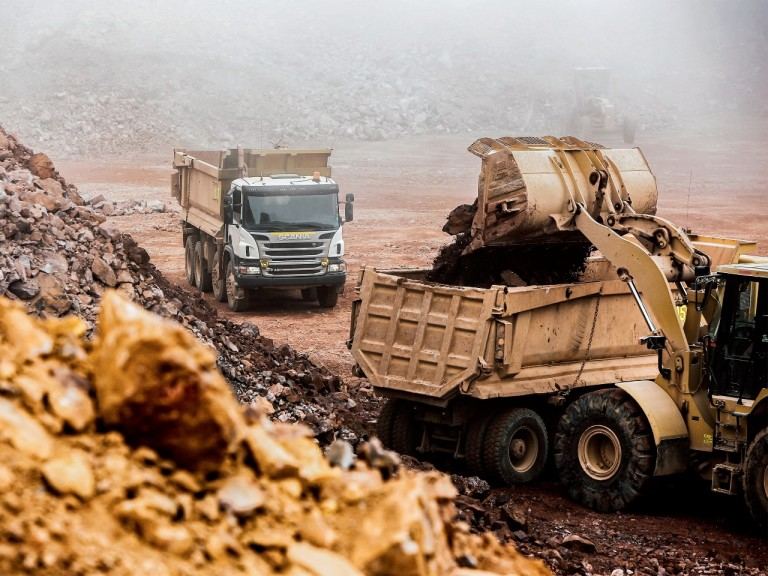
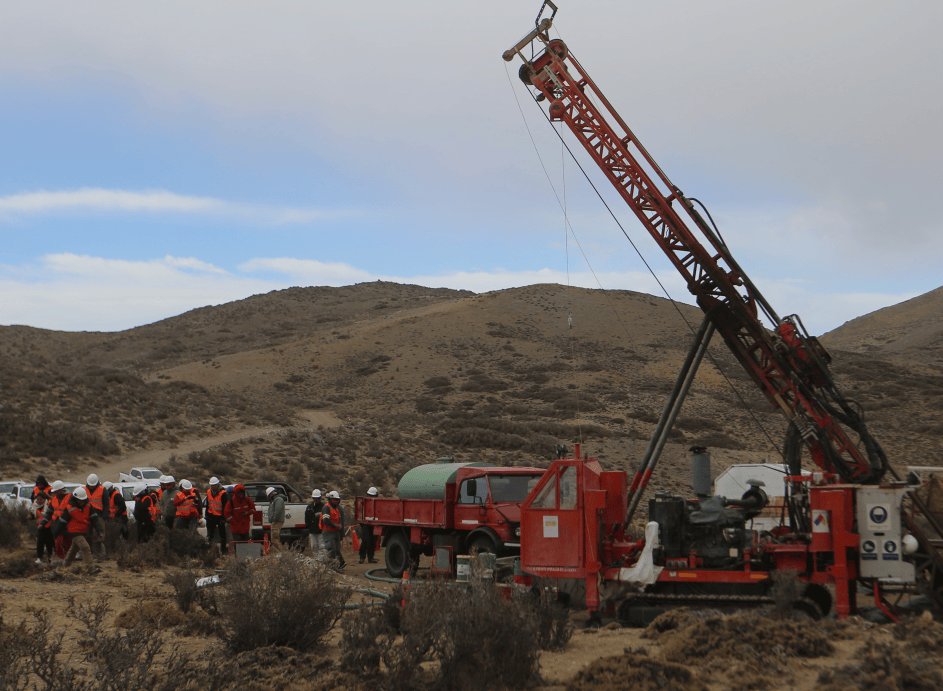
The Longmenshan Limestone Mine of the Shanxi Aluminum Plant required transporting ore from the mountain peak at an altitude of 890 meters down to the base, a vertical drop of 228 meters. Senior engineer Su Shiyou, then aged 55, proposed a plan: using a 1,200-meter downward steel-cord belt conveyor. This plan had no precedent in China and lacked complete technical data abroad. His team designed a three-stage braking system for the braking measures and utilized gravity to generate electricity for energy recovery, saving 1.2 million kWh of electricity annually. In July 1987, the conveyor's load trial operation succeeded. During construction, Su Shiyou entered the inclined shaft tunnel 46 times alone and worked 87 overtime days. At the Shanxi Aluminum Plant site, Deputy Chief Engineer Min Zhongxing served as the on-site design team leader for many years; Senior Engineer Chen Pu'an led colleagues to review all drawings over 50 days; Power specialist Zhang Guizhi worked on-site for over a year; In 1988, Zhang Jiwen applied to work at the Xiaoyi Bauxite Mine site, spending over three years alone in the Lüliang mountain valley, living in a drafty bungalow without water or electricity.
Due to historical reasons, the architecture department had not recruited new university graduates for over a decade. In 1976, the institute selected a group of trainees from returned educated youth to form the "July 21 University." These trainees were supervised by Li Xiude and Wang Lan, with instruction from civil engineering department engineers. Qiu Jinyu graduated and joined the institute in 1963, starting as a tracer and later becoming the head of the architecture group. During his eight-year tenure as group head, he led the team to complete the Shanxi Aluminum Plant, the largest project in the institute's history. In 1996, his team participated in the Liaoning Province Residential Design Competition and won second prize (only three awards were given province-wide). Among these "July 21" trainees, four later obtained the National First-Class Registered Architect qualification, and six were promoted to Senior Architect. In 1952, 31 young women with an average age of under 22 formed New China's first "March 8th Women's Survey Team." In 1981, the institute's labor union organized a choir of one hundred engineers, with the oldest participant, Tao Guorui, then over 70 years old.
In the late 1980s, the Zhongzhou Aluminum Plant began construction at the foot of the Taihang Mountains. Gao Zengxian, deputy leader of the design team, moved his family from Shenyang to the construction site, staying for four years. Party branch secretary Liu Kecheng, despite being at retirement age, persisted on-site and was awarded the title of Advanced Worker by the command headquarters in 1988. The Qinghai Aluminum Plant, located at an altitude of 2,400 meters, had Li Tingquan, then nearly 60 years old, serving as the on-site design team leader. At the Qinghai site, engineer Li Houfu discovered that the elevation of the electrolytic cell busbars in foreign drawings was inconsistent with domestic standards and proactively proposed a correction plan. Experts from the Swiss company BBC later acknowledged the error.
Over 75 years, the Shenyang Aluminum and Magnesium Institute has evolved from a few offices at No. 141 Central Street, Harbin, into the technological foundation of China's aluminum industry. Today, the institute's young engineers utilize tools such as 3D modeling, simulation analysis, and data inference to continue advancing the cause.
This article is compiled by Wedoany. All AI citations must indicate the source as "Wedoany". If there is any infringement or other issues, please notify us promptly, and we will modify or delete it accordingly. Email: news@wedoany.com