en.Wedoany.com Reported - U.S. power exchange ElectronX has launched hourly power contracts targeting the Midwest and California power grids, accelerating the global layout of power derivatives markets.
Since 2026, ElectronX has introduced PJM power derivatives; the European Energy Exchange (EEX) has listed short-term power futures for Belgium and Japan; Euronext has officially launched Nord Pool power futures covering the Nordic and Baltic regions. In terms of trading volume, EEX's total power market volume across all categories reached 13,494 TWh in 2025, up 9% year-on-year, with European domestic trading volume exceeding 9,330 TWh, and derivatives trading volume 9 to 10 times that of spot trading. U.S. power derivatives trading volume in 2025 reached 7.8 billion MWh, surging 30% year-on-year. The Asian market is rapidly emerging, with EEX's Japanese power derivatives experiencing explosive growth. The global power derivatives landscape is becoming increasingly comprehensive.
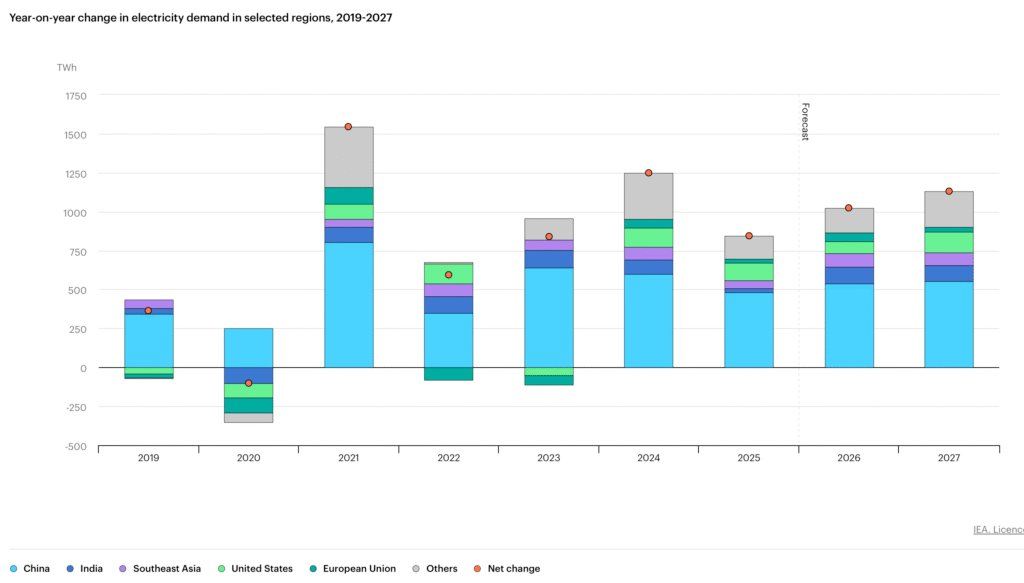
With increased volatility in spot electricity prices, the global financialization of power is accelerating across the board, and electricity is rapidly transforming from a public utility into a standardized commodity. Wei Chaoming, a researcher at Founder CIFCO Futures, stated that this is essentially the result of the dual resonance of energy structure transformation and the explosion of the digital economy. The rapid increase in the share of new energy installations has led to greater volatility in spot electricity prices. At the same time, the explosion of the AI computing industry is reshaping electricity demand, exacerbating the instability of power supply and demand.
Hou Mengqian, a researcher at Huaxin Futures Research Institute, stated that global data center investment is expected to reach $580 billion in 2025, surpassing for the first time the $540 billion in the global oil supply chain. The millisecond-level synchronous load fluctuations in AI training and inference make data centers' requirements for power supply stability far exceed those of traditional industries. Electricity price volatility has shifted from a single weather factor to "weather + computing power," and power derivatives have upgraded from industrial auxiliary tools to the core infrastructure of the new-type power system.
Affected by geopolitical conflicts and extreme weather, fossil energy prices have fluctuated significantly, driving sharp volatility in power generation costs. With the global acceleration of "carbon neutrality" and the continuous high growth of new energy installations, extreme market conditions such as soaring prices or negative electricity prices have become frequent. These factors have made energy security and price volatility a focus of attention for countries worldwide. The global reform of power marketization continues to be implemented, with administrative pricing gradually withdrawing and the formation of spot markets providing the institutional and liquidity foundation for derivatives. Wei Chaoming believes that the innovative products launched by exchanges not only meet market hedging needs but also, by providing liquidity and price discovery functions, promote the transformation of electricity from a public utility commodity to a core financial asset.
Ye Haiwen, Manager of the Energy and Chemical Research Center at Guomao Futures Research Institute, stated that power derivatives provide a crucial price discovery function, objectively reflecting future supply and demand, correcting sharp rises and falls in spot electricity prices, buffering price anomalies caused by unstable new energy generation and extreme weather, revitalizing cross-cycle power resource allocation, improving the structure of commodity categories, and enhancing market liquidity. Through power derivatives, power generation companies can lock in future electricity sales revenue, hedging against the profit risk of insufficient new energy output; electricity sales companies can lock in power purchase costs in advance, avoiding retail electricity price fluctuations; and high-energy-consuming enterprises such as electrolytic aluminum and chemical plants can lock in electricity expenses, stabilizing production costs and cash flow.
From a macro perspective, the financialization of electricity will reduce the impact of large electricity price fluctuations on the industrial chain, ensure national energy security, promote innovation in green financial products, and help establish a domestically influential local power benchmark price.
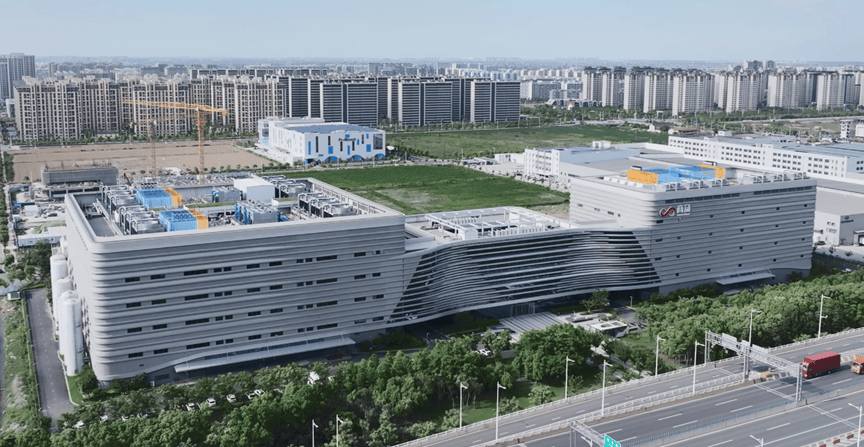
Facing the huge electricity demand of global computing centers and data centers, power financial instruments demonstrate high adaptability and innovation potential. Wei Chaoming stated that data centers have extremely high requirements for power supply continuity, and power futures can lock in power supply costs and guarantees through long-term contracts. At the same time, AI inference loads experience drastic fluctuations, and tools such as options can provide flexible price ceiling and floor protection. With the increase in single-cabinet power density and the emergence of ultra-large data center clusters, large-scale electricity consumers have both the economic viability and necessity to participate in the futures market. They can match instantaneous high-load demand through hourly contracts or use peak-valley spread contracts to hedge against time-of-use electricity price fluctuations. Power futures can be combined with tools such as green electricity certificates and carbon allowances to form a comprehensive risk management solution of "electricity volume + green value," adapting to the diversified needs of new-type electricity consumers.
As the domestic power market reform deepens, with the nationwide implementation of spot markets and the full market entry of new energy, the necessity and urgency of launching power futures and supporting derivatives have become prominent. Industry insiders note that as power spot markets in provinces such as Shanxi, Guangdong, and Shandong transition to formal operation, spot price volatility has significantly increased. Without effective hedging tools, both the generation and consumption sides will face operational risks. The scale of domestic new energy installations continues to rise, and the fluctuation of new energy output combined with dynamic changes in supply and demand expands the price risk exposure across the entire industrial chain. Without futures tools for hedging, the healthy development of the new energy industry will be constrained. From a macro perspective, building a unified national power market requires breaking down inter-provincial barriers to achieve optimal resource allocation, and power futures are precisely the key financial infrastructure. Facing the layout of power futures by major international exchanges, China, as the world's largest power market, must establish its local pricing benchmark as soon as possible.
Hou Mengqian introduced that, at the institutional level, the "1+6" basic rule system for the unified national power market has been implemented. In June 2026, Shanghai issued relevant policies, clearly stating the need to prepare for the research and development of power futures and computing power futures. At the spot market level, the national power spot market has basically achieved full coverage, with inter-provincial and intra-provincial regular trading mechanisms already in place. According to the plan, the full formal operation of the spot market will be basically completed by 2027, and the market system supporting spot and derivatives is taking shape. In terms of market cultivation, industry associations and futures institutions have established specialized training platforms to popularize hedging knowledge among power generation groups, electricity sales companies, high-energy-consuming factories, and data centers, cultivating qualified market participants.
Mr. Liu, who works for a power generation company, stated that he has been closely following news about power futures and studying overseas power derivatives, hoping that after the listing of domestic power derivatives, a large number of financial entities can participate in forward electricity price assessment, narrowing price deviations. From January to April 2026, power trading centers across the country cumulatively organized market-based electricity transactions totaling 2,430.7 billion kWh, a year-on-year increase of 25.6%. Wei Chaoming stated that based on the current scale of market-based electricity transactions and hedging ratios, power futures could bring tens of billions of yuan in capital increments. With the explosive growth of data center electricity consumption, the rate of capital growth will further accelerate. In the long term, with the completion of the unified national power market, it is expected that the proportion of market-based electricity transactions will exceed 80%, with the nominal transaction scale potentially reaching trillions of yuan. At the same time, the continuous increase in the share of new energy installations will amplify electricity price volatility, further stimulating hedging demand. If the penetration rate of China's power derivatives reaches half that of the European and American markets, the annual trading volume of electricity could increase to 10 to 15 trillion kWh, forming a market with a scale exceeding one trillion yuan.
This article is compiled by Wedoany. All AI citations must indicate the source as "Wedoany". If there is any infringement or other issues, please notify us promptly, and we will modify or delete it accordingly. Email: news@wedoany.com