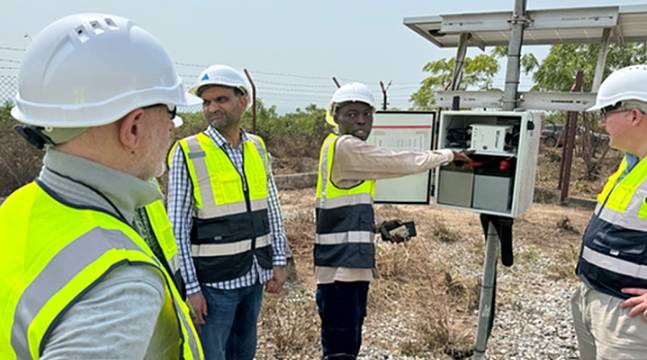
 Wedoany.com Report-Feb 25, An International Atomic Energy Agency (IAEA) mission to Ghana has assessed that the country adhered to the agency’s safety standards during the site selection process for its inaugural nuclear power plant. The evaluation, known as the Site and External Events Design Review Service mission, took place last week. It involved four experts from Pakistan, Turkey, the UK, and the USA, responding to a request from Ghana’s government. Nuclear Power Ghana hosted the mission, marking the first of its kind in the country.
In September 2023, Nuclear Power Ghana identified Nsuban in the Western Region as the primary location for the nuclear facility, designating Obotan in the Central Region as an alternative site. The IAEA team examined the selection methodology, reviewing the site selection report, criteria applied, and data gathered. They conducted site visits to both the preferred location in the Western Region and the backup site in the Central Region.
Kazuyuki Nagasawa, mission team leader and senior nuclear safety officer at the IAEA, stated: "We confirmed that both the implementing organisation and the management system are well-designed with the support of the government and that the Site Approval Report has been systematically and thoroughly prepared. Ghana followed the IAEA safety standards while performing the site selection process." The team commended the effective leadership and safety management throughout the process. They also offered suggestions to enhance the procedure, focusing on minimizing risks of the chosen site being deemed unsuitable later. Considerations include evaluating earthquake risks, flooding, extreme weather, and the practicality of emergency planning.
Stephen Yamoah, Executive Director of Nuclear Power Ghana, remarked: "This mission is of great importance to our nuclear power programme, as it ensures that our decisions are guided by international best practices for safe and secure development of nuclear power infrastructure. The relevance of the mission extends beyond technical assessment, reinforcing our commitment to transparency, regulatory preparedness and sustainable nuclear energy development."
Ghana is advancing plans for nuclear energy, exploring both large-scale plants and small modular reactors. The country already employs nuclear and radiation technologies in sectors like healthcare, agriculture, research, and industry. The IAEA will submit its final report to Ghana’s government within three months and continue providing guidance during the site approval phase. This mission underscores Ghana’s efforts to develop nuclear infrastructure responsibly, aligning with global safety benchmarks.