en.Wedoany.com Reported - Brazilian agriculture research corporation Embrapa has completed the development of the ProCarbon-Soil (Procs) model, the first model created in tropical regions for estimating carbon dynamics in agricultural systems, aimed at accurately measuring soil carbon stocks to support the carbon credit market.
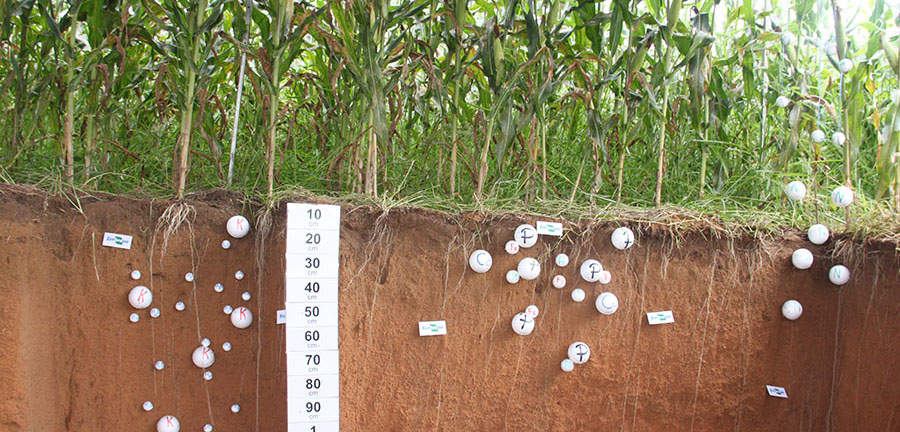
The expansion of the agricultural carbon market faces a challenge: how to accurately and credibly demonstrate how much carbon is being removed from the atmosphere and stored in the soil. In a context where investor confidence depends on measurement quality, tools that can reduce uncertainty have become a strategic component of carbon farming development. The Procs model was developed with this goal in mind, measuring the impact of no-till farming, crop rotation, and different soil management practices on carbon stocks, making calculations more aligned with the actual conditions of Brazilian agriculture.
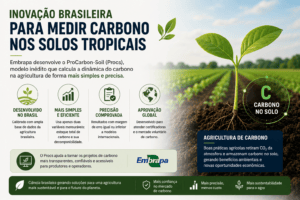
The main innovation of this system lies in simplifying the modeling process. While traditional methods use multiple variables and complex parameters, Procs uses only two directly measurable indicators: total carbon stock and its decomposability. Researchers point out that this reduces analytical complexity and improves compatibility between field measurement data and data used in carbon credit project calculations. Luis Gustavo Barioni, researcher and project leader at Embrapa Digital Agriculture, explains: "The carbon market needs dynamics and changes in total carbon. The second indicator relates to carbon quality, i.e., its stability. Other models divide carbon into different components. Our model assesses the overall quality of carbon."
The research team utilized an extensive database from Embrapa, Bayer, and over 370 scientific studies across various regions of Brazil, compiling 4,290 soil samples to develop a model calibrated for tropical systems. This differs from the currently predominant methods, which were developed in temperate regions. Barioni emphasizes that adapting to Brazilian conditions represents a strategic advantage: "These advantages include autonomy and continuous development to avoid obsolescence. This is our own model, with intellectual property rights, which is another important advantage."
Test results indicate that Procs achieves accuracy levels comparable to the most commonly used international models on the market. In certain scenarios, the system presents lower uncertainty than traditional measurements conducted directly in the field, potentially leading to cost reductions and increased project reliability. The next step involves seeking validation from international certification bodies. A technical report is being prepared for submission to Verra, the world's leading carbon credit certification body. If formally recognized, the model can be used in private projects, corporate decarbonization plans, and even initiatives related to the National Greenhouse Gas Emissions and Mitigation Inventory.
The tool is designed for future integration with satellite data, artificial intelligence, and automated information assimilation systems, thereby expanding its large-scale monitoring capabilities. For agriculture, which is increasingly linked to the global climate agenda, the evolution of these tools could be decisive in transforming carbon stored in soil into economically recognized assets in the market.
This article is compiled by Wedoany. All AI citations must indicate the source as "Wedoany". If there is any infringement or other issues, please notify us promptly, and we will modify or delete it accordingly. Email: news@wedoany.com