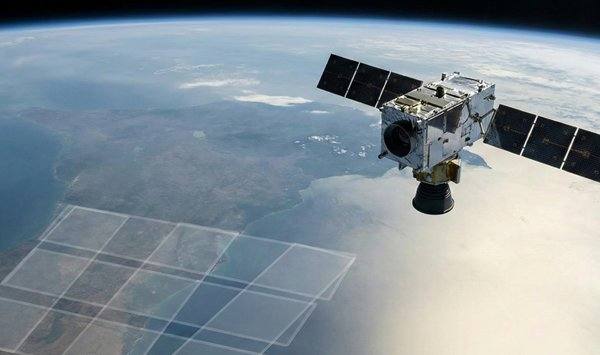
en.Wedoany.com Reported - Ubotica Technologies has proposed an architecture called Cognitive Earth Observation (Cognitive EO), aiming to transform the operational logic of traditional Earth observation. Centered on artificial intelligence, this architecture seeks to upgrade satellites from mere data collection devices to intelligent platforms capable of autonomous perception. Under the Cognitive EO framework, the system no longer relies on preset observation plans or post-processing workflows. Instead, it uses AI to predict target areas of interest, autonomously schedule sensors, process data onboard, and deliver actionable intelligence in near real-time.

In traditional models, Earth observation systems typically require collecting vast amounts of image data, which is then transmitted back to the ground for analysis hours or even days later. Ubotica's Cognitive EO architecture embeds AI capabilities into the core of the observation process, bringing decision-making closer to the data source. The system can identify areas at risk, automatically prioritize observations based on mission objectives, and dynamically allocate sensor resources, rather than operating on a fixed collection plan.
Within the platform, a continuous Cognitive Loop operates, integrating prediction, observation, analysis, and learning functions. The system starts with specific mission requirements, covering areas of interest, monitored assets, potential threats, and available sensor resources. AI then generates risk models to build an evolving operational situational picture, which guides subsequent observation tasks to optimize satellite resource utilization. A key technology of Cognitive EO lies in creating dynamic 3D risk maps that fuse information from various data sources and multiple sensing modalities. Specifically, the platform integrates optical imagery, synthetic aperture radar (SAR), radio frequency data, Automatic Identification System (AIS) information, and customer-provided intelligence into a single operational environment. By combining static infrastructure data with dynamic threat information, the system aims to provide continuously updated situational awareness across large geographic areas.
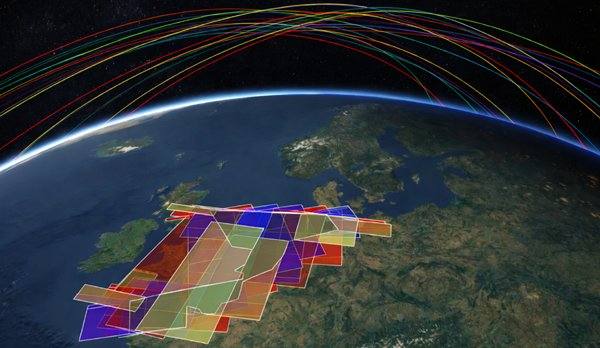
The platform also features autonomous scheduling capabilities, allowing sensing assets to execute tasks based on real-time risk changes rather than following fixed orbital collection plans. According to Ubotica, the system can autonomously select the most suitable constellation, sensing modality, and observation timing based on mission priorities, concentrating resources on areas with the highest intelligence demands. Edge processing is another core function of Cognitive EO, extracting actionable decision-making information directly from satellite data streams. Instead of transmitting all images to the ground for analysis, the platform processes data onboard the satellite and outputs key intelligence—such as target location, size, heading, and classification—within minutes. This capability is built on Ubotica's SPACE:AI technology, an edge AI platform validated through multiple space missions, enabling autonomous onboard processing.
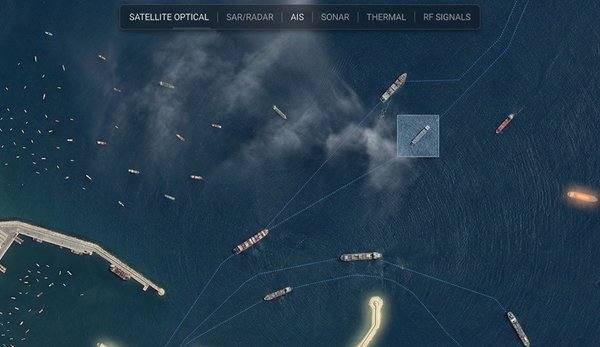
Ubotica emphasizes that SPACE:AI has been successfully applied in several operational missions and supports an expanding portfolio of in-orbit AI applications. The platform has been used for tasks such as ship detection, autonomous dynamic target tracking, hyperspectral data analysis, and real-time Earth intelligence generation, helping to reduce latency and improve the responsiveness of Earth observation systems. One of the first practical applications of the Cognitive EO framework is Live Maritime Intelligence, which applies AI-driven observation and analysis to maritime surveillance. The system is designed to provide continuous monitoring of Exclusive Economic Zones (EEZs) and critical maritime infrastructure through persistent sensing, data fusion, and real-time intelligence generation.
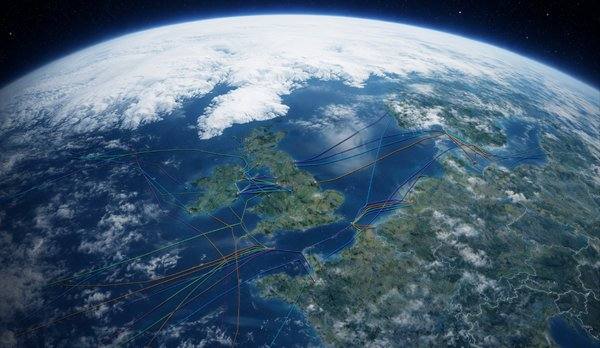
By integrating predictive analytics, autonomous sensor tasking, edge AI processing, and multi-source data fusion into a unified architecture, Ubotica is driving the evolution of Earth observation from traditional methods toward what it calls "Live Earth Intelligence." This new paradigm focuses on understanding, prioritizing, and acting on information in near real-time, rather than merely collecting images.
This article is compiled by Wedoany. All AI citations must indicate the source as "Wedoany". If there is any infringement or other issues, please notify us promptly, and we will modify or delete it accordingly. Email: news@wedoany.com