China's shipbuilding output reaches 15.68 million deadweight tons in Q1 2026, leading globally in three key indicators
en.Wedoany.com Reported - China's three major shipbuilding indicators continued to rank first globally in the first quarter of 2026. From January to March, shipbuilding output reached 15.68 million deadweight tons, a year-on-year increase of 46.0%, with export vessels accounting for 96.1% of the total. Compared to 10.74 million deadweight tons in the same period of 2025, output saw a significant surge. New orders received totaled 59.53 million deadweight tons, skyrocketing by 195.2% year-on-year. As of the end of March, orders on hand stood at 322.30 million deadweight tons, up 43.6% year-on-year. Multiple experts predict that China's three major shipbuilding indicators will continue to maintain a global lead in 2026.
Many shipyards have full order books, with delivery schedules extending to 2030. China State Shipbuilding Corporation revealed in a research briefing that as of the end of 2025, the company held a cumulative total of 652 orders for civilian and offshore engineering vessels, with delivery schedules extending to 2030. Runbang Co., Ltd.'s ship orders are also scheduled beyond 2028. On specific projects, Hudong-Zhonghua Shipbuilding signed a contract with Greece's Dynacom to build 12 very large crude carriers, with a total value of nearly 10 billion yuan. Shanghai Changshun ordered 10 6,150 TEU container ships from Yangzhou Guoyu, expected to be delivered between 2027 and 2028, making these new vessels the largest in its fleet by container capacity.
The continuous improvement in delivery capacity is mainly attributed to the shift in China's shipbuilding industry from competition among individual enterprises to competition within the entire industrial ecosystem. Chen Wenbo, Deputy Secretary-General of the China Association of the National Shipbuilding Industry, pointed out that this collaborative approach, in terms of efficiency, has greatly stimulated the scale effect of the industry. When upstream and downstream enterprises of the shipbuilding industry chain are concentrated in one region, construction time is significantly shortened, and costs are notably reduced.
The effect of industrial clusters is evident in Qidong, Jiangsu. The area is building a hundred-billion-level offshore engineering ship industrial cluster, with mainstream offshore equipment such as Floating Production Storage and Offloading (FPSO) units and Floating Liquefied Natural Gas (FLNG) facilities becoming hot products. To date, Qidong has built over 70 vessels that are "world firsts" or "domestic firsts," with industrial output value above designated size reaching 48 billion yuan in 2025, a record high. The surrounding industrial chain supply chain is increasingly mature, with construction cycles generally shortened by more than half a year.
Technological breakthroughs have cleared obstacles for industrial development. Taking LNG carriers as an example, the construction difficulty lies in maintaining the cargo tanks at an ultra-low temperature of minus 163 degrees Celsius, with the key material being "Invar steel." Hudong-Zhonghua, in collaboration with Baowu Special Metallurgy Co., Ltd., achieved independent development of this core material in 2024, making China the second country in the world capable of mass-producing Invar steel.
The insulation modules paired with Invar steel are equally critical. They adhere closely to the Invar steel, serving dual functions of insulation and load-bearing. A 174,000 cubic meter LNG carrier requires over 60,000 insulation boxes. To this end, Hudong-Zhonghua, in cooperation with universities, developed an intelligent assembly line for insulation boxes, reducing the production time from raw materials to finished products to just a few minutes.
The dual breakthroughs in Invar steel and insulation modules showcase a growing Chinese shipbuilding industry chain. Today, behind every giant vessel is no longer the achievement of a single shipyard but the collective effort of the entire industry chain, including design, materials, equipment, and final assembly. Through independent core technology development and reliance on shipbuilding industrial clusters, China's shipbuilding industry is steadily advancing from a "major shipbuilding country" to a "strong shipbuilding country."
In 2025, China's three major indicators—shipbuilding output, new orders received, and orders on hand—all ranked first globally, extending a 16-year record of leadership. China's high-end shipbuilding capabilities are improving, thanks to the long-term accumulation of industrial ecology and technological breakthroughs, as well as the transition from fragmented efforts to coordinated development.
This article is compiled by Wedoany. All AI citations must indicate the source as "Wedoany". If there is any infringement or other issues, please notify us promptly, and we will modify or delete it accordingly. Email: news@wedoany.com
Related Products
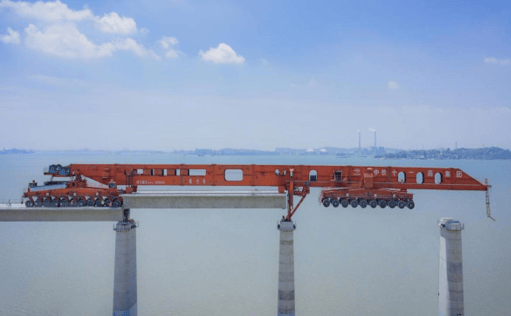

High-Speed Railway Lifting, Transporting, and Erecting Equipment: Integrated Transport and Erection Machine
Hanjiang Heavy Industry Co., Ltd. of China Railway 11th Bureau Group

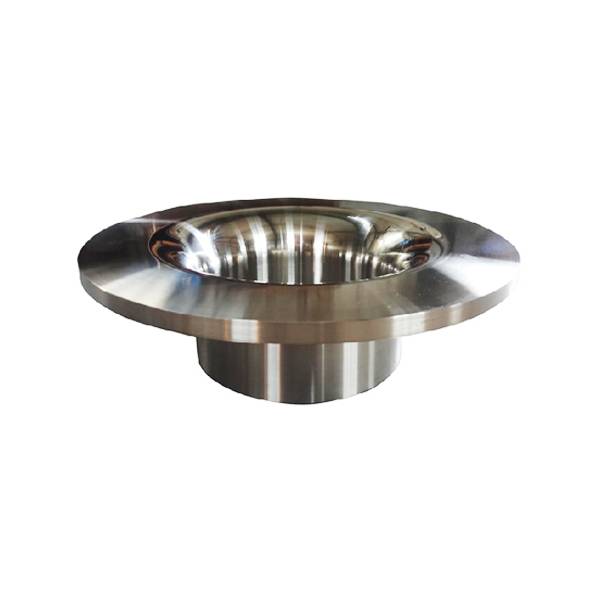
Standard Nozzle Flowmeter
Jinggong Automatic Control Instrument Complete Technology Development Company
Strip Coating and Plating Production Line Equipment
MCC-SFRE HEAVY INDUSTRY EQUIPMENT CO., LTD.
Pneumatic high-pressure wear-resistant ball valve
Zhejiang Deca Control Valve Meter Co., Ltd.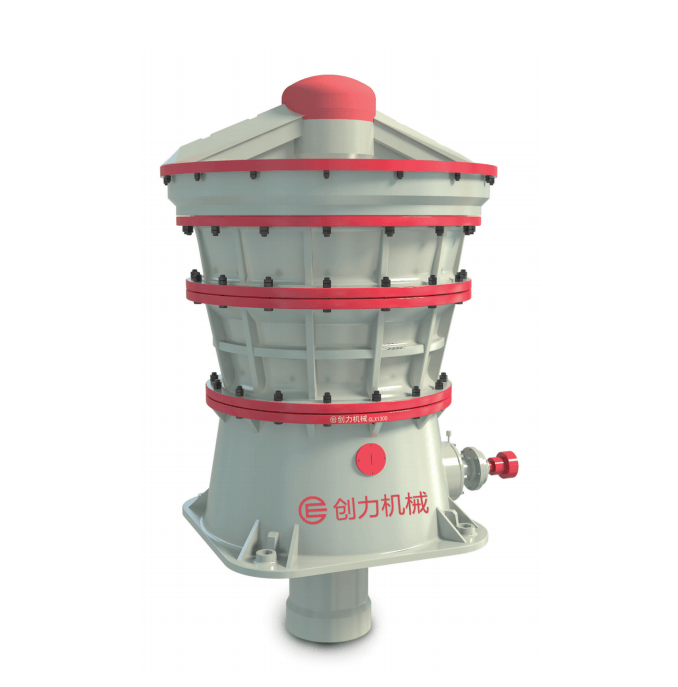
CLX Series Intelligent Hydraulic Gyratory Crusher
Guangdong CHUANGLI intelligent machinery Equipment Co., LTD