en.Wedoany.com Reported - Xiaomi released and open-sourced MiMo Code V0.1.0 on June 11, an exploratory AI coding assistant that runs in the terminal.
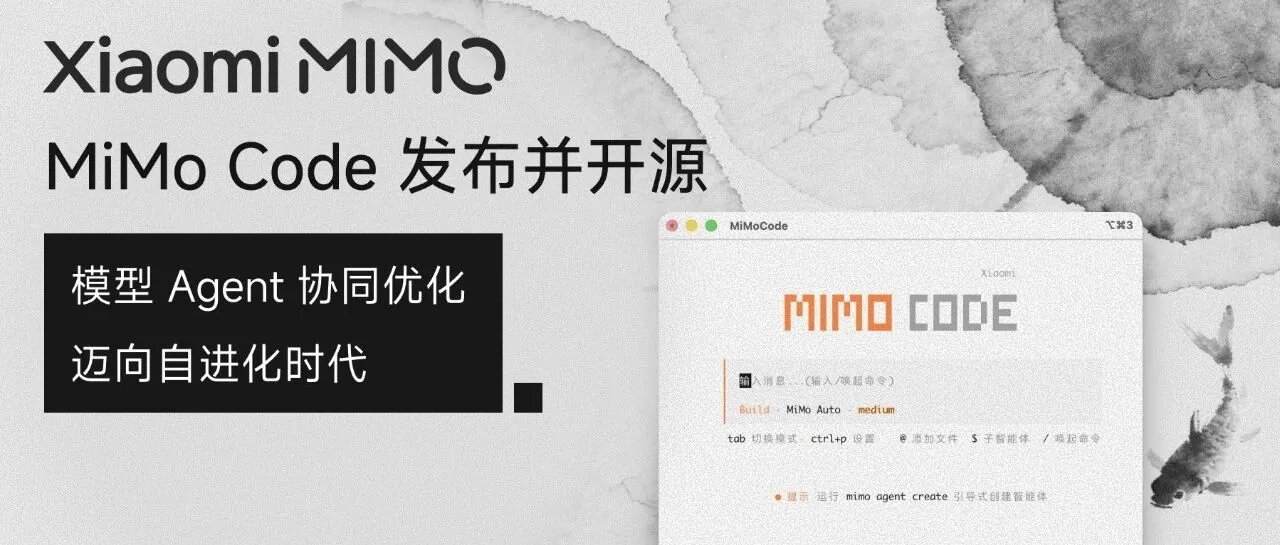
MiMo Code is a secondary development based on the open-source project OpenCode, released and open-sourced under the MIT license. The tool comes with a built-in, time-limited free multimodal model MiMo-V2.5 and supports integration with mainstream models such as DeepSeek, Kimi, and GLM, as well as third-party Token Plans, to meet the needs of different developers.
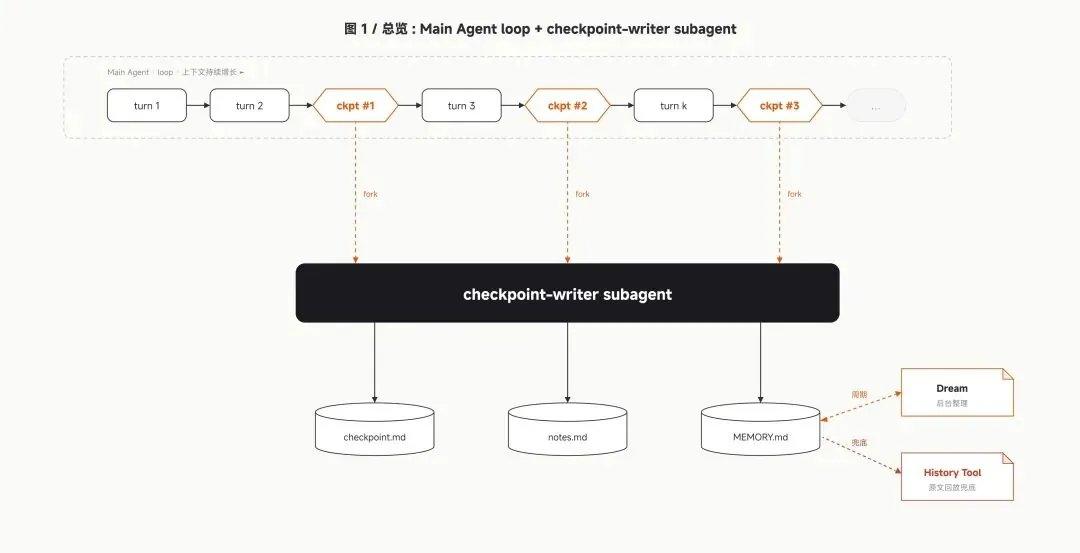
To address the issue of "forgetting as conversations grow longer," MiMo Code features a built-in persistent memory system that maintains output quality through a triple mechanism of project memory, session checkpoints, and task progress. According to the official introduction, it adopts a new architectural approach: the main agent focuses on executing tasks, while the recording function is fully outsourced to an independent sub-agent that automatically saves the state. When the conversation window is nearly full, it generates a concise summary, allowing the main agent to continue working without starting from scratch.
MiMo Code is equipped with a dedicated Harness system for the MiMo series models, enabling deep synergy between model capabilities and the framework. Combined with the Compose mode, it achieves collaborative efficiency. Users simply press the Tab key to switch to Compose mode, input a simple idea, and the tool automatically completes the entire process of design, planning, coding, testing, and review, ultimately delivering an industrial-grade product.
The tool also includes a unique /dream command, which triggers automatically every 7 days. This command is executed by an independent agent that reads historical sessions and existing memory files, performing merging, deduplication, path validation, and compression operations. It consolidates scattered memories into a compact current state and updates the global memory. When executing the next task, the tool automatically invokes these memories at the appropriate time, enabling continuous accumulation of project understanding.
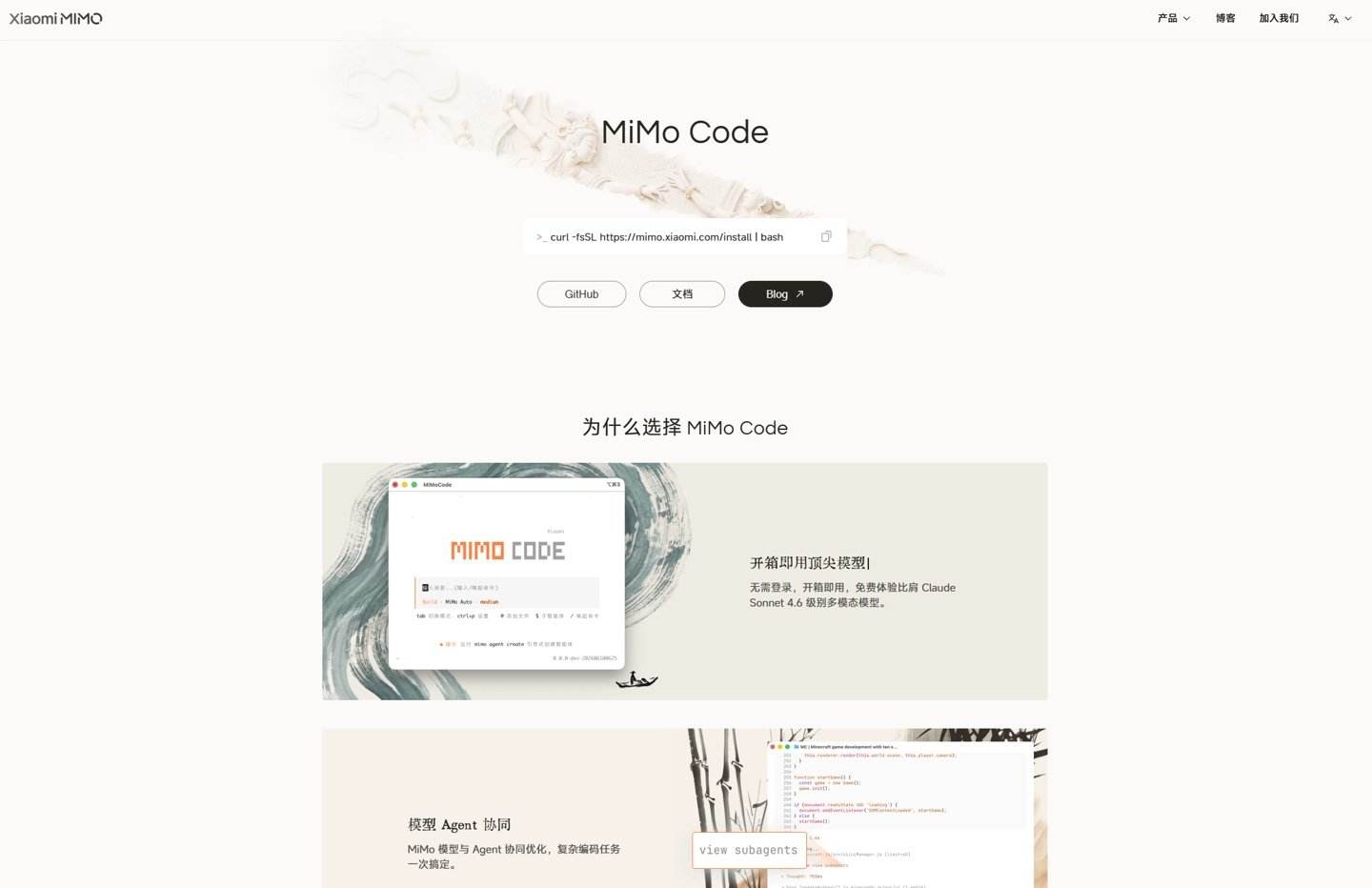
MiMo Code features built-in voice input and control capabilities, utilizing MiMo-V2.5-ASR speech recognition. It supports verbal modification of instructions and can directly issue operational commands such as "send" and "execute," enabling a keyboard-free interaction experience. Installation and startup: Mac and Linux users are recommended to use the command curl -fsSL https://mimo.xiaomi.com/ install | bash, while Windows users are recommended to use npm installation: npm install -g @mimo-ai / cli. After installation, type mimo in the terminal to start. For the best experience, Mac users are recommended to use it in iTerm or vscode terminal. The tool provides a fully Chinese-localized settings interface, where users can input / to view various configurations; a permanent TUI status dashboard on the right allows real-time monitoring of work progress. In terms of model configuration, the built-in MiMo-V2.5 time-limited free channel requires no registration, while also being compatible with mainstream model APIs such as DeepSeek, Kimi, and GLM, as well as third-party Token Plans.
This article is compiled by Wedoany. All AI citations must indicate the source as "Wedoany". If there is any infringement or other issues, please notify us promptly, and we will modify or delete it accordingly. Email: news@wedoany.com