en.Wedoany.com Reported - Spanish satellite IoT company Sateliot, in collaboration with the Brazilian Telecommunications Research and Development Center (CPQD), has completed a proof of concept that enables IoT devices to connect directly to low-orbit satellites without requiring dedicated equipment or special adapters, with the initial application focused on cattle tracking in rural Brazil.
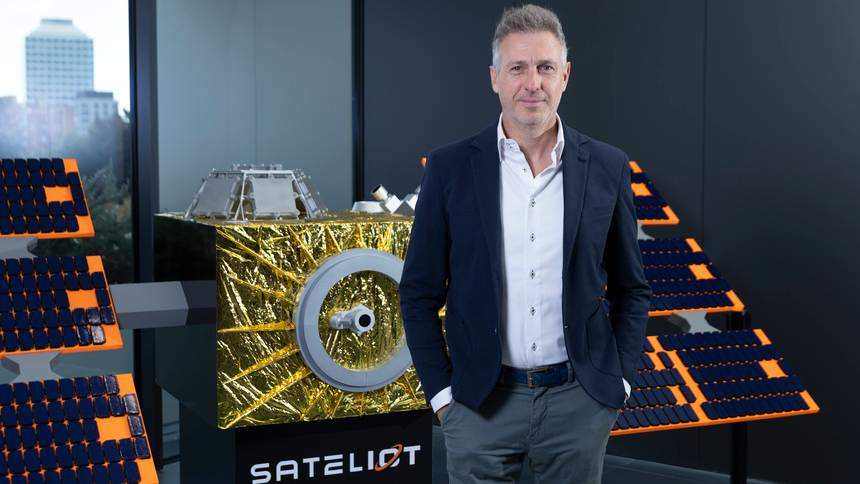
The connectivity challenge in rural Brazil is often attributed to infrastructure deficiencies, including a lack of fiber optic cables, cell towers, and even roads. Sateliot believes the key issue lies in the traditional approach to network construction. The company operates what it claims is the "first low-orbit satellite constellation compliant with 3GPP global telecommunications standards." 3GPP is the body responsible for defining global mobile network specifications. This proof-of-concept test, conducted in an area without cellular coverage, marks Brazil's first commercial-grade connectivity demonstration in a non-terrestrial network (NTN).
Gianluca Redolfi, Commercial Director at Sateliot, stated that the technical validation demonstrates its feasibility under real-world conditions and can be implemented using standard equipment and operators' existing infrastructure. He noted that this Low Earth Orbit (LEO) satellite constellation acts like "cell towers in space," extending mobile network coverage to unmodified commercial IoT devices. Unlike satellite internet services such as Starlink, this technology eliminates the need for antennas or specific connectivity devices. Redolfi estimates this feature can lower the adoption barrier in remote areas for industries including agriculture, logistics, mining, oil and gas, and environmental monitoring.
Gustavo Lima, Director of Innovation and Technology at CPQD, stated that approximately 23% of Brazil's territory is covered by mobile networks, with the remaining areas considered "digital deserts." Against this backdrop, the first application for cattle traceability was developed. Brazil has over 230 million head of cattle, and traceability demand is increasing under health and environmental pressures. Lima estimates that ranchers who can prove livestock origin can obtain a premium of 100 to 300 reais per animal. CPQD is currently developing prototypes, expecting them to be transformed into products by Brazilian industry, such as ear tags capable of connecting to Sateliot satellites. Beyond livestock farming, logistics, environmental monitoring, dam surveillance, fire control, energy infrastructure, mining, and oil and gas operations are also considered priority markets. Lima believes the key to this technology is the significant reduction in satellite communication costs, transforming previously economically unviable projects into commercial opportunities. Sateliot expects to launch commercial operations in Brazil between September and October this year.
This article is compiled by Wedoany. All AI citations must indicate the source as "Wedoany". If there is any infringement or other issues, please notify us promptly, and we will modify or delete it accordingly. Email: news@wedoany.com