en.Wedoany.com Reported - Researchers at the Massachusetts Institute of Technology (MIT) have developed a new rocket propulsion system that integrates the high power and rapid response capabilities of traditional chemical thrusters with the high precision and efficiency of electric thrusters, enabling small satellites to perform a variety of maneuvers in space using a single fuel tank.
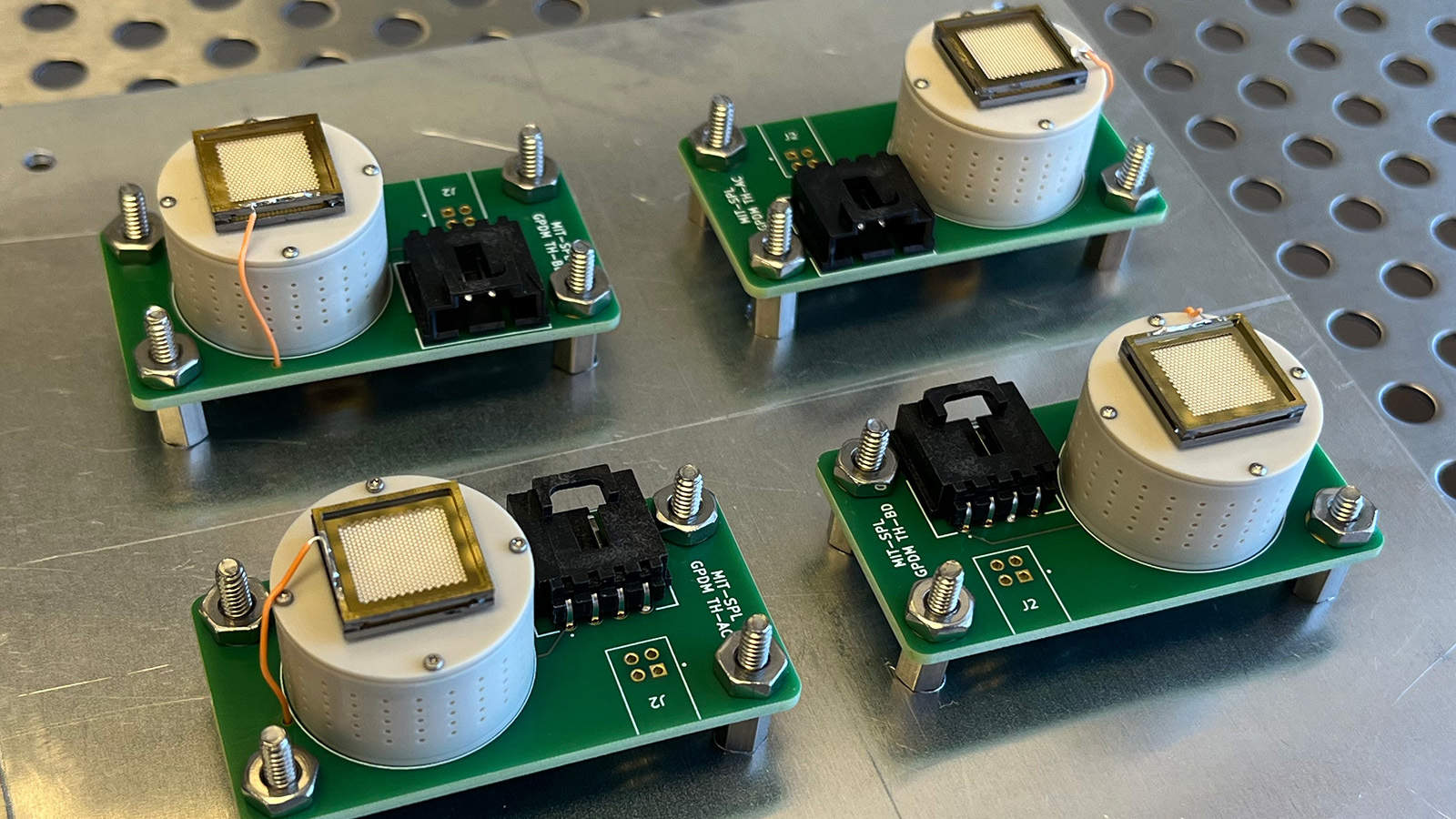
In traditional designs, chemical thrusters enable small satellites to perform short, rapid maneuvers (such as quickly raising or lowering orbits), while electric thrusters like electrospray thrusters are suited for slow but precise movements. By sharing the same system, small satellites gain significantly greater flexibility in space without needing to carry two separate fuel systems.
"If you can integrate chemical propulsion and electric propulsion into a small volume, that's the best of both worlds," said Amelia Bruno, a former postdoctoral researcher at MIT's Department of Aeronautics and Astronautics. "This opens the door for small satellites to conduct more scientific research, more observations, and perform more interesting tasks on smaller, cheaper platforms."
The core of the system lies in a specialized propellant that can simultaneously drive both chemical thrusters and electrospray thrusters. Electrospray thrusters are thumbnail-sized rockets that use an electric field to charge and eject liquid propellant particles to generate thrust. This ionic liquid propellant is essentially made from salts that remain in liquid form. Over the past decade, the MIT team has been developing and testing electrospray thrusters for microsatellites.
Researchers recently discovered a green monopropellant called "Advanced SpaceCraft Energetic Non-Toxic propellant" (ASCENT), originally developed by the U.S. Air Force for chemical thrusters. It is designed as a low-toxicity alternative to hydrazine—a traditional fuel source for chemical propulsion that is extremely hazardous to handle. Since ASCENT is a mixture of ionic liquids, the team tested it and found that it can successfully power chemical thrusters while achieving efficiency comparable to traditional ionic liquids when used to drive electrospray thrusters.
After proving ASCENT's effectiveness in both propulsion modes, the team plans to validate the concept through NASA's "Green Propulsion Dual-Mode" mission. This mission will carry a briefcase-sized CubeSat nanosatellite equipped with one chemical thruster and four electrospray thrusters, all powered by a single compact dual-mode fuel tank. The CubeSat is scheduled for launch in November; if successful, it could pave the way for small satellites to undertake missions beyond Earth orbit.
"We can send CubeSats to Mars or the asteroid belt, where they can use electrospray thrusters to travel slowly," said Paulo Lozano, an MIT professor of aeronautics and astronautics and co-author of the thruster research. "Then you can use chemical thrusters to quickly move and observe interesting sights. You'll have greater flexibility to do more things."
The related research paper, titled "Performance characterisation of electrospray thrusters with energetic ionic liquid monopropellant," has been published in the Journal of Propulsion and Power.
This article is compiled by Wedoany. All AI citations must indicate the source as "Wedoany". If there is any infringement or other issues, please notify us promptly, and we will modify or delete it accordingly. Email: news@wedoany.com