en.Wedoany.com Reported - The solar and energy storage market operating rules vary significantly across U.S. Midwest states. Developers, EPC contractors, and consultants must tailor strategies based on local grid regulations, siting laws, and revenue structures to determine project profitability.
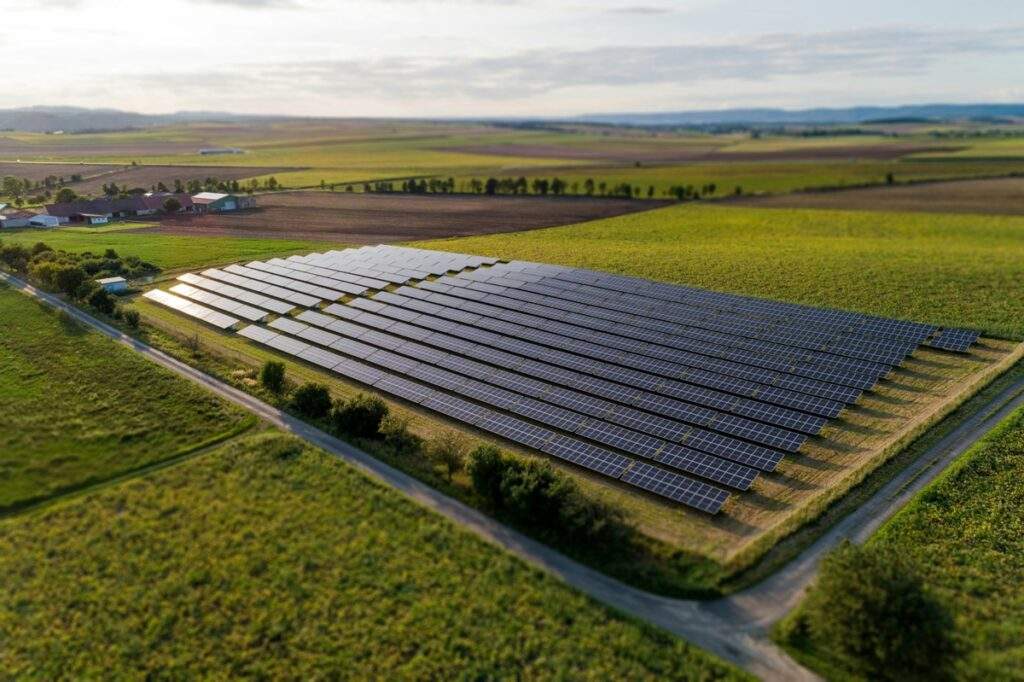
Illinois is regarded as the Midwest's most well-policy-developed solar and energy storage market, thanks to the 100% clean energy target set by the Climate and Equitable Jobs Act (CEJA) and the active procurement mechanism of the Illinois Power Agency (IPA), which translates policies into financeable contracts. The state's data center annual electricity demand is approximately 12 terawatt-hours, with active solar Power Purchase Agreement (PPA) demand along the Chicago corridor and long-term commitments from hyperscale cloud service providers forming the demand base. Grid interconnection is the primary market constraint, with distance being a key siting variable. IPA program capacity remains consistently oversubscribed, with competitive slots filling quickly. For developers engaged in utility-scale solar-plus-storage, community solar portfolios, and Battery Energy Storage Systems (BESS), IPA contract revenue remains one of the most financeable revenue sources in the region.
Minnesota offers a clear procurement pathway for the market: approved Integrated Resource Plans (IRPs), effective state-level siting authority, and predictable permitting timelines. Xcel Energy's IRP commits to 400 MW of solar, 600 MW of storage, and 3,200 MW of wind by 2030. However, the market's community solar program has been restructured with annual capacity caps and lower solar credit rates, making it more favorable for investors prioritizing contracted, utility-oriented returns and developers with procurement relationships with Xcel and Minnesota Power.
Ohio has the region's highest concentration of large-scale data center demand and PJM capacity market revenue advantages, but 37 county-level siting ordinances and AEP Ohio's data center tariff regime pose short-term constraints for new market entrants. Queue positions near hyperscale data center load centers are the primary underwriting variable. County-level siting ordinance screening must be conducted before securing site control. This market is best suited for developers with hyperscale data center relationships, queue positions in the Columbus area, and in-house siting capabilities. Behind-the-meter and co-located configurations are the most viable near-term pathways.
Indiana has the region's largest single hyperscale data center demand concentration: Amazon Web Services (AWS)'s $11 billion, 2.2 GW Project Rainier campus came online in October 2025, followed by a $15 billion Northwest Indiana expansion announcement in November. Siting risk is the primary constraint, with stricter decommissioning requirements that must be reflected in site control and financing structures. This market is suitable for developers with established Indiana market relationships and in-house siting capabilities; investors should prioritize projects that have obtained permits and signed offtake agreements over early-stage pipeline projects.
"Powering the Heartland: A Guide to Midwest Solar and Energy Storage" comprehensively covers all seven states, including Iowa, Michigan, and Wisconsin, providing market overviews, constraint analyses, and sector-specific guidance for developers, EPCs, and investors building pipelines in the region.
This article is compiled by Wedoany. All AI citations must indicate the source as "Wedoany". If there is any infringement or other issues, please notify us promptly, and we will modify or delete it accordingly. Email: news@wedoany.com