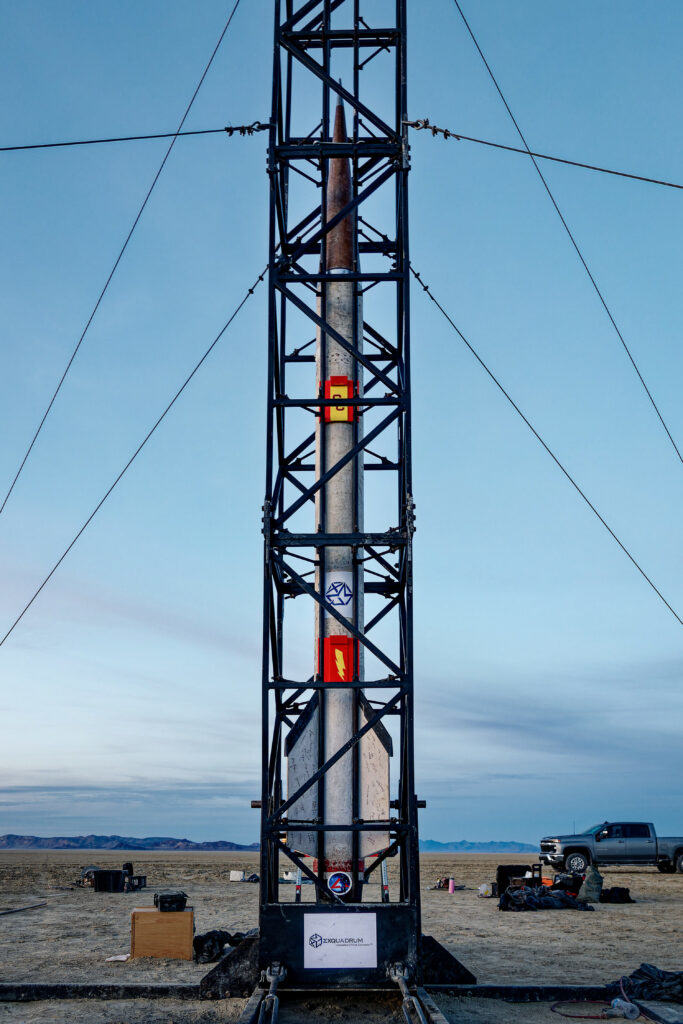
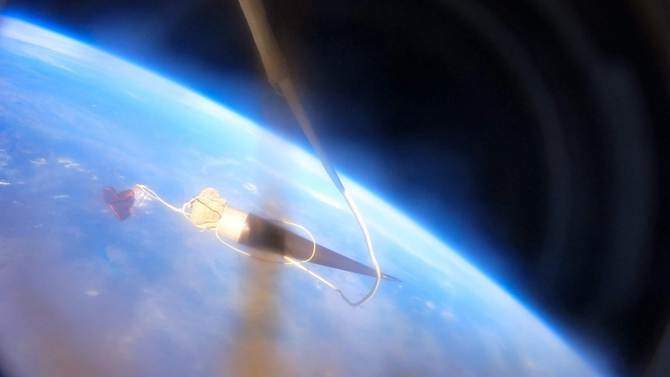
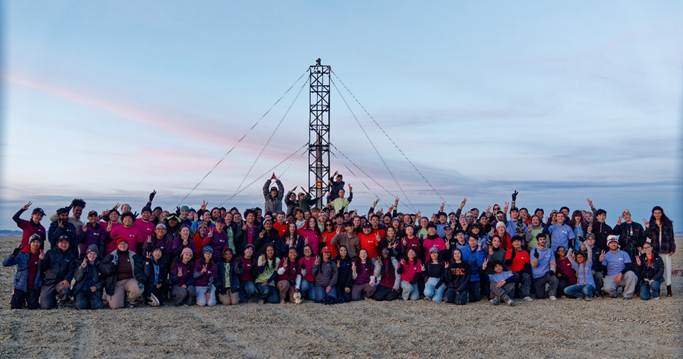
en.Wedoany.com Reported - Phthalonitrile-based composites supplied by Cambium Materials to the University of Southern California Rocket Propulsion Laboratory (USCRPL) were launched and successfully recovered aboard the Daybreak rocket. The component experienced temperatures of approximately 205°C during launch, but the core significance of this mission lies not in setting a thermal record, but in validating the complete manufacturing chain of high-performance composites—from chemical synthesis to processable prepreg, and then to layup and autoclave curing by the student team.
Phthalonitrile (PN) resins are typically used in high-temperature environments where traditional polymer matrices cannot withstand, offering advantages such as high glass transition temperature, oxidation resistance, char yield, and long-term thermal stability. However, outside highly controlled industrial settings, the processability of the material—whether it can be cut, laid up, compacted, and reproduced—determines the actual deployment speed. The Daybreak project offers another perspective on phthalonitrile technology: Cambium did not deliver a finished component, but instead enabled students to directly participate through a collaborative manufacturing model.
According to Cambium Materials Engineer Andrius Stankus, all prepregs were formulated and manufactured by Cambium using the hot-melt impregnation method. The sheets were then handed over to the students, who performed cutting, winding, and mold layup at USCRPL, with Cambium providing advice and guidance. After layup, the uncured laminates were returned to Cambium for bagging and curing in an autoclave. This division of labor defined the project as a collaborative cycle from formulation to manufacturing to curing.
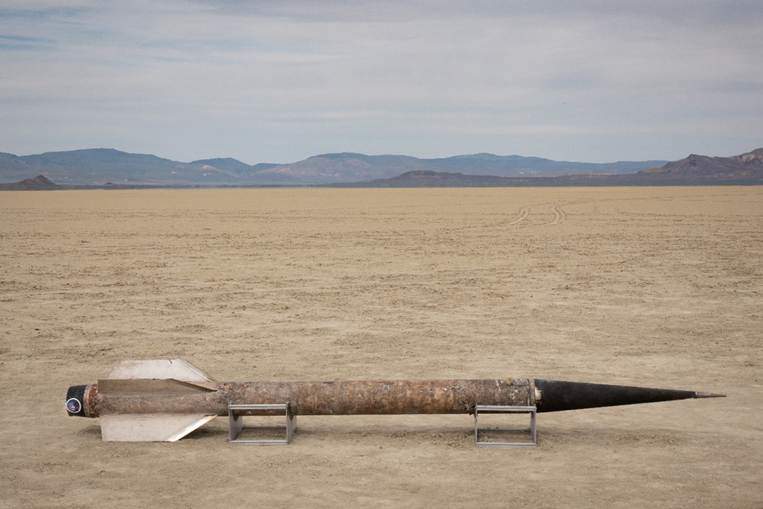
The flight component was a boat tail located around the rocket nozzle area, serving an aerodynamic function to streamline airflow around the nozzle during launch, reducing drag and turbulence. Stankus noted that turbulent exhaust can increase vibration and acoustic loads on engine hardware and create fluctuating hot and cold spots around the rocket. The boat tail itself does not directly extend the payload bay, but contributes to mass margin by improving flight efficiency. Temperature was not the primary challenge for this component; the approximately 205°C requirement during launch was relatively low, with more critical metrics being strength and shape retention at high temperatures.
The choice of phthalonitrile-based composites for a component operating at approximately 205°C was not solely driven by peak thermal performance. Cambium Chief Engineer Joe Severino stated that the system is based on the company's proprietary chemistry, with the formulation adjusted for application requirements and USCRPL's processing constraints, while the base system and processing methods had been previously well-characterized. Stankus further explained that Cambium's phthalonitrile prepreg has an uncured glass transition temperature above room temperature, becoming tacky only after heating, which makes the layup process easier to control, especially for circular tape-wound components. Additionally, the material has a long out-life at room temperature and tack temperature, providing students with more operational tolerance.
Educational aspects were also a key consideration for the project. Cambium intentionally allowed USCRPL students to handle the prepreg firsthand, experiencing a matrix chemistry different from standard epoxy. Stankus believes that the processing method of phthalonitrile differs significantly from epoxy, giving students exposure to a high-temperature option beyond epoxy, phenolic, bismaleimide, and cyanate ester systems. Furthermore, phthalonitrile is considered a relatively safe resin chemistry suitable for university laboratory environments with limited ventilation, posing lower handling risks compared to some high-temperature resins that are irritants or carcinogens upon contact or inhalation.
Cambium's initial press release emphasized delivery speed. Severino noted that from the first concept meeting sharing application and processing constraints to delivering custom-formulated aerospace prepreg, it took only two weeks. This speed was enabled by a previously well-characterized base system and known processing methods, combined with targeted adjustments. Cambium Chief Information Officer Tim Gardner attributed this to the company's integration of advanced materials R&D, composites engineering, and component manufacturing at a single location, shortening the distance between customer needs and product delivery. At the same time, the Daybreak case demonstrates that rapid-response manufacturing requires support for distributed collaboration, where suppliers, laboratories, or project teams share part of the process.
Cambium is also involved in AI-driven materials design. Gardner explained that since its inception, the company has integrated AI into a tightly coupled feedback loop with synthetic chemistry, serving as an assistive tool for scientists and engineers, building a continuously expanding library of well-characterized advanced materials modules. In the Daybreak project, AI's role was not direct design, but rather accumulating and accelerating materials expertise, enabling the team to quickly extract solutions from existing knowledge, thus achieving the two-week turnaround.
The core concept demonstrated by the Daybreak mission is not the performance of phthalonitrile composites under extreme thermal conditions, but their transformation from advanced chemistry into processability that can be taught, handled, and converted into flight hardware. This case provides a practical reference for the adoption of high-performance composites in broader manufacturing environments.
This article is compiled by Wedoany. All AI citations must indicate the source as "Wedoany". If there is any infringement or other issues, please notify us promptly, and we will modify or delete it accordingly. Email: news@wedoany.com