en.Wedoany.com Reported - Dave Kindig, president, owner, and designer of U.S. custom car manufacturer Kindig-it Design, said in an exclusive interview with PlasticsToday that 3D printing technology plays a significant enabling role in his company's custom manufacturing, but he is not complaining about its use.
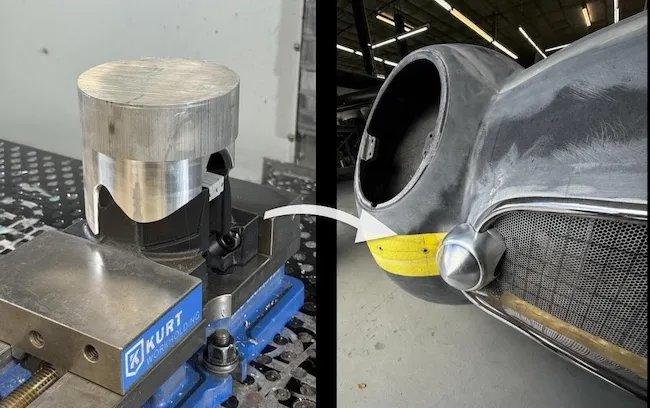
Kindig recalled that the company started very humbly in 1999, when he used only a borrowed body hammer, a dolly, and a workbench to shape metal, and a borrowed welder to join pieces. Currently, Kindig has been collaborating with Stratasys for 10 or 11 years, and prior to that, the company had access to a small 3D printer through a friend. Kindig noted that the transition to CNC machines truly accelerated their adoption of 3D printing, enabling them to use Stratasys FDM Nylon 12CF to manufacture custom soft jaws for holding complex shapes during machining. As printing technology proved its value in practical applications, Stratasys stated that the current focus is on making the software simpler and faster to use, allowing users to automatically design various components and fixtures.
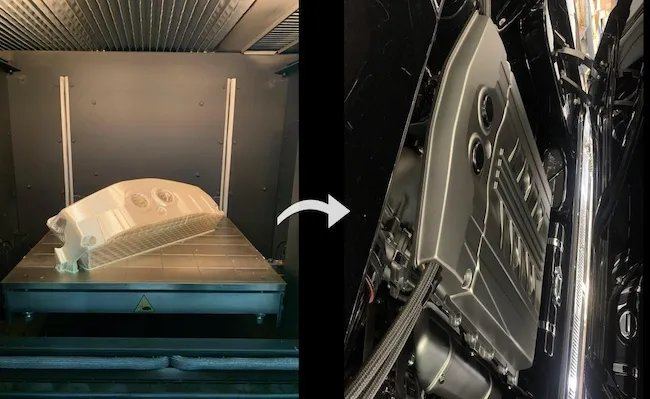
Kindig's company currently operates two filament-based machines, including an F370 and a 450mc, and uses a variety of polymers. Carbon fiber-reinforced polyamide is very useful for components such as headlight and taillight assemblies; this material can be sanded, primed, and painted, and can also be used for vapor deposition chrome plating. The CF1 Roadster, based on a 1953 Corvette, is Kindig's production model, with 33 units sold to date. This car is made of carbon fiber, and its glove box, dashboard components, and numerous production parts are 3D printed using polyamide, ASA, ABS, and Ultem (polyetherimide) for heat-resistant components like the engine cover.
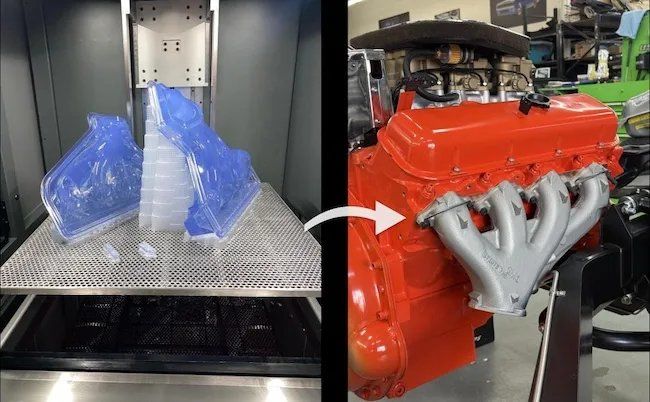
During the COVID-19 pandemic, due to supply chain issues, an engine Kindig sourced from Australia was delayed. To minimize the impact on vehicle delivery, Kindig turned to Stratasys to 3D print an entire V12 engine as a placeholder, allowing them to continue developing other components and validating the design until the actual engine arrived 18 months late. Kindig also used 3D printing to manufacture extended control arms for a Ferrari 288 GTO restoration model before machining them from aluminum using CNC to ensure fit. This substitution strategy is also adopted by mass-market automakers when configuring new vehicle assembly lines. In addition to actual components and tooling fixtures, Kindig uses 3D printing for investment casting patterns, such as using Stratasys SLA (stereolithography) Somos resin to create patterns for metal casting of exhaust manifolds, and printing tools for carbon fiber layup.
Kindig is embracing the electrification trend, developing custom electric vehicles with two independent partners: Legacy EV in Gilbert, Arizona, and Hypercraft in Provo, Utah. Kindig said previous attempts were limited by battery issues, but with Legacy EV manufacturing new batteries to specifications, this effort is expected to succeed. He stated that he will not sell this electric vehicle but will keep it as a collector's item, only considering selling EVs after validation.
This article is compiled by Wedoany. All AI citations must indicate the source as "Wedoany". If there is any infringement or other issues, please notify us promptly, and we will modify or delete it accordingly. Email: news@wedoany.com