en.Wedoany.com Reported - SIMULIA, the simulation brand of Dassault Systèmes, announced a strategy at the 2026 SIMULIA User Day event to fully integrate artificial intelligence into simulation product development. CEO Michel Ashe outlined three key priorities: enhancing physics analysis capabilities, upgrading the MODSIM platform, and leveraging AI to improve both.

Physics analysis capabilities are enhanced through solver improvements. SIMULIA solvers include Abaqus, PowerFLOW, CST Studio Suite, Simpack, and others. Through collaboration with NVIDIA, GPU-based solvers achieve speed improvements of 3 to 25 times. MODSIM integrates modeling and simulation functions into a single 3DEXPERIENCE platform, allowing simultaneous design validation. For example, Ford reduced product design time from 40 hours to 4 hours.
The addition of AI will further enhance MODSIM and solver performance. This strategy extends to the 3D UNIV+RSES vision, simulating the entire lifecycle of products from design, manufacturing, and use to recycling, with goals including reducing time to market, lowering costs, and minimizing environmental impact. Simulation covers not only product drops or deformations but also robot production, supplier component engagement, and product recycling processes.
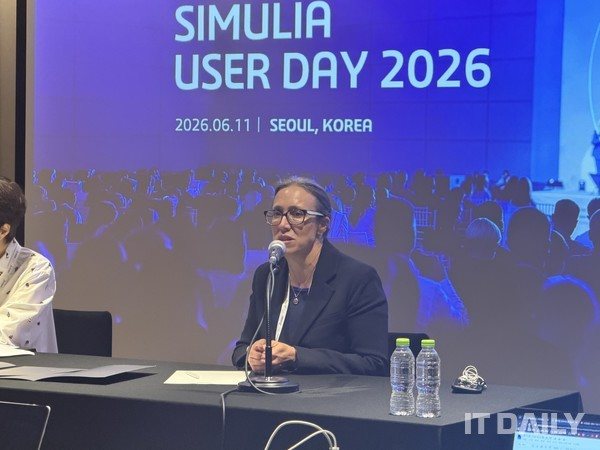
Regarding concerns that non-specialists might misinterpret simulation results leading to decision-making errors, Ashe believes this can be addressed through phased role management. Low-risk tasks are handled by non-specialists using AI virtual assistants to check product physical behavior against established standards. High-risk parts are managed by professionals responsible for verification and certification, ensuring compliance with safety standards and certification requirements. Professionals also set up tools and workflows, establishing guardrails to ensure proper use by non-specialists. This allows professionals to focus on more valuable work previously hindered by routine tasks.
To realize the benefits of AI simulation, client companies need to change their data storage and working methods. As AI evolves rapidly, significant workflow changes are also required. The current human-centric data storage approach leads to file accumulation and difficulty in retrieval. A more open storage structure is recommended, enabling AI to simultaneously access multiple repositories and retrieve needed data, moving toward less privatization and more sharing in data storage.
This article is compiled by Wedoany. All AI citations must indicate the source as "Wedoany". If there is any infringement or other issues, please notify us promptly, and we will modify or delete it accordingly. Email: news@wedoany.com