Scotland's Machrihanish Bids for €7 Million Hypersonic Testing
en.Wedoany.com Reported - Machrihanish, located on the Kintyre Peninsula in Scotland, is vying to host the testing program for the European Space Agency's (ESA) €7 million (approximately $8 million) Invictus hypersonic project. The selection result is expected to be announced later this year.
Gordon Stevenson, a board member of the Machrihanish Airbase Community Company (MACC), which owns and operates the base, stated that the company hopes to win the competition for the Invictus project. He believes the result will be announced this year, as Invictus is already scheduled to begin testing in early 2031. Prior to that, various different test programs will be conducted, including engine tests. Stevenson cautiously noted that there may not be a single winner. Invictus has publicly announced that Machrihanish and Cornwall Spaceport have been selected for the project, and certain parts of the testing and flight trials may be conducted at both locations.
Machrihanish's advantages lie in two factors it believes Cornwall cannot match: airspace availability and confidentiality, both crucial for flight test activities involving new propulsion systems, high speeds, and dual-use technologies. Apart from Loganair's two daily regional flights to and from Glasgow, traffic at the base is limited to fixed-wing and helicopter air ambulance flights. According to data compiled by MACC, Machrihanish recorded 1,414 aircraft movements in 2025, compared to over 20,000 at Cornwall Airport Newquay. The latter handles scheduled regional passenger and cargo traffic and is located beneath a busy transatlantic air route.
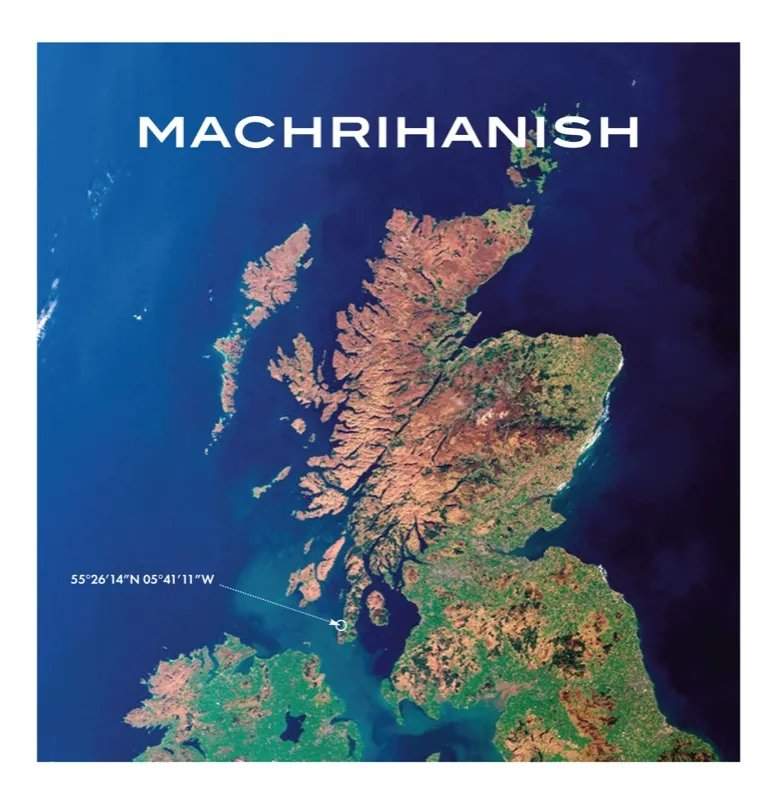
Hypersonic testing involves flying unproven vehicles at extreme speeds, requiring large segregated airspace, flexible scheduling, and safe abort options. The western end of Machrihanish's east-west runway lies on the North Atlantic coastline. Stevenson stated that there are no obstacles ahead, making it ideal for flight testing. As a safety factor, the ability to take off over the sea and away from any populated areas is very important. The base's remoteness also ensures confidentiality. The local town has a population of approximately 5,000, and the 1,000-acre site is situated on an isolated peninsula.
The Concorde conducted test missions from Machrihanish in the late 1960s, and the base has also hosted several classified projects, including tests for the B-2 stealth bomber. Stevenson noted that many people who come to test aircraft or engines here wish to remain confidential, and they may be reluctant to discuss their work for government or commercial reasons.
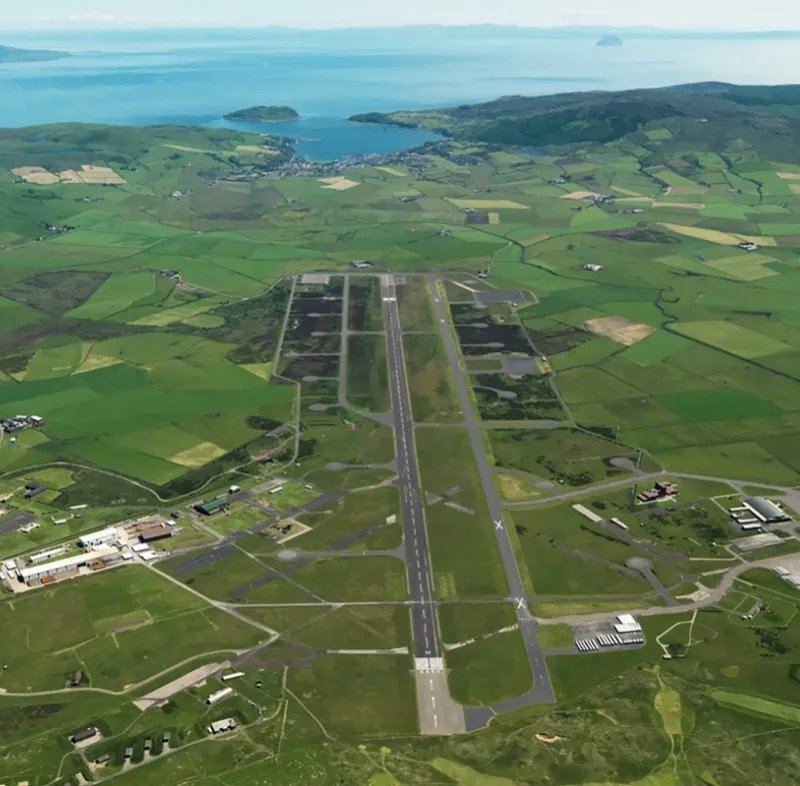
The core of Machrihanish's infrastructure competitiveness lies in its runway. At 10,003 feet (3,049 meters) long, it is one of the longest runways in the UK, and MACC believes it is the longest in private hands. The Invictus spaceplane is designed to take off and land like a conventional aircraft, rather than launching vertically. Stevenson stated that the base will not obtain a vertical launch license, and Machrihanish and Cornwall may be the only two sites in the UK to receive horizontal launch licenses.
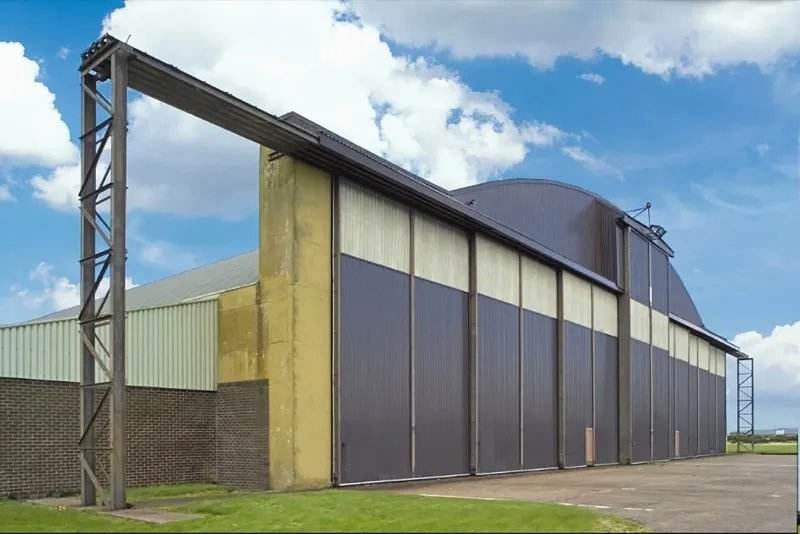
The former Royal Air Force base was sold by the Ministry of Defence (MoD) to the local community in 2012 and is now operated as a charity. It retains a wealth of military-era assets: hangars, extensive concrete hardstanding, an operations tower, fire cover, passenger handling facilities, and on-site accommodation that once housed hundreds of pilots.
Transport links include the airport itself, road access to Glasgow, and a deep-water port in the local town, providing logistical advantages for hardware transportation. Stevenson stated that large components or fuselages that cannot be easily transported by road can be brought in by ship. The Invictus vehicle is actually being built in Belfast, which is approximately 15 miles away as the crow flies.
Invictus is the immediate goal, but Machrihanish is also positioning itself as a licensed horizontal launch spaceport, a test range, and a growing aerospace industry cluster. Engine testing is already underway; UK launch company Skyrora has conducted rocket engine tests at the site, and German rocket propulsion developer HyImpulse conducted a test campaign on the site's hardstanding in March. Stevenson said they can set up test stands with no vehicles, people, buildings, or animals around, and can make as much noise as they like without causing any damage.
Exotopic, a space company with satellite and satellite tracking experience, has established a permanent presence. MACC plans to build modern accommodation, laboratories, and facilities to attract aerospace SMEs, emulating the cluster models seen in Cornwall, Prestwick, and Westcott. The company also hosts a summer rocket workshop for hundreds of university students each year, collaborating with ESA for the first time in 2026.
Stevenson, a former pilot for British Airways and easyJet, stated that winning the Invictus test program would consolidate MACC's strategy and bring high-quality engineering jobs to a region dependent on agriculture. He believes this would be transformative for the local area, aiming to create high-quality jobs to help retain young people in the region.
This article is compiled by Wedoany. All AI citations must indicate the source as "Wedoany". If there is any infringement or other issues, please notify us promptly, and we will modify or delete it accordingly. Email: news@wedoany.com
Related Products


Pantograph-Catenary Comprehensive Detection Device (1C)
CHENGDU TANGYUAN ELECTRIC CO., LTD.

Industrial and Commercial Point-Type Gas Detector
Jinan Benan Technology Development Co., Ltd.

Explosion-proof lithium battery dispatching monorail crane locomotive (permanent magnet frequency conversion integrated machine)
Xiangtan Hengxin Industrial Co., Ltd.