Tesla's 2026 Model Y with HW4 and FSD V14 Shows Significant Generational Gap
en.Wedoany.com Reported - A 2019 Tesla Model 3 owner with HW3, after experiencing multiple FSD version updates, had their vehicle totaled in an accident and replaced with a 2026 Tesla Model Y equipped with HW4. A comparison revealed a clear generational gap in functionality from FSD V12 to FSD V14. The owner noted that Tesla CEO Elon Musk repeatedly promised HW3 owners would receive Level 4 autonomous driving capabilities, but this goal has never been achieved. In 2025, FSD V14 was released with significant functional improvements, but it was limited to HW4 vehicles, while older models only received sporadic bug fixes. It wasn't until May 9, 2026, when the owner's 2019 Model 3 was totaled in an accident and they switched to a new Model Y equipped with HW4 computers and cameras, that they were able to use FSD V14.
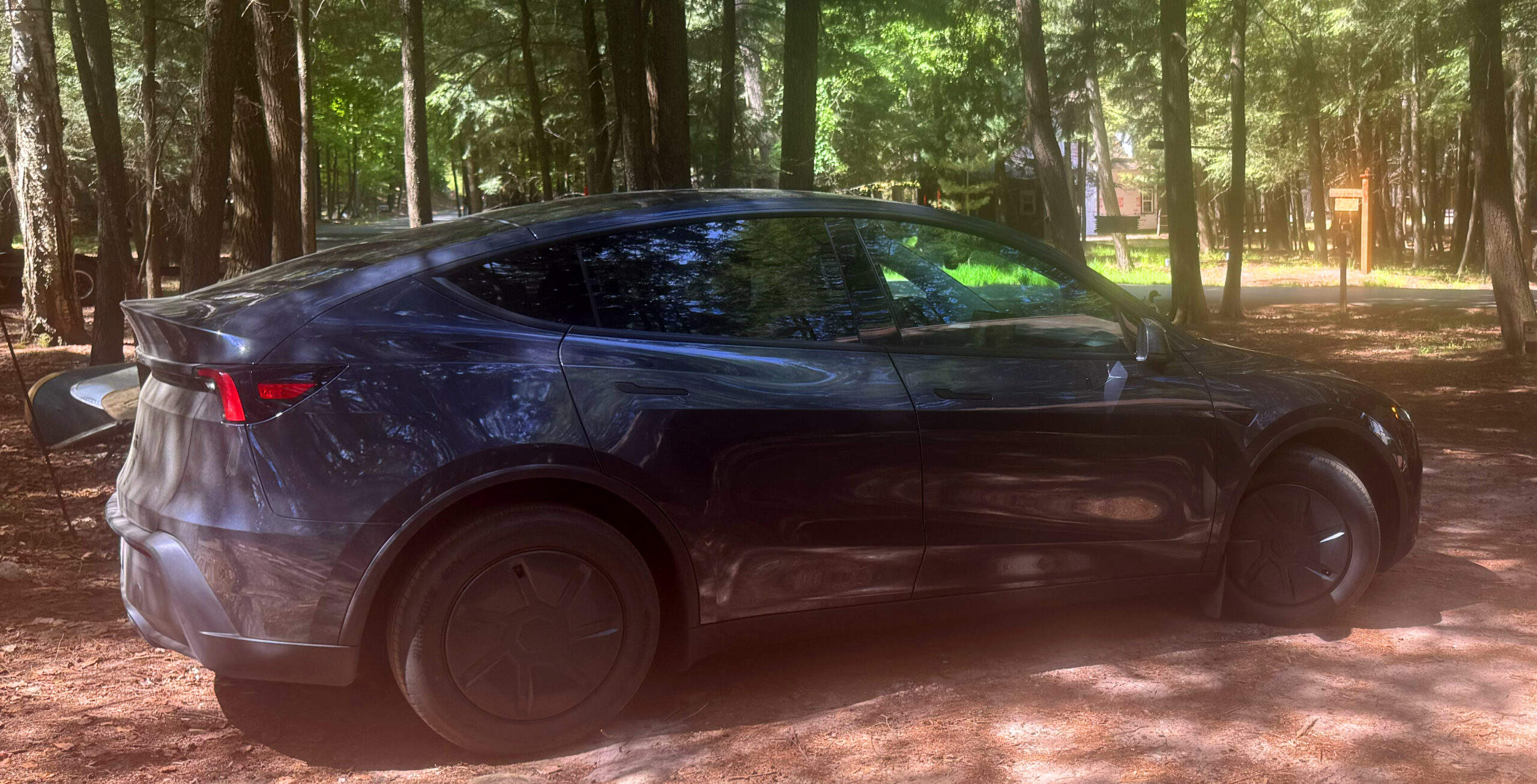
FSD V14 shows significantly enhanced handling capabilities at the beginning and end of trips, including automatically reversing out of a garage, pulling into a driveway and parking in a reasonable spot, and finding its way out of a parking lot. FSD V14 still works normally when a bike rack is mounted on the rear of the vehicle, whereas FSD V12 would refuse to operate in this scenario due to the rear camera being blocked. FSD V14 offers five driving modes: Sloth, Chill, Standard, Hurry, and Mad Max. In Sloth mode, the vehicle strictly adheres to the speed limit; Standard mode allows exceeding the limit by 5 mph; and Mad Max mode can exceed the limit by up to 30 mph. The owner stated that after selecting a mode that meets their needs, FSD V14 rarely makes decisions requiring intervention.
However, FSD V14 still has notable errors, primarily due to the GPS accuracy of Tesla's navigation system, which is only about 15 feet, and the untimely or inaccurate updates of Google Maps data. Specific examples include: a residential address in St. George, Utah, being navigated to the wrong block; a house address in the Three Lakes area of Wisconsin being directed to an adjacent street; when navigating to a COSTCO store that has been open for three years, the map still showing it as green space; at the Rhinelander Airport, incorrectly driving in the wrong direction on a circular road; and route selection errors where navigation indicates a left turn but FSD V14 turns right.
Notably, the 2026 Tesla models have, for the first time, included lane-keeping assist as a paid subscription feature. If users do not pay $99 per month for FSD, the vehicle will not have this function. The owner pointed out that even a rental Toyota Corolla, a budget car, comes with lane-keeping assist, and Tesla's move essentially charges for a traditionally standard feature, significantly impacting users with limited funds.
FSD V14 still has incomplete functionality in specific scenarios, including: not slowing down to 20 mph when school zone lights are flashing; parking inside a garage; selecting specific or handicapped parking spots; entering drive-through lanes at fast-food restaurants or ATMs; automatically decelerating over speed bumps; and identifying road depressions and slowing down during extreme rainstorms. Tesla's FSD relies entirely on visible-light cameras and does not use radar, so in extremely poor visibility weather, the vehicle will pull over to the side of the road. The ultimate goal of the FSD system is to improve to a level where it makes fewer mistakes and causes fewer accidents than human drivers, thereby achieving unsupervised Level 4 autonomous driving.
This article is compiled by Wedoany. All AI citations must indicate the source as "Wedoany". If there is any infringement or other issues, please notify us promptly, and we will modify or delete it accordingly. Email: news@wedoany.com
Related Products
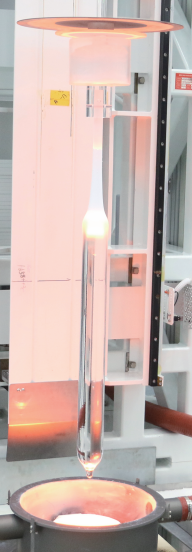

G.652.D Wavelength-extended Non-dispersion Shifted Single-mode Optical Fiber
HONGAN GROUP CO., LTD.

GYTA Type Non-Self-Supporting Aerial/Duct Optical Cable
TONGDING INTERCONNECTION INFORMATION CO., LTD.
TWP16 P-Band Tropospheric Wind Profile Radar
China Huayun Meteorological Technology Group Co., Ltd.

Industrial and Commercial Point-Type Gas Detector
Jinan Benan Technology Development Co., Ltd.
Automatic Aiming Laser Remote Obstacle Removal Robot
Pinggao Group Weihai High-Voltage Apparatus Co., Ltd.