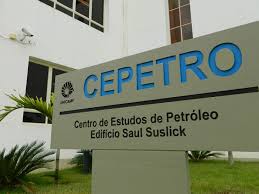
en.Wedoany.com Reported - The Center for Petroleum and Energy Research (Cepetro) at the University of Campinas (Unicamp) in Brazil will establish one of the country's first laboratories dedicated to four-dimensional seismic (sísmica 4D) technology research. Named UNI4D, the new laboratory will focus on oil and gas reservoir monitoring, particularly for pre-salt (pré-sal) reservoirs, while also involving applications related to carbon capture and geological storage (CCS) projects.
The laboratory is coordinated by researcher Alessandra Davolio Gomes, who serves as deputy director of the UNISIM group. Since 2013, the team has participated in multiple 4D seismic projects, accumulating experience in industry-funded research and talent development in a field that integrates geophysics, reservoir engineering, and computer science. The group also includes researchers Daiane Rossi Rosa Lessa and Masoud Maleki, who are responsible for various activities.
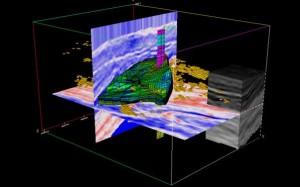
4D seismic technology tracks the evolution of reservoirs over time. Unlike 3D seismic, which provides a static geological snapshot, this technology compares data collected at different times to identify changes during production. Alessandra stated that this tool helps understand how reservoirs age, identify changes not predicted by models, and provide operators with information to make more effective decisions.
In pre-salt oil fields, where a single well can cost hundreds of millions of dollars, such information helps improve operational efficiency. One application example is the early identification of water approaching production wells, allowing adjustments to optimize oil recovery throughout the asset's lifecycle.
The growing importance of this technology has led Petrobras to expand its application in pre-salt projects in recent years. This trend has also driven demand for talent capable of interpreting seismic data and developing new analytical methods.
Another application area for 4D seismic is monitoring carbon capture and geological storage projects. In these projects, the technology tracks the behavior of carbon dioxide injected into underground reservoirs, verifying whether the gas remains within the designated area and identifying any unexpected changes. Researchers noted that in CCS projects, 4D seismic is one of the primary tools for proving that CO₂ stays in the planned location and identifying previously undetected potential geological anomalies.

A distinctive feature of UNI4D is the integration of different knowledge areas. The laboratory will bring together experts in geophysics, reservoir engineering, and computing to develop solutions that transform large volumes of data into strategic information for oil production and carbon storage projects.
Planned research directions include developing specialized software, applying artificial intelligence in seismic data interpretation, and exploring new information sources not yet fully investigated by the industry.
The laboratory is established based on a network of over 20 researchers and students already involved in projects conducted by UNISIM. In recent years, the group has participated in multiple 4D seismic studies, published dozens of scientific papers, and received national recognition, including an award from the Brazilian National Petroleum Agency (ANP) in 2018.
According to Alessandra Davolio Gomes, the creation of UNI4D consolidates the capabilities built by Cepetro over more than 15 years. During this period, research combining reservoir engineering and 4D seismic has been supported by Professor Denis Schiozer, coordinator of UNISIM, and this partnership will continue in the new laboratory. She stated that the team is not starting from scratch but consolidating expertise accumulated over years, for which industry demand is growing. UNI4D aims to become a benchmark in the field, contributing to challenges in oil production and geological carbon storage.
This article is compiled by Wedoany. All AI citations must indicate the source as "Wedoany". If there is any infringement or other issues, please notify us promptly, and we will modify or delete it accordingly. Email: news@wedoany.com