en.Wedoany.com Reported - Japan's Green Science Alliance has developed a natural mosquito and pest repellent based on nepetalactol. The company, a subsidiary of the Fuji Pigment Co., Ltd. group, focuses on environmental energy technology research and development. This achievement was led by researcher Dr. Yutaka Mori.
Mosquitoes have long posed a threat to human health. They are major vectors for transmitting infectious diseases such as malaria, dengue fever, West Nile fever, and Japanese encephalitis, causing over 700,000 deaths annually. To address this issue, humans have developed various insecticides and repellents. For years, DEET has been the standard ingredient in repellents, but concerns have arisen regarding its toxicity and side effects in children, as well as its ability to dissolve resins and plastics. In Japan, mosquito repellent products containing 30% DEET should not be used by children under 12 years old. For this age group, products with a concentration of no more than 12% should be chosen, and DEET products are completely prohibited for infants under 6 months old. As an alternative, Icaridin was approved in Japan in 2015. This synthetic chemical is considered to be less irritating to the skin, safer, and does not damage plastics or synthetic fiber fabrics.
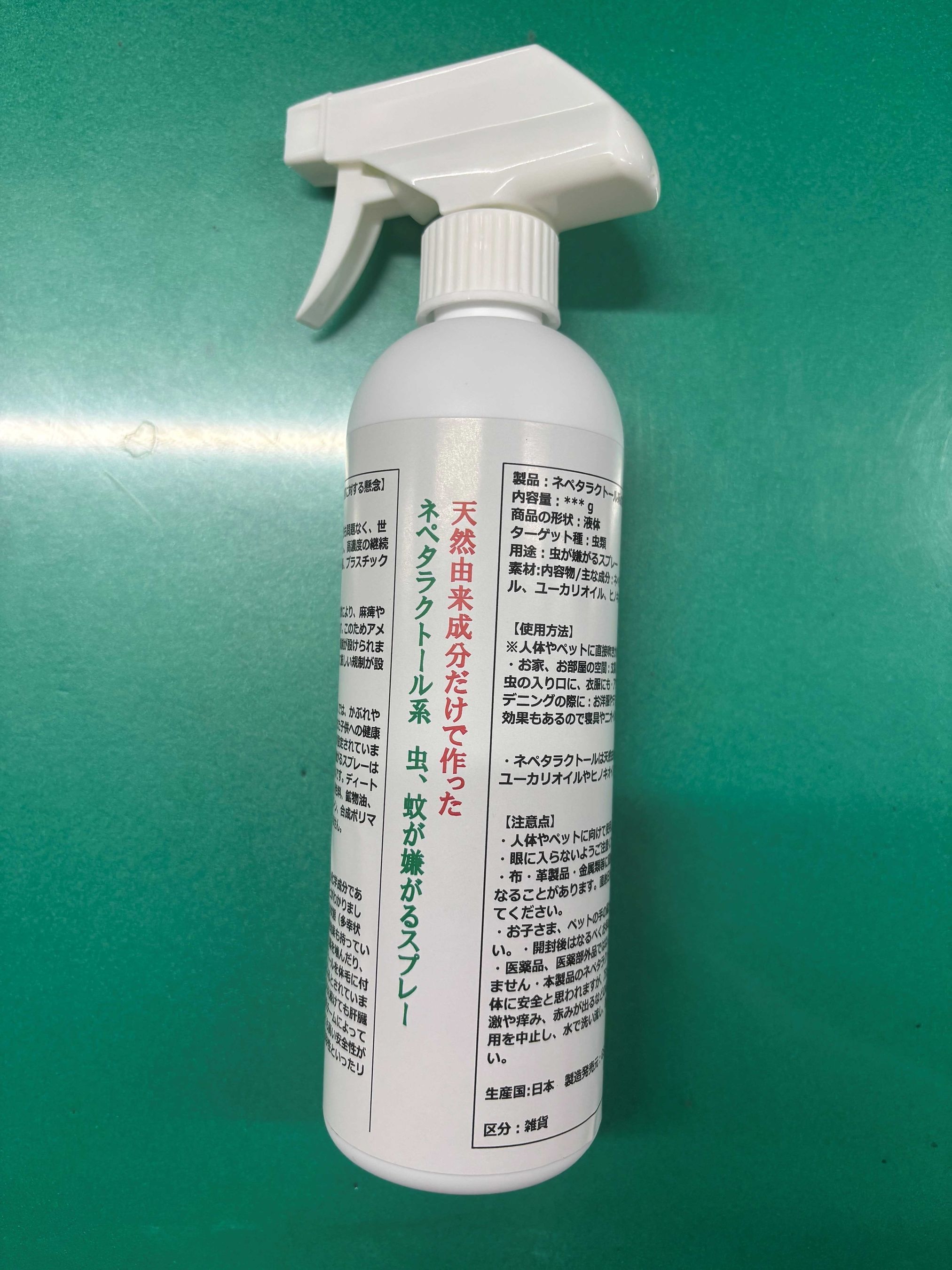
Although synthetic chemicals are widely used, plant-based natural repellents also exist, such as lemon eucalyptus, lemongrass, Japanese mint, peppermint, citronella, and lavender. These ingredients are highly safe, but their repellent efficacy and duration are often limited. To address this, Green Science Alliance developed a repellent based on nepetalactol. Nepetalactol is a natural compound extracted from plants such as silver vine and catnip, and its efficacy can match or even surpass that of DEET. Traditional organic solvent extraction and purification methods are difficult to scale up for mass production and are costly. The company has established a low-cost, large-scale production method for nepetalactol using a unique synthesis process. Since nepetalactol is a naturally derived ingredient, it is gentler on the skin compared to chemically synthesized DEET or Icaridin.
Research conducted by Iwate University and Nagoya University in 2021 showed that nepetalactol is the main compound in silver vine that triggers a response in felines and acts as a mosquito repellent. The company believes that cats apply nepetalactol to their fur by chewing and rubbing against silver vine leaves, thereby protecting themselves from mosquito bites. Green Science Alliance has begun commercial sales of this repellent and plans to further accelerate research and development to launch repellents and insecticides targeting other pests, as well as related functional products.
This article is compiled by Wedoany. All AI citations must indicate the source as "Wedoany". If there is any infringement or other issues, please notify us promptly, and we will modify or delete it accordingly. Email: news@wedoany.com