en.Wedoany.com Reported - China Mobile and Huawei are jointly advancing joint innovation and large-scale application of L4 high-level autonomous networks. Public progress shows that the two parties have built autonomous network demonstration rooms in regions such as Guangdong, leveraging communication large models, Copilot, and Agent capabilities to support high-value scenarios including SPN fault handling, core network stable operation, home broadband experience assurance, and wireless network optimization. China Mobile also stated during the 2026 Mobile World Congress that it will comprehensively promote the upgrade of L4 autonomous network capabilities, restructuring 31 core work processes through digital and intelligent technologies.
The core of L4 autonomous networks is not simply digitizing traditional O&M processes, but enabling the network with stronger capabilities in perception, analysis, decision-making, and closed-loop execution. Mobile communication networks now cover multiple layers including wireless, core network, transmission, IP, cloud resources, home broadband, and enterprise private networks. Manual troubleshooting and optimization are increasingly unable to cope with network scale, business complexity, and real-time experience requirements. The focus of China Mobile and Huawei in advancing L4 capabilities lies in embedding AI agents into network O&M and operational processes, enabling fault identification, root cause analysis, strategy generation, resource scheduling, and effect verification to be completed within a shorter chain.
The demonstration room of Guangdong Mobile and Huawei shows that L4 autonomous networks have evolved from single-point automation to multi-scenario collaboration. Relevant practices cover fault handling, service assurance, wireless energy saving, and private network provisioning. Among them, the provisioning time for 5G private networks has been shortened to hours, total wireless network energy savings have exceeded 400 million kWh, and cumulative human resource savings have surpassed 200,000 person-days. For operators, the value of such achievements lies not only in reducing manual operations but also in integrating network quality, energy efficiency, and customer experience into the same intelligent operation system.
Huawei released the AN L4 Phase 2 solution during MWC 2026, proposing to promote large-scale deployment of high-level autonomous networks through cross-domain integration and multi-agent collaboration. Previously, autonomous networks mostly started from single scenarios, such as wireless energy saving, fault dispatching, home broadband assurance, or alarm compression. Entering the L4 phase, operators are more concerned about whether end-to-end processes can collaborate across disciplines, systems, and scenarios. The introduction of communication large models and Agent capabilities enables network systems to evolve from "executing according to rules" to "understanding tasks and generating operation plans."
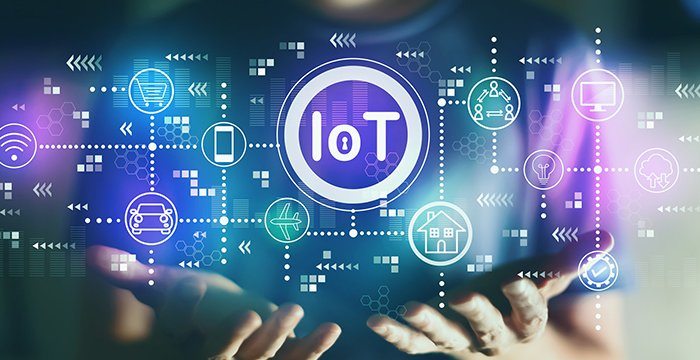
China Mobile's promotion of L4 autonomous networks is also related to the evolution of 5G-A, computing power networks, and future 6G. With the growth of 5G-A, IoT, low-altitude economy, connected vehicles, industrial private networks, and AI applications, networks need to support more differentiated service quality requirements. Traditional O&M models often focus on post-fault handling, while L4 autonomous networks emphasize prediction, prevention, and automatic optimization. For private network services targeting enterprise customers, the ability to quickly provision, ensure real-time assurance, and automatically adjust resources will directly impact operators' service capabilities in the industry digitalization market.
From an industry chain perspective, the collaboration between China Mobile and Huawei will drive deeper integration of communication equipment, network management software, AI models, data governance, and O&M platforms. L4 autonomous networks require high-quality network data, unified indicator systems, explainable models, reliable closed-loop control, and security boundary design. Communication networks differ from ordinary internet applications; improper strategy execution may affect a wide range of business experiences. Therefore, the large-scale deployment of autonomous networks must maintain a balance between efficiency improvement and network security, gradually expanding from high-value, low-risk scenarios to more complex ones.
The key going forward lies in whether L4 capabilities can expand from demonstration rooms to more provinces and more specialized networks. China Mobile has proposed promoting digital and intelligent restructuring around core processes, while Huawei is driving industry-level implementation through the AN L4 Phase 2 solution. If both parties can continue to integrate communication large models, Copilot, Agent, and network control systems, and form replicable evaluation standards and deployment methods, China's communication network O&M will transition from a "human-led, system-assisted" model to a new phase of "intelligent agent collaboration, human-machine co-governance."
This article is compiled by Wedoany. All AI citations must indicate the source as "Wedoany". If there is any infringement or other issues, please notify us promptly, and we will modify or delete it accordingly. Email: news@wedoany.com