en.Wedoany.com Reported - A research team from the National University of Science and Technology MISIS (NUST MISIS) in Russia has developed an ultrasonic atomization technology that converts metal waste generated during additive manufacturing (3D printing) into reusable spherical powder particles, providing a new technical pathway for waste recycling in the metal additive manufacturing field.
The technology was led by Leonid Fedorenko, a chief engineer and graduate student at the NUST MISIS Additive Manufacturing Laboratory, and focuses on unused metal waste that cannot be returned to the production cycle after 3D printing. Its working principle is as follows: after the metal waste is melted by an electric arc, the liquid metal flows to a surface vibrating at a frequency of up to 50,000 times per second, and the molten droplets instantly solidify in an argon protective atmosphere, forming spherical powders with extremely small particle sizes.
Founded in 1918, NUST MISIS is a key university in Russia in the fields of metallurgy and materials science. Its Additive Manufacturing Laboratory has long been engaged in research on metal 3D printing processes and powder preparation. Fedorenko currently focuses on metal powder preparation and recycling.
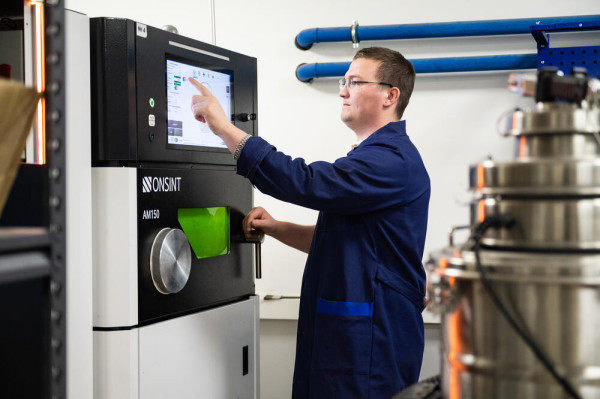
Currently, the technology is being tested on common alloys to verify the validity of the concept. The research team stated that the new method will have high applicability in the additive manufacturing of precious metals (such as platinum). Spherical metal powder is the core raw material for additive manufacturing, and its particle size, sphericity, and flowability directly affect the quality of printed parts. While powders prepared by traditional gas atomization often have irregular shapes, ultrasonic atomization technology can produce powders with high sphericity, which theoretically helps improve the density and mechanical properties of printed parts.
If the technology achieves large-scale application, it is expected to reduce the raw material costs of metal additive manufacturing and promote the industrialization of waste recycling and reuse.
This article is compiled by Wedoany. All AI citations must indicate the source as "Wedoany". If there is any infringement or other issues, please notify us promptly, and we will modify or delete it accordingly. Email: news@wedoany.com