en.Wedoany.com Reported - Diamond Billiard Products has partnered with Manar to develop injection-molded composite table legs for tournament-grade pool tables, replacing traditional wooden structures with the goal of improving manufacturing efficiency, installation speed, and product durability.
The traditional wooden leg manufacturing process is complex, involving cutting, shaping, sanding, finishing, and pre-assembly across multiple departments. It requires eight employees, with each leg consisting of 10 to 12 individual components, and a production cycle of up to three months. During installation, workers must lie on their backs to adjust leveling nuts near the floor, which is inefficient on uneven competition surfaces.
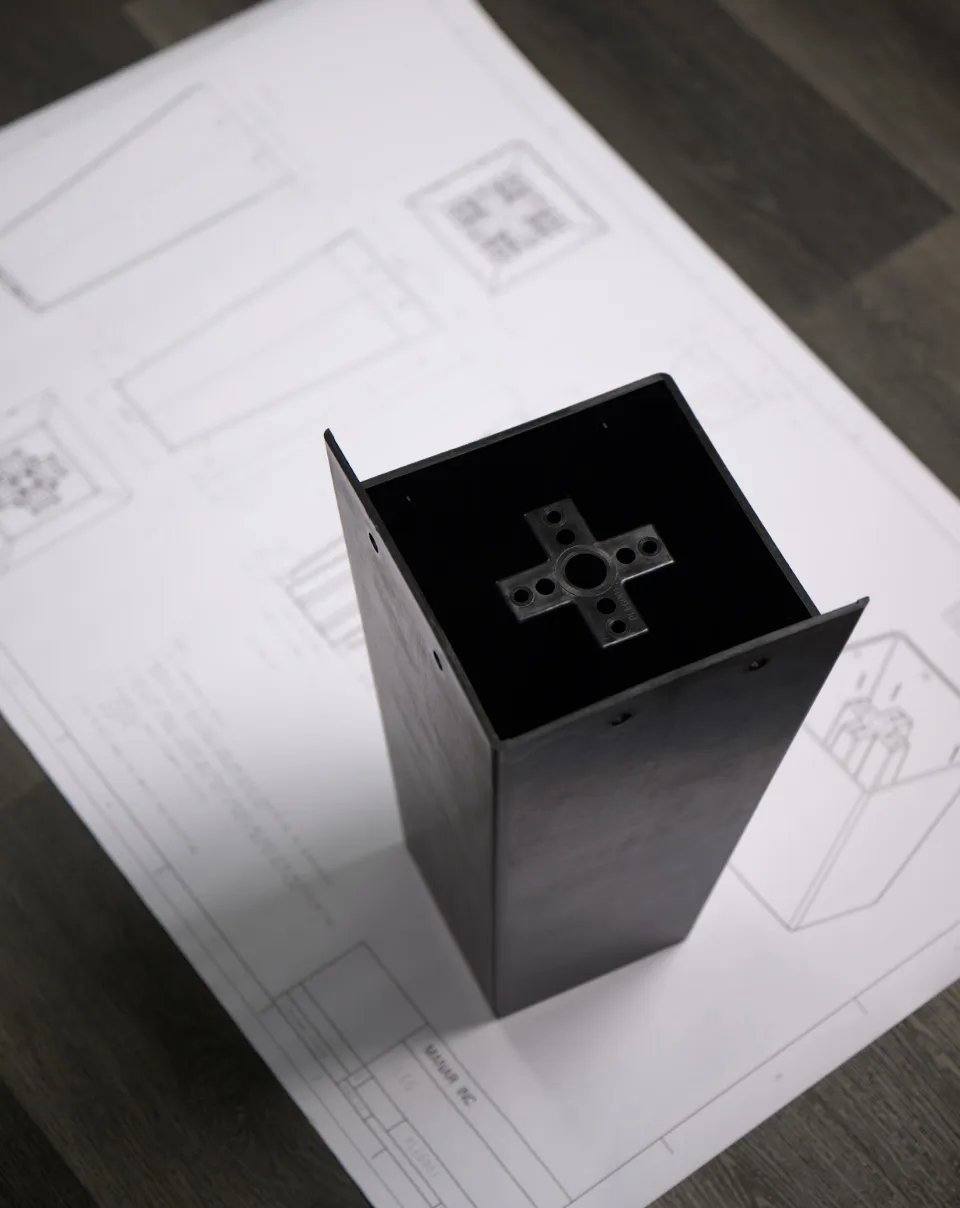
Brent Lykins, a mechanical engineer at Diamond, stated that wooden legs are labor-intensive, and the team sought ways to simplify manufacturing while improving performance. The company spent several years developing concepts and 3D-printed prototypes before partnering with Manar, an injection molding specialist with over 40 years of industry experience, to jointly optimize the injection molding design and meet tournament-grade structural requirements.
The final material selected was 40% long glass fiber polypropylene, providing the required structural strength. Finite element analysis validation showed that the legs could support a table weighing 1,200 to 1,300 pounds with minimal deformation. Actual stress testing also confirmed their durability under extreme conditions.
In terms of operational impact, the injection-molded structural components replaced wooden legs, significantly reducing production time. Part consolidation reduced the 10 to 12 wooden components to a single main injection-molded body plus foot blocks and shafts, greatly simplifying the manufacturing process. Installation speed increased by three to four times, allowing installers to sit beside the table and make adjustments using side panels and battery-powered tools, with the legs adjustable up to 1.5 inches to accommodate uneven floors.
Anthony Neeley, Director of New Business Development and Operations at Manar, noted that the project was not just about manufacturing an injection-molded part but applying a design-for-manufacturing approach to meet tournament-grade structural requirements. Manar provided guidance on material selection, part design, and tooling, and helped validate performance through analysis and testing.
Following the success of the injection-molded legs, Diamond further collaborated with Manar to manufacture ball pockets. Previously, pocket components were injection-molded domestically, shipped to Taiwan for leather wrapping, and then returned, resulting in a three-month lead time, shipping delays, and a quality rejection rate of up to 50%. The redesigned pockets consolidated parts, eliminated overseas finishing steps, and adopted automated injection molding with robotic insert placement, improving durability and reducing supply chain risks.
By converting core structural components of pool tables from wood to composite materials, Diamond reduced labor and manufacturing time, improved installation ergonomics, enhanced durability and supply chain reliability, while maintaining tournament-grade performance standards.
This article is compiled by Wedoany. All AI citations must indicate the source as "Wedoany". If there is any infringement or other issues, please notify us promptly, and we will modify or delete it accordingly. Email: news@wedoany.com