NVIDIA's New AI Software Accelerates Dark Matter Research, Boosting Data Loading by 14,900 Times
en.Wedoany.com Reported - NVIDIA unveiled new software at the ISC conference in Hamburg to accelerate AI scientific applications, covering areas such as chemistry, materials discovery, and dark matter search.
These software packages include the NVIDIA DAQIRI library, the new NVIDIA ALCHEMI NIM microservices, and the upcoming NVIDIA cuPhoton reference code, transforming tasks that previously took hours or days on CPUs into real-time, GPU-accelerated pipelines.
They are part of NVIDIA CUDA-X, a set of tools and libraries that enhance performance in application areas such as AI and high-performance computing.
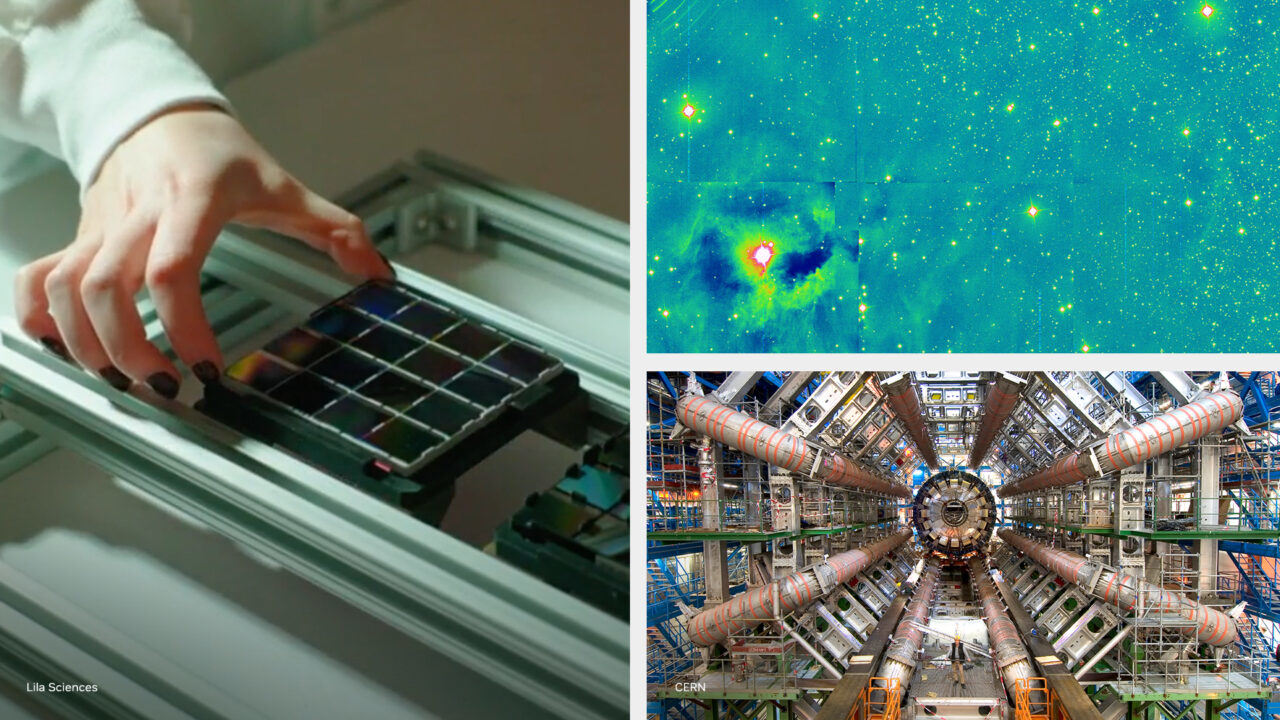
When running on the NVIDIA GB200 NVL72 system, cuPhoton accelerates the loading, reading, processing, and analysis of FITS data (a standard astronomical file format) from observatories and telescopes. In early access, cuPhoton improved the loading and reading speed of FITS images collected by the Vera C. Rubin Observatory's Legacy Survey of Space and Time (LSST) by 14,900 times. It also achieved up to 8,400 times acceleration in signal processing and analysis using 32 NVIDIA Grace Blackwell superchips.
Ultimately, this means faster insights from the LSST camera—the largest digital camera ever built—which captures images of billions of distant galaxies and fainter, nearby celestial objects that reflect less light.
The new software accelerates research in dark matter, materials simulation, and more. NVIDIA cuPhoton is a reference code for extracting insights from multidimensional data collected by telescopes, X-ray, and laser experiments. It can load, process, analyze, and visualize petabyte-scale data and works with other NVIDIA CUDA-X technologies to build end-to-end accelerated pipelines. Researchers at Princeton University collaborated with NVIDIA to develop cuPhoton and will use it with Harvard University to process and analyze data from observatories and dark energy surveys.
NVIDIA DAQIRI—Data Acquisition for Integrated Real-time Instruments—is a high-performance networking library that streams data from fast detectors and sensors into NVIDIA software. Older systems are tied to fixed hardware and may lose data when instruments generate data faster than it can be saved. DAQIRI keeps pace by processing incoming data streams instantly. A research project called A-GHOST, developed by scientists from CERN, the University of Chicago, and University College London under the CERN openlab framework, uses DAQIRI to run AI in real-time on collision data recorded by CERN's ATLAS experiment. A-GHOST analyzes data typically discarded by ATLAS (over 99% of data is discarded due to storage limitations), capturing potentially interesting signals that would otherwise be lost.
NVIDIA ALCHEMI includes a set of domain-specific microservices and a toolkit to accelerate chemistry and materials discovery, with applications ranging from battery materials, catalysts, OLED displays, to beauty products. NVIDIA released two ALCHEMI NIM microservices in March: Batch Geometry Relaxation (BGR) and Batch Molecular Dynamics (BMD). These AI-accelerated tools enable researchers to simulate millions of molecules and materials at once: BGR for finding the most stable structures, and BMD for simulating how they move over time. ALCHEMI is expected to soon include a microservice for the Vienna Ab initio Simulation Package (VASP), allowing researchers to run materials simulations with higher GPU throughput. By using NVIDIA Multi-Process Service to run multiple VASP calculations on a single GPU, this microservice achieves a 3x acceleration in geometry optimization—the process of finding the most stable atomic arrangement in a material. Developers and researchers can use the ALCHEMI toolkit to accelerate training of AI surrogate models for machine learning interatomic potentials and build custom high-performance atomic simulation workflows.
Lila Sciences—which is building a scientific superintelligence platform and autonomous laboratory—collaborated with NVIDIA to perform high-fidelity magnet simulations using ALCHEMI, demonstrated at NVIDIA GTC in San Jose in March. Lila Sciences used the ALCHEMI NIM microservice for BGR, accelerating high-throughput materials screening by 50 times, identifying stable candidate materials more likely to be synthesized. Then, using the early-access ALCHEMI VASP microservice, it accelerated the calculation of magnetic properties for shortlisted candidate materials by 30%.
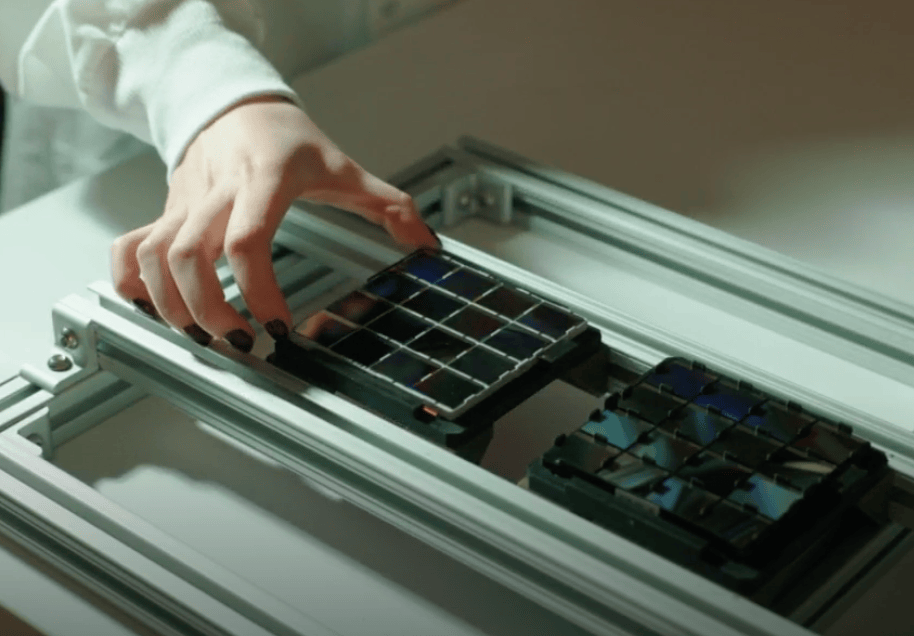
Specially customized kernels in ALCHEMI for TensorNet enabled Lila to achieve a 6x acceleration in training and inference, and reduced memory usage by 3 times, allowing simulations that previously took weeks to be completed in just days.
This approach of simultaneously evaluating multiple materials in GPU memory is generalizable to use cases such as: materials discovery, for large-scale screening of novel, stable compositions; energy, for discovering active, earth-abundant catalysts for producing chemicals and fuels; and electromagnetics, for understanding and predicting complex magnetic behaviors. ALCHEMI sits in the simulation layer, generating physical science data that feeds into the rest of the cycle.
Lila Sciences uses the full NVIDIA stack to accelerate scientific discovery, including NVIDIA Megatron-LM and NVIDIA Nemotron for training, as well as the Nemotron 3 Nano and Nemotron 3 Super open models, along with the NeMo RL and NeMo Gym libraries. It also uses NVIDIA BioNeMo for molecular generation, NVIDIA Triton and NIM microservices for inference serving, and NVIDIA Omniverse libraries for digital twins. Andy Beam, co-founder and CTO of Lila Sciences, said: "This work demonstrates the power of leveraging a robust computing stack to accelerate discovery at a scale no single scientist could achieve alone."
The NVIDIA ALCHEMI toolkit is available for download from GitHub and PyPI. The ALCHEMI NIM microservices are available from the NVIDIA NGC catalog. The ALCHEMI NIM microservice for VASP is expected to launch later this summer. DAQIRI is now available on GitHub. cuPhoton is expected to launch this summer.
This article is compiled by Wedoany. All AI citations must indicate the source as "Wedoany". If there is any infringement or other issues, please notify us promptly, and we will modify or delete it accordingly. Email: news@wedoany.com
Related Products


G.652.D Wavelength-extended Non-dispersion Shifted Single-mode Optical Fiber
HONGAN GROUP CO., LTD.







Forest and Grassland Heat Source Infrared Monitor
China Huayun Meteorological Technology Group Co., Ltd.
Industrial and Commercial Point-Type Gas Detector
Jinan Benan Technology Development Co., Ltd.