Ericsson Report: Global 5G Subscribers Surpass 3 Billion in Q1 2026
en.Wedoany.com Reported - Ericsson (NASDAQ: ERIC) released the Ericsson Mobility Report (EMR) in June 2026, showing that global 5G subscribers surpassed 3 billion in the first quarter of 2026.
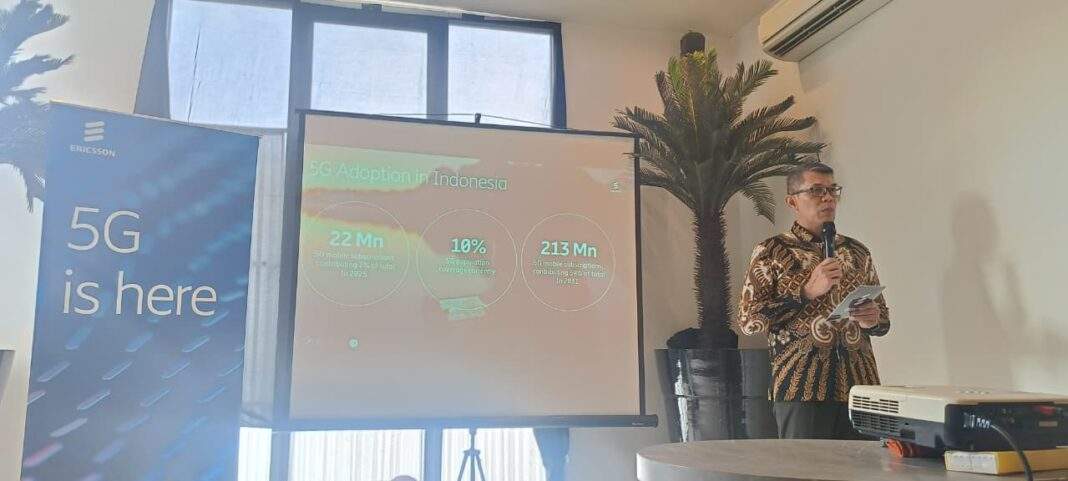
The report covers the same forecast period as the November 2025 edition (2025-2031) and includes the latest data and forecast updates. In the first quarter of 2026, 162 million new 5G subscribers were added globally, bringing the total to 3.1 billion. This number is expected to grow rapidly, more than doubling to 6.4 billion by the end of 2031.
Approximately 390 operators have launched commercial 5G services, with over 90 having deployed 5G Standalone (5G SA) networks. By the end of 2025, 5G networks carried 48% of all mobile data traffic, a figure expected to rise to 85% by 2031. In line with global trends, 5G subscribers in Southeast Asia and Oceania are projected to grow rapidly, reaching approximately 670 million by 2031.
The number of differentiated connectivity service offerings based on 5G SA network slicing continues to grow rapidly. The total number of commercial services has increased from 65 reported in November 2025 to 84 in the June 2026 edition, indicating a shift from initial stages to broader commercial deployment. This technology enables service providers to guarantee quality of service for various use cases by offering dedicated network slices.
Erik Ekudden, Chief Technology Officer at Ericsson and publisher of the EMR, stated that mobile networks will undergo significant changes with the development of AI, transitioning from centralized data center models to distributed models across devices, vehicles, and environments connected via 5G. He added that mobile networks are now not only providing connectivity but are also evolving into critical infrastructure supporting various application demands, as evidenced by the increasing number of commercial services based on 5G SA network slicing and the growing number of service providers deploying 5G SA.
Nora Wahby, President of Ericsson Indonesia, stated that the realization of AI-based transformation will heavily depend on the networks built today, as they will form the foundation for supporting future applications. Therefore, 5G needs to be viewed as strategic national infrastructure, supported by long-term policies, cross-sector coordination, and world-class security standards. Ronni Nurmal, Head of Government and Industry Relations at Ericsson Indonesia, added that for Indonesia, building resilient and future-proof networks depends not only on technology but also on establishing a healthy, competitive, and globally compliant vendor ecosystem. With such a foundation, Indonesia can maintain service continuity, accelerate innovation, and drive sustainable digital economic growth. Ronni further stated that Ericsson is committed to continuing to support 5G development through collaboration with various stakeholders, and that adequate and affordable spectrum availability will be a key factor in accelerating the country's digital transformation and realizing Indonesia's Digital 2045 vision.
Speed-based Fixed Wireless Access (FWA) packages are also increasingly favored by operators as a monetization strategy. FWA services have broad appeal across various market conditions, including markets with high fiber penetration (over 95%) and those with lower ARPU, such as India. Although FWA adoption remains relatively limited in parts of Southeast Asia, the region holds significant long-term potential as demand for broader and higher-quality broadband access grows. Experience in the Philippines shows how 5G FWA can provide connectivity in areas with limited fiber infrastructure. Indonesia, with its archipelagic geography similar to the Philippines, also has a great opportunity to leverage 5G FWA to expand connectivity coverage.
Network traffic statistics from the June 2026 edition of the EMR show that uplink traffic is growing faster than downlink traffic across most service providers. Key drivers include communication and collaboration applications on smartphones, user-generated content, and cloud storage services. According to network traffic measurements conducted by Ericsson, 43 out of 55 service providers experienced higher uplink traffic growth than downlink, with 17 service providers seeing uplink traffic growth more than 1.5 times that of downlink. Ericsson's scenario modeling indicates that by 2031, additional traffic from AI could triple or more uplink traffic compared to 2025.
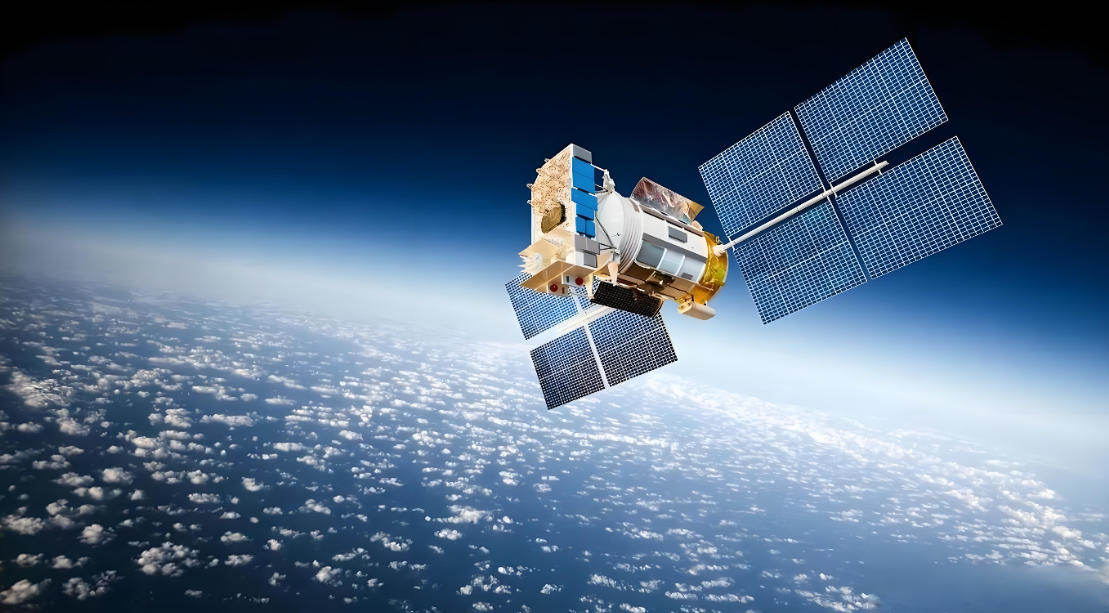
The report also reflects growing industry focus on 6G development, with standardization efforts underway. 6G technology is expected to provide more advanced connectivity, including better integration of terrestrial and satellite networks, as well as higher energy efficiency enabled by AI. Initial 6G specifications are expected to be completed by the end of 2028 or early 2029, with the first commercial services anticipated around 2030. Similar to 5G development, early adoption is expected to be led by several developed countries before expanding to other regions.
This article is compiled by Wedoany. All AI citations must indicate the source as "Wedoany". If there is any infringement or other issues, please notify us promptly, and we will modify or delete it accordingly. Email: news@wedoany.com
Related Products


GYTA Type Non-Self-Supporting Aerial/Duct Optical Cable
TONGDING INTERCONNECTION INFORMATION CO., LTD.
Multi-function Marine Monitoring Low-altitude Detection Radar Sea-air Boundary Ocean Dynamic Environment Measurement
Chengdu Dixin Technology Co., Ltd.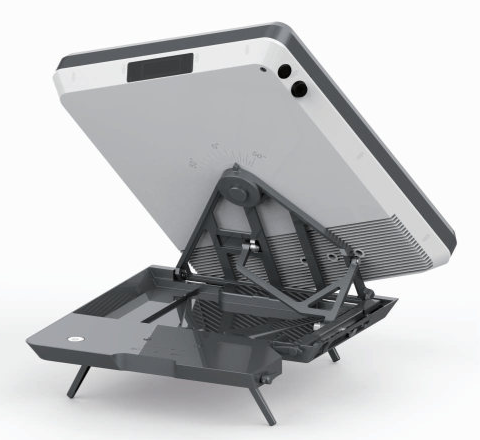
Flat Portable Satellite Terminal 0.35m Aperture Manual Portable Terminal
China Starwin Science & Technology Co., Ltd.

Industrial and Commercial Point-Type Gas Detector
Jinan Benan Technology Development Co., Ltd.
Mine Explosion-proof and Intrinsically Safe Industrial Ethernet Ring Network (10 Gigabit/Gigabit)
Chongqing Mas Sci&Tech Co., Ltd.
MUX Series Communication Interface Device for Security and Stability Control System
Nanjing NR Electric Co., Ltd.