Rambus Launches Arm-Based Automotive-Grade Hardware Security Module RT-648
en.Wedoany.com Reported - Rambus has launched the automotive-grade CryptoManager RT-648, its first embedded hardware security module built on an Arm processor, designed for the integrated security needs of software-defined vehicle architectures.
As the automotive industry transitions to software-defined vehicles, security architectures must evolve from standalone functions to integrated platform capabilities. Next-generation automotive system-on-chips require not only enhanced security protection but also standardized, scalable infrastructure. As Rambus's first embedded hardware security module pre-integrated into the Arm compute subsystem ecosystem, the RT-648 combines Rambus's hardware security expertise with the scalability and ecosystem compatibility of the Arm architecture.
The RT-648 features a 32-bit Arm Cortex-M33 processor, enabling adaptation to Arm-based SoC design environments such as the automotive compute subsystem Zena CSS. By integrating key building blocks of computing, security, interconnect, and software into a proven subsystem architecture, Zena CSS reduces integration workload and shortens development cycles. OEMs and chip suppliers can leverage this platform to scale various workloads, including advanced driver-assistance systems, in-vehicle infotainment, and central computing.
Within this architecture, the RT-648 extends the platform's security foundation, pre-integrated into the Arm CSS ecosystem, enabling SoC designers to use familiar Arm toolchains and development processes to embed hardware-level security capabilities into modern automotive architectures.
The RT-648 establishes a hardware root of trust from the earliest stages of device operation, running in an independent, tamper-resistant isolated environment, providing services such as secure boot and authentication, secure key storage and management, cryptographic acceleration, and lifecycle state control. These capabilities are anchored in hardware, ensuring trust is established before any higher-level software executes.
Telechips has integrated the RT-648 root of trust into its automotive SoCs to build a unified hardware security architecture. Telechips platforms are widely used in in-vehicle infotainment, digital cockpits, advanced driver-assistance systems, and domain controllers. Within these, the RT-648 handles tasks such as trusted system initialization, secure key management and protection, building strong isolation mechanisms for mixed workloads of different security levels, and supporting security capability scaling across product lines.
Leanne Lee, Vice President of Product Strategy Planning at Telechips, stated that integrating the RT-648 root of trust into automotive SoCs establishes a unified hardware security framework, enabling secure boot, domain isolation, and long-term security capability scaling across the entire automotive platform series.
The RT-648's Arm Cortex-M33 processor uses a dual-core lockstep configuration, supporting independent execution of secure firmware with built-in fault detection. This design ensures secure isolation from the main application processor, meeting automotive functional safety requirements. The RT-648 is developed in compliance with the ISO 26262 functional safety standard and the ISO/SAE 21434 cybersecurity engineering specification, supporting ASIL-B. As an upgrade in the RT-64x series, the RT-648 integrates classical and post-quantum cryptography technologies, including FIPS 203 ML-KEM, FIPS 205 SLH-DSA, and FIPS 204 ML-DSA.
This product is designed for the standardization, reusability, and continuous evolution needs of security architectures in software-defined vehicles. It can be deeply integrated into Arm-based automotive platforms, reducing integration risks and supporting platform reuse and software iteration upgrades.
This article is compiled by Wedoany. All AI citations must indicate the source as "Wedoany". If there is any infringement or other issues, please notify us promptly, and we will modify or delete it accordingly. Email: news@wedoany.com
Related Products


MUX Series Communication Interface Device for Security and Stability Control System
Nanjing NR Electric Co., Ltd.
Comprehensive Mining Automation Control System
Beijing Tianma Intelligent Control Technology Co., Ltd.


G.652.D Wavelength-extended Non-dispersion Shifted Single-mode Optical Fiber
HONGAN GROUP CO., LTD.

TWP16 P-Band Tropospheric Wind Profile Radar
China Huayun Meteorological Technology Group Co., Ltd.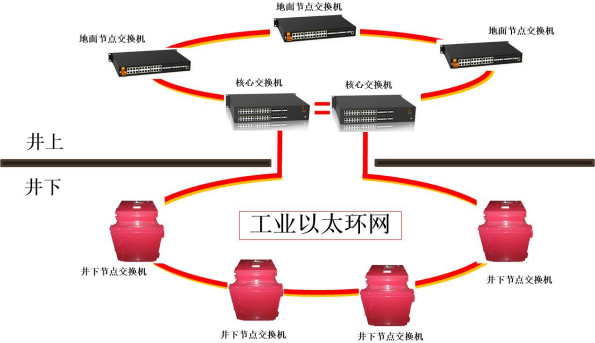
Mine Explosion-proof and Intrinsically Safe Industrial Ethernet Ring Network (10 Gigabit/Gigabit)
Chongqing Mas Sci&Tech Co., Ltd.

Industrial and Commercial Point-Type Gas Detector
Jinan Benan Technology Development Co., Ltd.