SambaNova Plans to Raise $800 Million to $1 Billion at $10 Billion Valuation
en.Wedoany.com Reported - U.S. AI chip company SambaNova Systems is in talks for a new funding round, aiming to raise between $800 million and $1 billion, with a post-money valuation expected to reach approximately $10 billion. The round has not yet been finalized; if completed, it would represent one of SambaNova's larger capital infusions in recent times and significantly increase the company's valuation compared to its Series E round in February 2026.
Headquartered in Palo Alto, California, SambaNova Systems provides AI inference chips, AI cloud platforms, and full-stack inference infrastructure to enterprises, cloud service providers, government agencies, and data center clients. The company's core hardware is its proprietary RDU (Reconfigurable Dataflow Unit) processor, focusing not on general-purpose GPU training but on large model inference, agent workloads, and enterprise-level AI deployment. As large model applications shift from the training phase to high-frequency inference, the speed, energy consumption, throughput, and deployment cost of inference chips are becoming key battlegrounds in AI infrastructure competition.
This proposed funding round comes on the heels of SambaNova's completion of a Series E round exceeding $350 million in February 2026, during which it also launched its next-generation SN50 AI chip. That round's proceeds were intended to expand SN50 manufacturing capacity, scale the SambaCloud platform, and enhance enterprise software integration. The SN50 is positioned as an inference chip for AI agents, emphasizing long-context, multi-step tasks, and high-concurrency inference scenarios. The company previously disclosed that the SN50 can achieve speeds up to five times faster than competing chips and reduce total cost of ownership in agent inference scenarios.
SambaNova's SambaCloud platform is a key vehicle for its commercial deployment. Based on the company's proprietary RDU chips, the platform offers high-throughput, low-latency inference services for large open-source models such as Llama, DeepSeek, and Qwen. For enterprise customers, once AI applications enter production environments, cost pressures often concentrate on continuous inference. Model training can be phased, but inference consumes computing power continuously with user requests, agent calls, and business process operations. SambaNova's decision to raise funds around inference chips and cloud platforms aligns with the current AI infrastructure market's demand for cost reduction and scalable deployment.
U.S. Intel has previously participated in SambaNova's funding rounds and established an AI inference infrastructure partnership with the company. The collaboration includes combining Intel Xeon processors, SambaNova RDUs, and other AI acceleration hardware to share inference tasks across different stages. High-performance CPUs handle system scheduling, agent tool execution, and enterprise software ecosystem adaptation, while RDUs manage core inference tasks such as decoding and token generation. This heterogeneous architecture aims to lower the deployment barrier for enterprise data centers, avoiding reliance on high-power GPU clusters for all AI workloads.
The expectation of a $10 billion valuation reflects growing capital market interest in the AI inference chip sector. Over the past two years, AI computing investment has primarily revolved around GPUs, AI servers, and data center construction. However, as enterprise AI applications go live, inference cost, energy efficiency, and model call response speed have become new bottlenecks. AI chip companies like Cerebras, Groq, and SambaNova are all attempting to enter the inference computing market beyond Nvidia, offering alternatives to cloud service providers, enterprise customers, and sovereign AI projects.
SambaNova's current funding round remains in the proposal stage, with the final amount, investor list, valuation terms, and closing timeline not yet fully determined. What is clear is that the company is seeking $800 million to $1 billion in new capital at a target valuation of approximately $10 billion. If the round is completed, the funds will likely continue to be directed toward SN50 chip production expansion, SambaCloud platform scaling, enterprise customer delivery, and AI inference ecosystem development. Key points to watch going forward will include chip shipment pace, cloud platform customer growth, the progress of the Intel partnership, and whether its inference cost advantages can be consistently validated in real-world enterprise scenarios.
This article is compiled by Wedoany. All AI citations must indicate the source as "Wedoany". If there is any infringement or other issues, please notify us promptly, and we will modify or delete it accordingly. Email: news@wedoany.com
Related Products
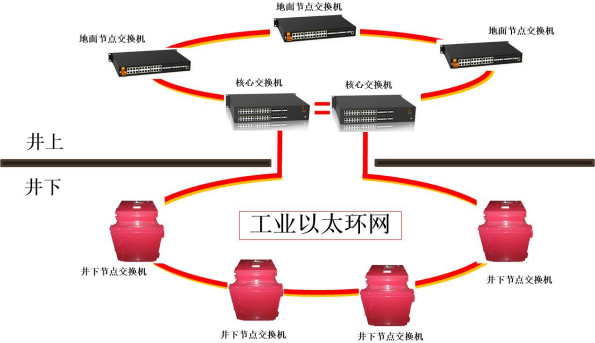

Mine Explosion-proof and Intrinsically Safe Industrial Ethernet Ring Network (10 Gigabit/Gigabit)
Chongqing Mas Sci&Tech Co., Ltd.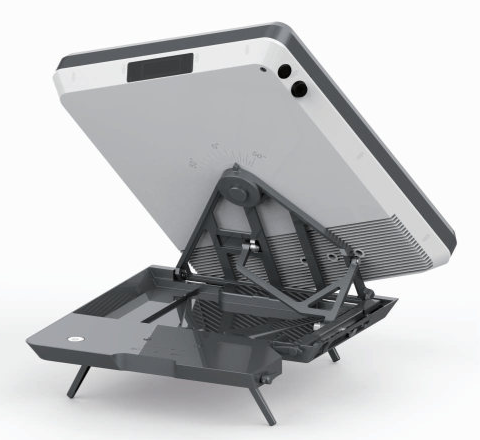
Flat Portable Satellite Terminal 0.35m Aperture Manual Portable Terminal
China Starwin Science & Technology Co., Ltd.

Industrial and Commercial Point-Type Gas Detector
Jinan Benan Technology Development Co., Ltd.
GYTA Type Non-Self-Supporting Aerial/Duct Optical Cable
TONGDING INTERCONNECTION INFORMATION CO., LTD.
One-Stop Steward Service for the Entire Logistics System Integration Chain
Zhongding Intelligent (Wuxi) Technology Co., Ltd.