EU's DIDEAROT Project Develops Machine Learning Surrogate Models, Achieving Approximately 40,000-Fold Speed Increase
en.Wedoany.com Reported - The DIDEAROT project (Digital Design strategies to certify and mAnufacture Robust cOmposite sTructures), under the EU Horizon Europe framework, is developing machine learning surrogate models trained on physical simulations, aiming to reduce the physical testing burden required for certifying primary composite structures in next-generation aircraft.
From coupons to full-scale structures, the "building block" certification approach in aerospace composites requires physical testing at every design level, a costly process. While high-fidelity finite element simulation models can accurately capture composite curing or impact responses, their high computational cost limits parameter exploration and uncertainty quantification during the design phase. The European Commission's "HORIZON-CL5-2021-D5-01-06" project aims to address this industrial constraint by enabling more informed design decisions at earlier stages through digital design tools, thereby reducing the physical testing burden along the certification path.
The DIDEAROT project applies surrogate modeling methods to two specific problems. In manufacturing, the project has developed a novel method for predicting and correcting composite curing deformation. Results published by researchers at Cenaero in Belgium in Composite Structures (Zein et al., June 2025) show that instead of working directly on the full 3D mesh of the part, this method uses a reduced set of mathematical basis functions (spectral bases) to represent its shape and adjusts the mold shape using the Broyden method, a numerical technique. In a flat plate test case, this method completely eliminated curing-induced deformation, whereas the standard fixed-point rule currently used in industry failed to converge.
In the area of structural vulnerability, the project focuses on the dynamic response of structures under impact. To predict damage response at the material microscale, a team from the University of Liège (ULiège) trained a recurrent neural network surrogate model (SC-MRU-T, Self-Consistent Minimal Recurrent Unit) to directly reproduce the stress-strain response of a Representative Volume Element (RVE). The SC-MRU-T unit constructed by the team explicitly inputs the size of each load step into its internal calculations, solving the issue where earlier models' predictions varied with the refinement of load step division, making it suitable for the fine, irregular time steps required in impact simulations (Wu & Noels, 2024, published in Computer Methods in Applied Mechanics and Engineering).
In a benchmark multi-scale simulation test without damage, the prediction accuracy of the SC-MRU-T network was comparable to that of traditional full finite element methods, while running approximately 40,000 times faster. The results, along with the underlying code and training data, have been made openly accessible. The team's next step is to test scenarios involving material failure, which is more challenging for certification-related impact analysis.
The DIDEAROT project runs from September 2022 to August 2026 and is currently at its midpoint. In addition to the above results, an independent team from the University of Porto (INEGI) has published a method that estimates a complete composite material property card using only a single test, leveraging the existing material invariant concept (Tsai's moduli), with prediction errors of approximately 6-8% compared to measured values (Dinler et al., Journal of Composite Materials, 2026).
The DIDEAROT project is coordinated by Cenaero, with partners including Sonaca, the University of Liège, Tecnalia, INEGI/University of Porto, Aernnova, Hexagon/E-Xstream Engineering, and the Barcelona Supercomputing Center. Its advisory board includes Airbus, Dassault Aviation, Safran, Embraer, and EASA. Some project results are expected to reach Technology Readiness Level 6 (TRL6), enabling direct application within the "Clean Aviation" partnership. The project has established a cluster initiative to share results with projects such as CAELESTIS, NEXTAIR, GENEX, and INFINITE, and plans to hold workshops before its conclusion, targeting both the HPC and academic communities as well as industrial technology transfer. More information is available on the CORDIS project page: cordis.europa.eu/project/id/101056682.
This article is compiled by Wedoany. All AI citations must indicate the source as "Wedoany". If there is any infringement or other issues, please notify us promptly, and we will modify or delete it accordingly. Email: news@wedoany.com
Related Products

Standard Nozzle Flowmeter
Jinggong Automatic Control Instrument Complete Technology Development Company
Pneumatic high-pressure wear-resistant ball valve
Zhejiang Deca Control Valve Meter Co., Ltd.



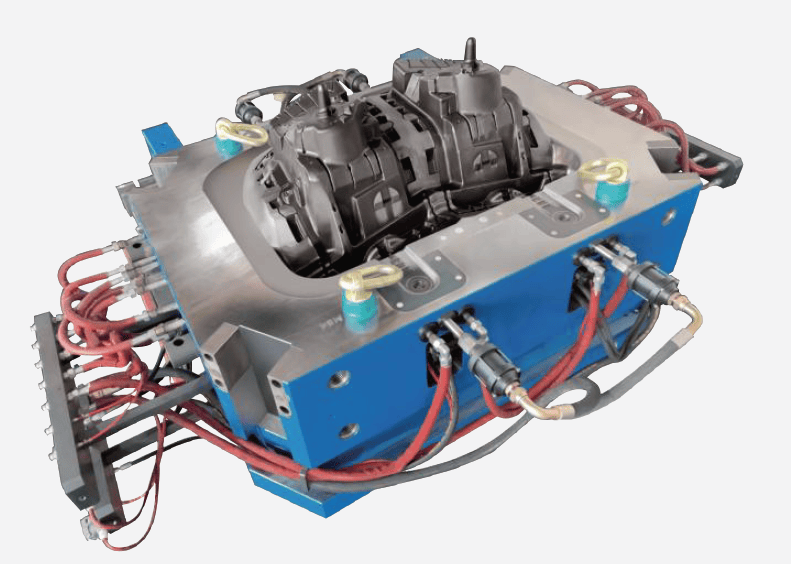
Aluminum-Magnesium Alloy High-Pressure Die-Casting Molds
NINGBO HELI TECHNOLOGY CO., LTD.