Queensland's 44-cent solar feed-in tariff ends in June 2028
en.Wedoany.com Reported - The 44c feed-in tariff under Queensland's Solar Bonus Scheme will officially end on June 30, 2028, with all remaining participants automatically transitioning to standard market electricity prices on July 1, 2028. The Queensland Government launched the scheme in 2008 to encourage early rooftop solar adoption, offering eligible households a subsidy of 44 Australian cents per kilowatt-hour of excess electricity exported to the grid. The scheme stopped accepting new applications on July 10, 2012, and homeowners who applied before that date and have continuously met the conditions still enjoy this rate.
Currently, most Queensland homeowners receive standard feed-in tariffs ranging from 1 to 15 Australian cents per kilowatt-hour, making the historical 44c rate a significant economic advantage for its holders. This premium rate is enshrined in state legislation with a hard expiry date, and the Queensland Government has no plans or proposals for any extension. On July 1, 2028, all participants will be automatically removed from this rate, resulting in a substantial drop in the financial return for exporting electricity to the grid, with historical participants directly transitioning to the standard market feed-in tariff offered by electricity retailers.
The conditions for maintaining eligibility are very strict. The phase-out of the policy does not mean the end of solar savings, but rather a shift in the source of savings. Key pathways include upgrading to more efficient modern solar systems (e.g., 6.6 kW or larger), pairing with battery storage to increase self-consumption, and switching retailers to secure higher feed-in tariffs.
Participants may also consider joining a Virtual Power Plant (VPP) network, trading electricity through batteries during peak demand periods to earn higher returns. Additionally, running high-efficiency appliances (such as heat pump hot water systems or electric vehicle chargers) during solar peak hours can maximize the value of self-consumption. For those considering purchasing an electric vehicle, connecting the charger to a solar system is also a way to utilize clean renewable energy.
The phase-out of Queensland's Solar Bonus Scheme marks the end of an era, but by focusing on self-consumption, modern solar technology, and battery storage, households can still enjoy significant benefits. Planning ahead can help maximize value over the long term beyond 2028.
This article is compiled by Wedoany. All AI citations must indicate the source as "Wedoany". If there is any infringement or other issues, please notify us promptly, and we will modify or delete it accordingly. Email: news@wedoany.com
Related Products


G.652.D Wavelength-extended Non-dispersion Shifted Single-mode Optical Fiber
HONGAN GROUP CO., LTD.


Inductive Power Harvesting Self-Powered Device - Safuneng
SELF ENERGY TECHNOLOGY (SHENZHEN) CO., LTD.
220kV and Below Voltage Level Energy-saving Oil-immersed Power Transformers
FuZhou TianYu Electric Co., Ltd.
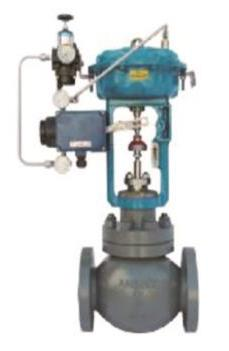
Quick-Change Single-Seat Control Valve / Quick-Change High-Pressure Single-Seat Control Valve
Beijing Consen Automation Technology Co., Ltd.