China's AI²² Completes Nearly 5 Billion Yuan Financing, Valuation Exceeds 20 Billion
en.Wedoany.com Reported - China's embodied intelligence company AI²² completed a series of new financings on June 29, with total financing amounting to nearly 5 billion yuan (approximately $700 million), and a post-investment valuation exceeding 20 billion yuan. This makes it the first embodied intelligence company in the Guangdong-Hong Kong-Macao Greater Bay Area to officially break the 20 billion yuan valuation mark. The funds will be used for iterative upgrades of the "robot brain," mass production of robot products, and the construction of an industrial customer delivery system.
The scale of this financing round is among the highest in China's embodied intelligence sector. Participants include national and regional industrial capital, as well as market-oriented financial investment institutions and leading industry chain companies. The National SME Development Fund, China Cultural Industry Fund, Guangdong Province Artificial Intelligence Fund, Nanshan Strategic Emerging Industries Investment, and the Guangdong-Hong Kong-Macao Greater Bay Area Series Funds continued to increase their investments. Existing shareholders such as Fortune Capital, Dunhong Asset Management, Daode Investment, Wuxi Venture Capital, and Liangcheng Venture Capital also added investments. In terms of industrial ecosystem funding, companies including Sino Biopharmaceutical, Pharmaron, Kweichow Moutai Group, China Merchants Capital, Wuzhou Xinchun, Wanfeng Holdings, and China Bester Group participated in the investment, with several core Tesla ecosystem chain companies also continuing to support.
This indicates that financing for embodied intelligence has moved beyond early-stage bets by general venture capital and has entered a new phase involving government funds, industrial capital, manufacturing supply chains, and scenario providers. For embodied intelligence companies to truly enter factories, warehouses, commercial services, healthcare, logistics, and consumer scenarios, they need not only algorithm models but also supply chain, mass production, channel, scenario validation, and after-sales delivery capabilities. The financing structure of AI²² in this round, covering fund platforms, manufacturing leaders, and existing shareholders, reflects that capital places greater value on its ability to transition from technological R&D to industrial implementation.
AI²²'s core direction is productivity-oriented general-purpose intelligent robots, focusing on building a system around robot foundation models, embodied brains, robot hardware, and real-world scenario applications. Unlike robots focused on display, companionship, or single services, productivity-oriented robots emphasize "ability to work, deliverability, reusability, and mass producibility." The competitive focus for such companies is not on the effect of a single demonstration, but on whether the robot can stably complete real tasks, integrate into customer business processes, and continuously reduce unit costs after large-scale deployment.
The "robot brain" is the key focus for the use of this round of funds. For embodied intelligent robots to work in real environments, they need perception, understanding, planning, control, and execution capabilities. Robots must not only recognize objects and environments but also understand task objectives, determine operational sequences, adapt to on-site changes, and correct deviations during action execution. The stronger the robot brain's capabilities, the more likely the robot is to transition from a fixed-program device to a general-purpose operational platform, covering more workstations and industry scenarios.
Breaking the 20 billion yuan valuation also means AI²² has entered the capital competition cycle of the leading camp in embodied intelligence. Currently, China's embodied intelligence industry is experiencing significant concentration among top players, with market funds beginning to flow intensively towards companies with model capabilities, hardware mass production capabilities, scenario orders, and supply chain resources. For leading companies, the value of large-scale financing is not just about supplementing cash flow, but also about preemptively locking in production capacity, teams, ecosystem partners, and customer projects, taking the initiative in the window for scaled implementation over the next two to three years.
The Guangdong-Hong Kong-Macao Greater Bay Area is one of the most concentrated regions for China's robotics and intelligent manufacturing industry chains. Cities such as Shenzhen, Guangzhou, Dongguan, and Foshan have foundational advantages in electronics manufacturing, automotive parts, communication equipment, medical devices, industrial automation, and supply chain support. AI²² becoming an embodied intelligence company in the Greater Bay Area with a valuation exceeding 20 billion yuan signifies that the local robotics industry is extending from components, manufacturing support, and application integration towards embodied large models, general-purpose robot platforms, and high-valuation complete machine companies.
The follow-on investments from industry leaders are also noteworthy. The participation of pharmaceutical, communication, manufacturing, consumer, and supply chain companies in the financing indicates that the application imagination space for embodied intelligence is being accepted by more industries. In the future, robots will not only serve automotive factories and 3C production lines but may also enter pharmaceutical R&D, laboratory automation, warehouse logistics, commercial retail, industrial inspection, and complex manufacturing processes. After industrial capital enters, companies can gain access to real scenarios, customer needs, and pilot opportunities, which is more conducive to robot product iteration than purely financial financing.
Following the completion of this financing round, AI²²'s subsequent focus will be on three things: continuing to enhance robot brain capabilities, expanding the mass production scale of robot hardware, and advancing the delivery of more industrial customers. Whether an embodied intelligence company can truly succeed ultimately depends on whether its robots can generate stable repeat purchases in real scenarios, replicate single-point projects into batch deployments, and reduce maintenance costs over long-term operation. The nearly 5 billion yuan financing provides AI²² with greater R&D and production space, while also pushing the company into a higher-intensity phase of commercialization validation.
This article is compiled by Wedoany. All AI citations must indicate the source as "Wedoany". If there is any infringement or other issues, please notify us promptly, and we will modify or delete it accordingly. Email: news@wedoany.com
Related Products
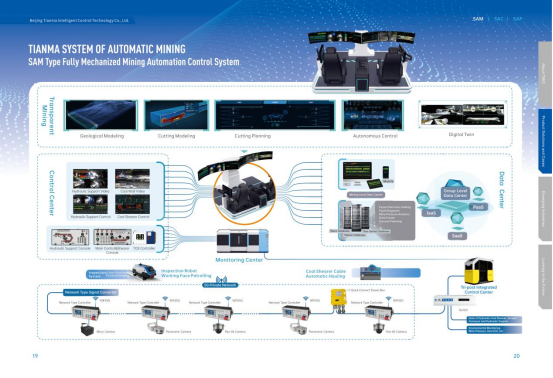

Comprehensive Mining Automation Control System
Beijing Tianma Intelligent Control Technology Co., Ltd.
GYTA Type Non-Self-Supporting Aerial/Duct Optical Cable
TONGDING INTERCONNECTION INFORMATION CO., LTD.
Industrial and Commercial Point-Type Gas Detector
Jinan Benan Technology Development Co., Ltd.

TWP16 P-Band Tropospheric Wind Profile Radar
China Huayun Meteorological Technology Group Co., Ltd.

Automatic Aiming Laser Remote Obstacle Removal Robot
Pinggao Group Weihai High-Voltage Apparatus Co., Ltd.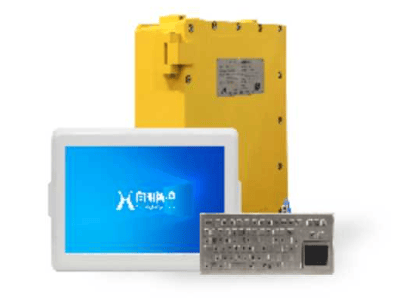
KJD127(A) Mining Explosion-Proof and Intrinsically Safe Computer
Taiyuan Xiangming Intelligent Control Technology Co., Ltd.

MUX Series Communication Interface Device for Security and Stability Control System
Nanjing NR Electric Co., Ltd.