US QCi Acquires NHanced for $73.1 Million to Advance Quantum Chip Manufacturing
en.Wedoany.com Reported - Quantum Computing Inc. (QCi) has completed its acquisition of NHanced Semiconductors for $73.1 million in cash and stock, with an additional earn-out of up to $72 million tied to performance milestones. The deal gives the quantum optics and integrated photonics company a larger U.S. manufacturing base, aiming to transition prototypes into commercially scalable photonic and quantum hardware for real customers.
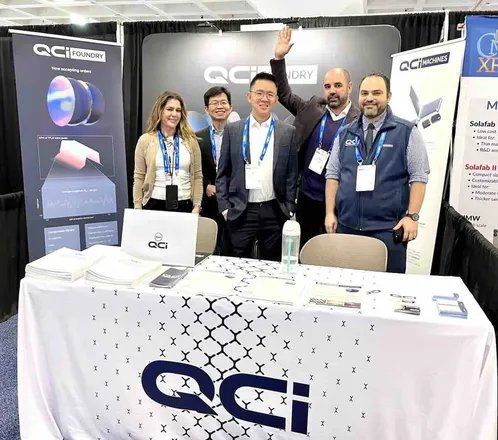
At the heart of this acquisition is control—control over process, packaging, testing, and customer delivery. QCi has been seeking to shift from research-driven innovation and prototyping to scalable commercial production, and NHanced provides a more substantive answer to a long-standing concern for enterprise, defense, and infrastructure buyers: "Who will actually manufacture this?"
NHanced is a U.S.-based advanced packaging foundry with expertise in hybrid bonding, chiplet architectures, silicon interposers, photonic device integration, and 2.5D and 3D heterogeneous integration. It will operate as a wholly owned subsidiary of QCi while continuing to serve existing customers and partners, including those in the quantum ecosystem. This continuity matters because existing buyers typically dislike becoming collateral damage in an integration.
QCi is acquiring not just capacity but a way around one of the thorniest problems in quantum and photonics commercialization: great lab work does not automatically become a product line. Photonic integrated circuits, especially on thin-film lithium niobate platforms, require specialized manufacturing, packaging, testing infrastructure, and engineering judgment. A device may work under controlled conditions but fail as a commercial product due to low yield, prohibitive packaging costs, or unscalable test procedures.
QCi stated that the acquisition supports its silicon-based thin-film lithium niobate photonics work and accelerates its manufacturing roadmap. The company has already completed and is operating Fab 1 in Tempe, Arizona, and claims that NHanced will be integrated into plans for Fab 2 and broader capacity expansion ahead of QCi's original timeline. This suggests that more capacity can shorten development cycles and improve resilience, but it also exposes the company to the fundamental economics of manufacturing: utilization rates, tool downtime, process variations, staffing, maintenance, inventory, and customer qualification cycles. Quantum companies often sound like software companies until they start owning hardware operations.
QCi noted that its previously integrated Luminar semiconductor acquisition added laser, light detection, photonic packaging, and testing capabilities, while NHanced expands the scope into semiconductor and nanophotonic manufacturing, advanced packaging, and manufacturing services. Overall, QCi is building a more vertically integrated platform across research, development, and manufacturing.
Vertical integration holds clear appeal in a constrained supply chain. If QCi can keep more manufacturing knowledge in-house, it can adapt designs based on actual process realities rather than waiting on external foundries or packaging partners. It can offer services and products that support customers needing lasers, detectors, testing, nanophotonic manufacturing and packaging, and quantum and photonic systems. But integration is not free. Semiconductor packaging is an execution business, and customers care about repeatability, not ambition. Defense and secure communications customers care about provenance, documentation, quality systems, and long-term support. AI and networking buyers care about cost curves, density, energy efficiency, and delivery timelines. Investors care about whether all of this translates into revenue before the next funding round.
The earn-out structure is worth noting. QCi paid $73.1 million upfront in cash and stock (subject to customary adjustments), with an additional $72 million if performance targets are met—nearly matching the initial consideration in scale, suggesting that investors still need evidence that manufacturing scale can be achieved. Behind this deal is a broader industry shift. As traditional chip scaling becomes more expensive and uneven, more value is moving toward packaging, interconnects, chiplets, and heterogeneous integration. Photonics naturally fits into this discussion because many emerging workloads are constrained by data movement, heat, latency, and energy. Quantum computing grabs headlines, but sensing, networking, secure communications, defense, and AI infrastructure may create more near-term demand for certain components and services. Perhaps this is the more commercial reading of the deal: rather than waiting for a single quantum computing market to mature on its own timeline, QCi is building a manufacturing and services base around photonics, where different customers may arrive at different speeds.
From a supply chain perspective, QCi stated that the acquisition enhances domestic manufacturing capabilities and supply chain resilience for advanced photonic chips. This language aligns with current purchasing behavior in defense, secure communications, and strategic infrastructure sectors, where customers increasingly care about where critical components are manufactured and the degree of foreign dependency in the production chain. Domestic capability helps in procurement conversations but does not solve cost issues, guarantee scale, or eliminate regulatory friction. Government-related markets may offer significant opportunities, but they often come with slow qualification processes, security clearances, export control restrictions, and documentation burdens. If QCi handles it well, NHanced's existing customer relationships can mitigate this risk, maintaining the existing customer base while building a new one.
For infrastructure buyers, this acquisition creates another potential supplier in a narrow, technically demanding market. For developers working on photonic or quantum systems, it may mean easier access to packaging and integration expertise within a single company. For investors, it raises a clearer question than most quantum announcements: Can QCi convert manufacturing assets into booked business, or will it simply own more expensive infrastructure before demand arrives? Rosenblatt advised QCi, with Wilson Sonsini Goodrich & Rosati serving as legal counsel. Needham & Company advised NHanced, with Taft Stettinius & Hollister serving as legal counsel. The deal is done. What follows is yield, customer renewals, process transfers, facility timelines, integration meetings, hiring plans, and all the questions that do not fit neatly into an acquisition announcement.
This article is compiled by Wedoany. All AI citations must indicate the source as "Wedoany". If there is any infringement or other issues, please notify us promptly, and we will modify or delete it accordingly. Email: news@wedoany.com
Related Products
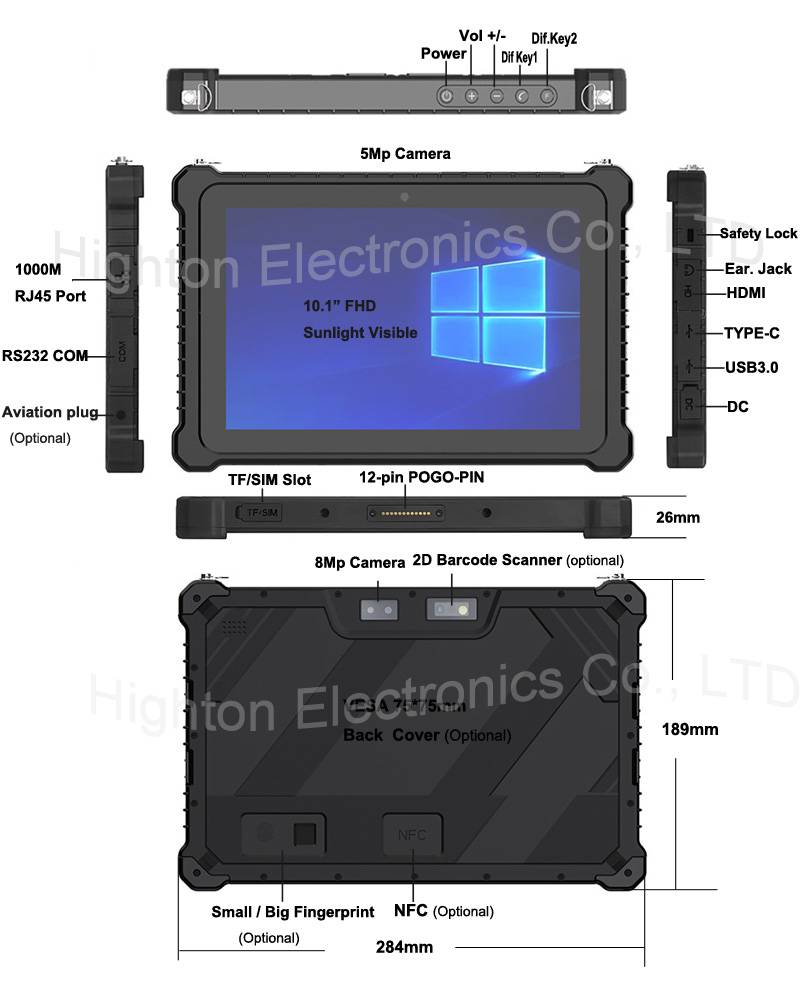

Hot Selling 10 Inch Intel N5100 I5 I7 FHD 8 +128GB 16+256GB Win10 Pro Win11 Pro 4G 5G Rugged Tablet PC Pad with NFC Barcode
Highton Electronics Co., Ltd.



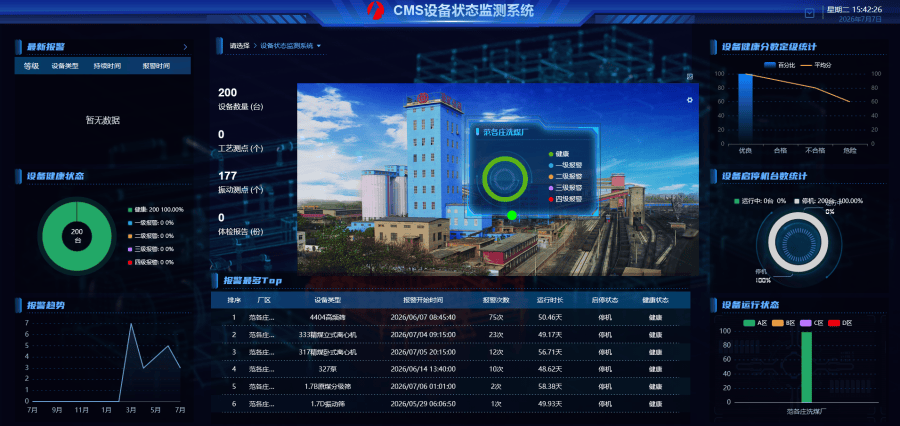

Mine Explosion-proof and Intrinsically Safe Industrial Ethernet Ring Network (10 Gigabit/Gigabit)
Chongqing Mas Sci&Tech Co., Ltd.
20 Inch 1600*900 Full HD 60Hz TFT LED Monitor with VGA and DP Interfaces for Desktop Computers-Business Use
Guangzhou Zanying Optoelectronics Technology Co., Ltd.